Bridge lesson, Spain, 2026
presented by Milan Macura via milanbridge.com
Castillo BC & Sotogrande BC
Session 1 – both
- Bridge essentialsHand evaluation, hand-orientation, strength ranges, deal balance
- Hand evaluation quizDifferences of balanced/semi-balanced hands that has same HCP strength
- Making a declarer plan in NTStep-by-step guide
- Making a declarer plan in TrumpsStep-by-step guide
- Card play quizPractise making a card play plan
- Playing and analyzing dealsLive games, option to play on Funbridge
Session 2 – Castillo
- Advanced hand evaluationHand types & patters, Theoretical losers, Trump adjustments
- Hand evaluation quizWhy do we have to evaluate unbalanced and goulash hands differently
- Bidding with MajorsRaising a Major, How high should we go?
- Part score competitionWhat is the strategy with unbalanced hands and how to bid as a partner
- Playing and analyzing dealsLive games, options to play on Funbridge
Session 2 – Sotogrande
- Advanced hand evaluationHand types & patters, Theoretical losers, Trump adjustments
- Hand evaluation quizWhy do we have to evaluate unbalanced and goulash hands differently
- Pre-empts & bidding after pre-emptsWhat is the strength for 2nd, 3rd, 4th level? How to react?
- High-level competitionHow should we find out when to pass/dbl/overbid?
- Playing and analyzing dealsLive games, options to play on Funbridge
Bridge essentials
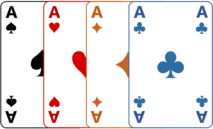
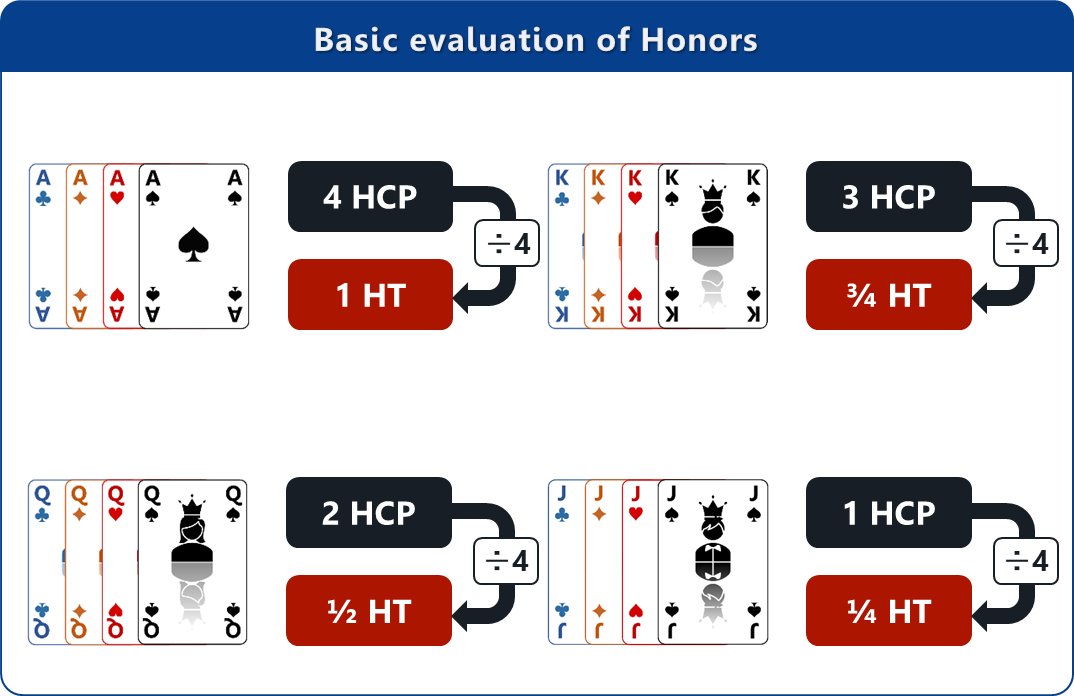
Ace = 1 HT / 4 HCP
King = ¾ HT / 3 HCP

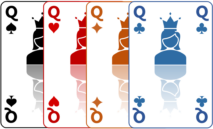
Queen = ½ HT / 2 HCP
J = ¼ HT / 1 HCP


Remember
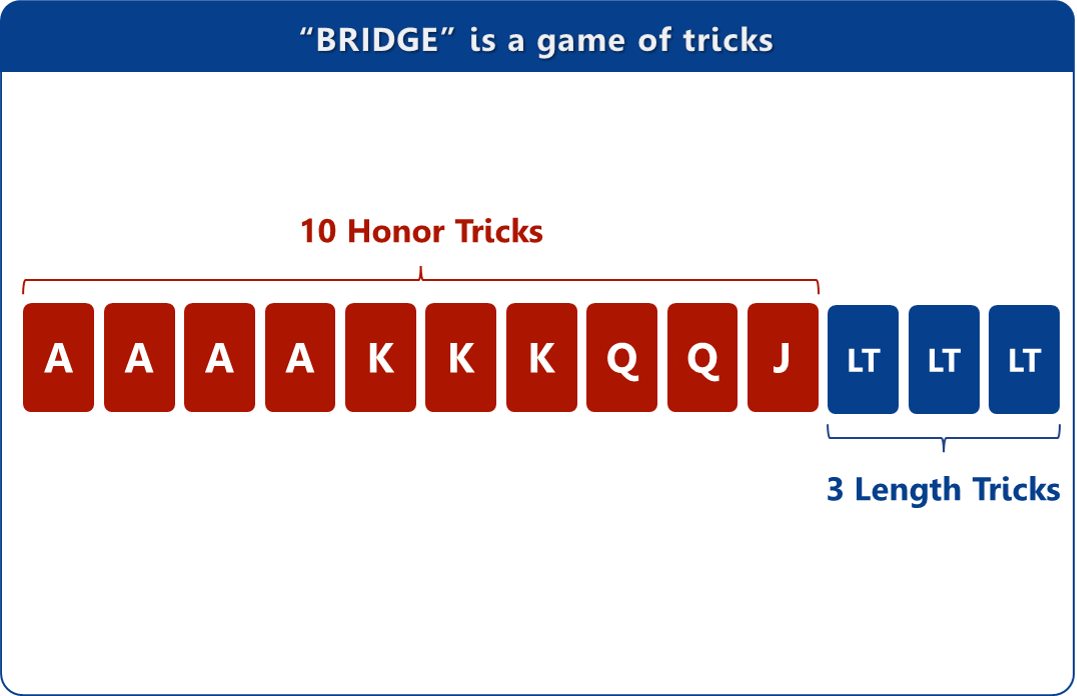
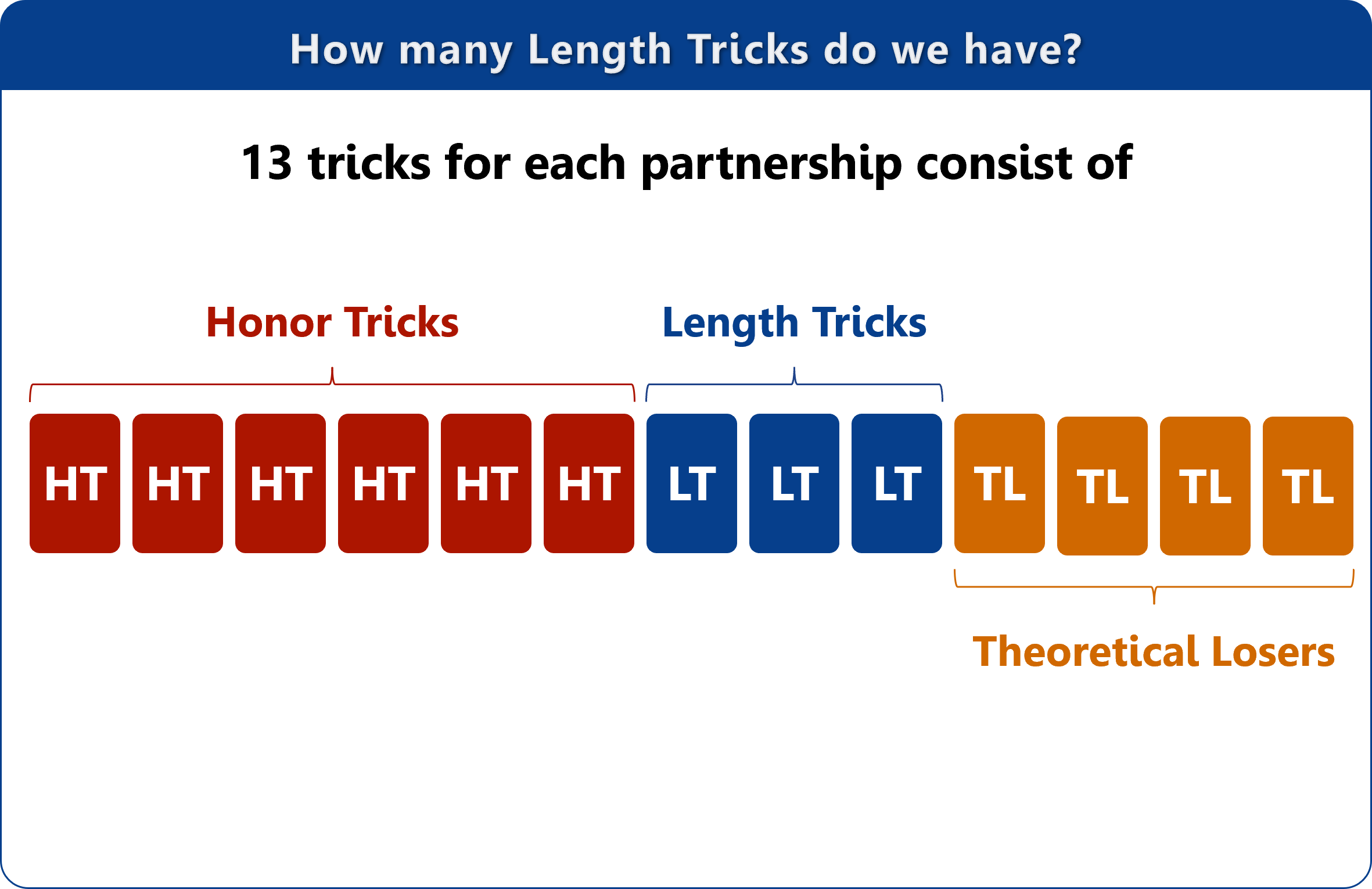
⇒ 13 tricks in each deal. Honors win 10 tricks, small cards win 3 tricks.
⇒ We use 2 honor evaluation methods: High Card Points (HCP) and Honor Tricks (HT)
⇒ A = 4 HCP or 1 HT
⇒ K = 3 HCP or ¾ HT
⇒ Q = 2 HCP or ½ HT
⇒ J = 1 HCP or ¼ HT
Remember
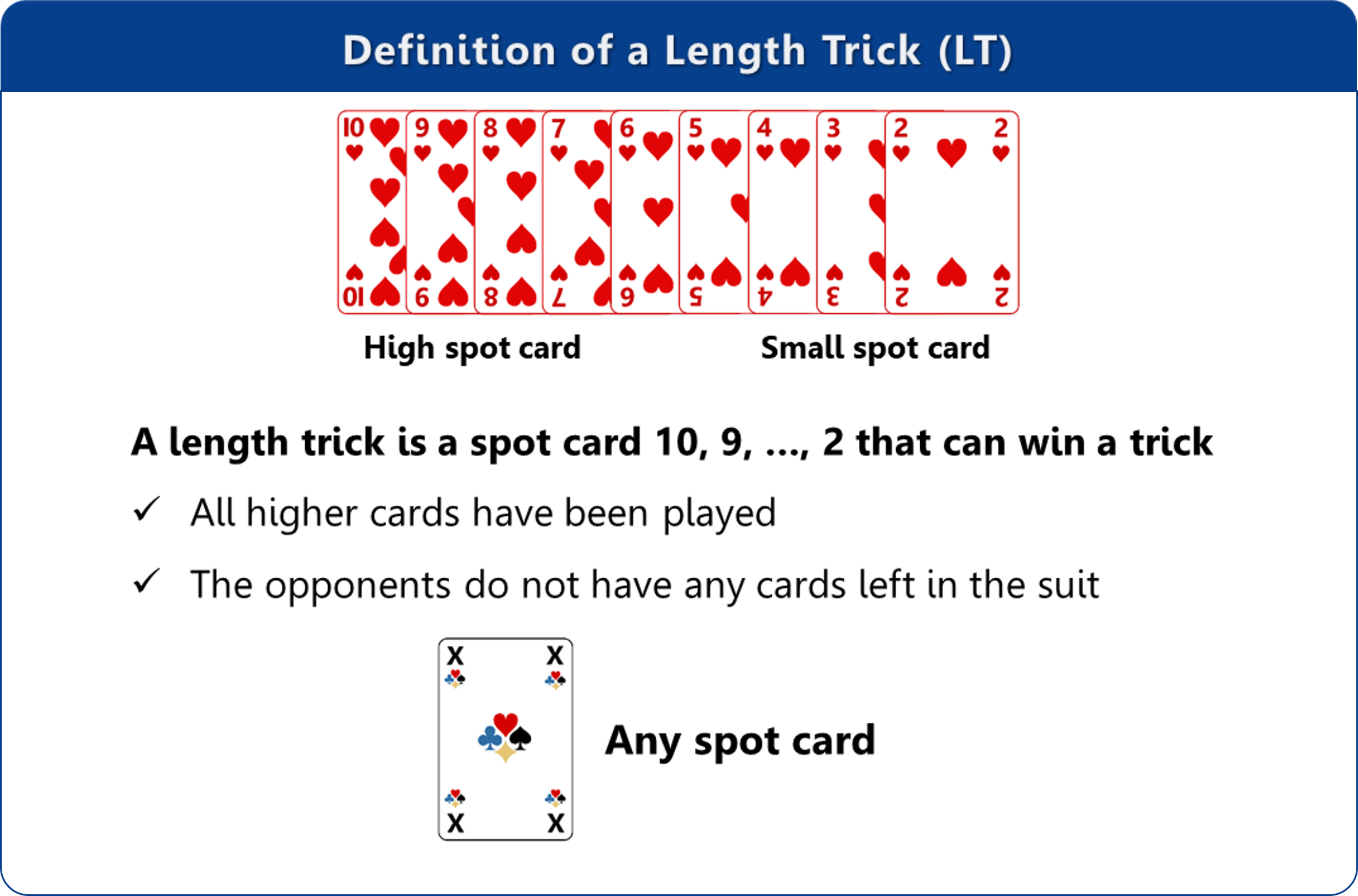
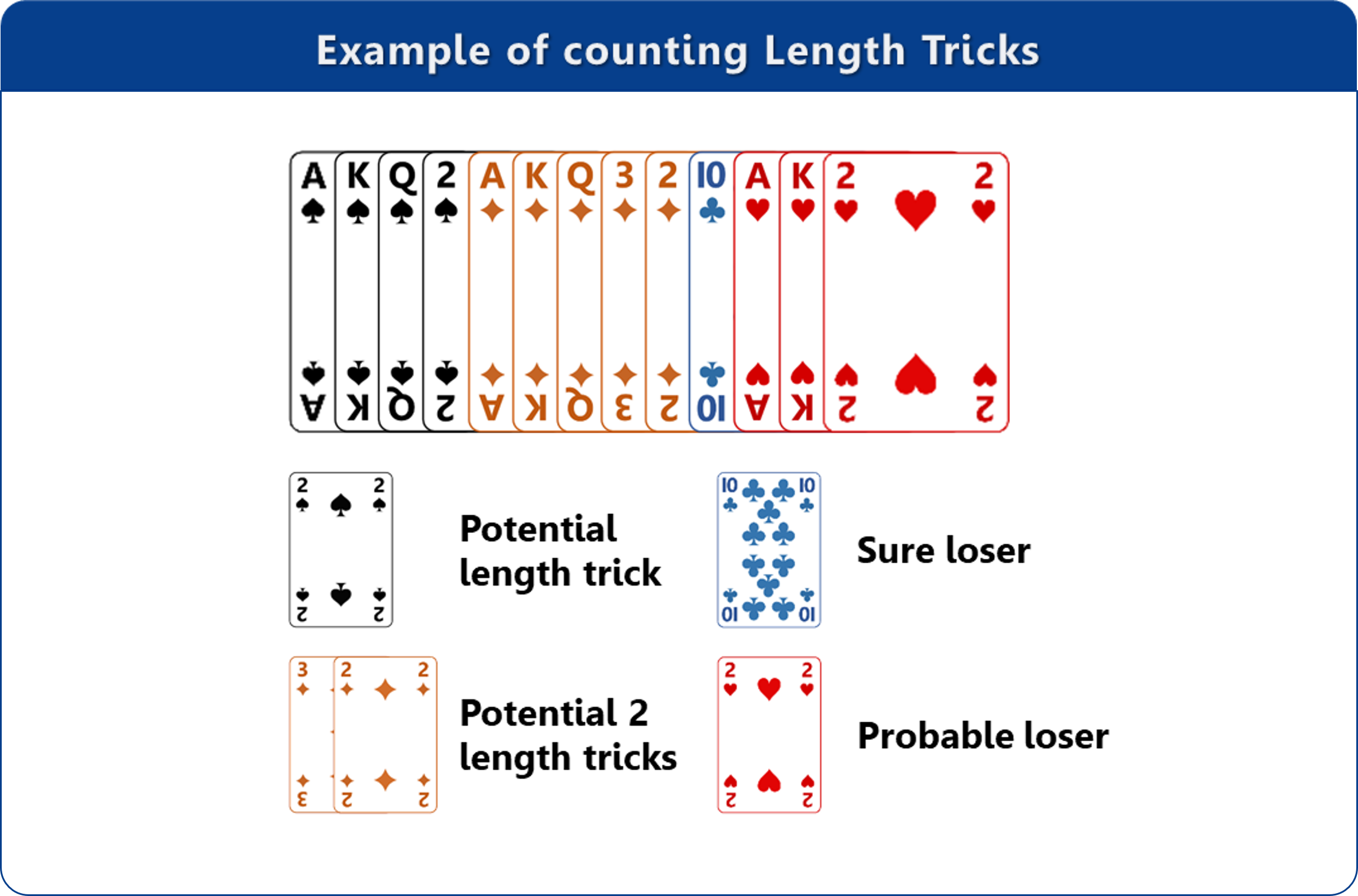
⇒ Length trick (LT) – a spot (small) card 10, 9, ..., 3, 2 that can win a trick because no higher cards are left in the game.
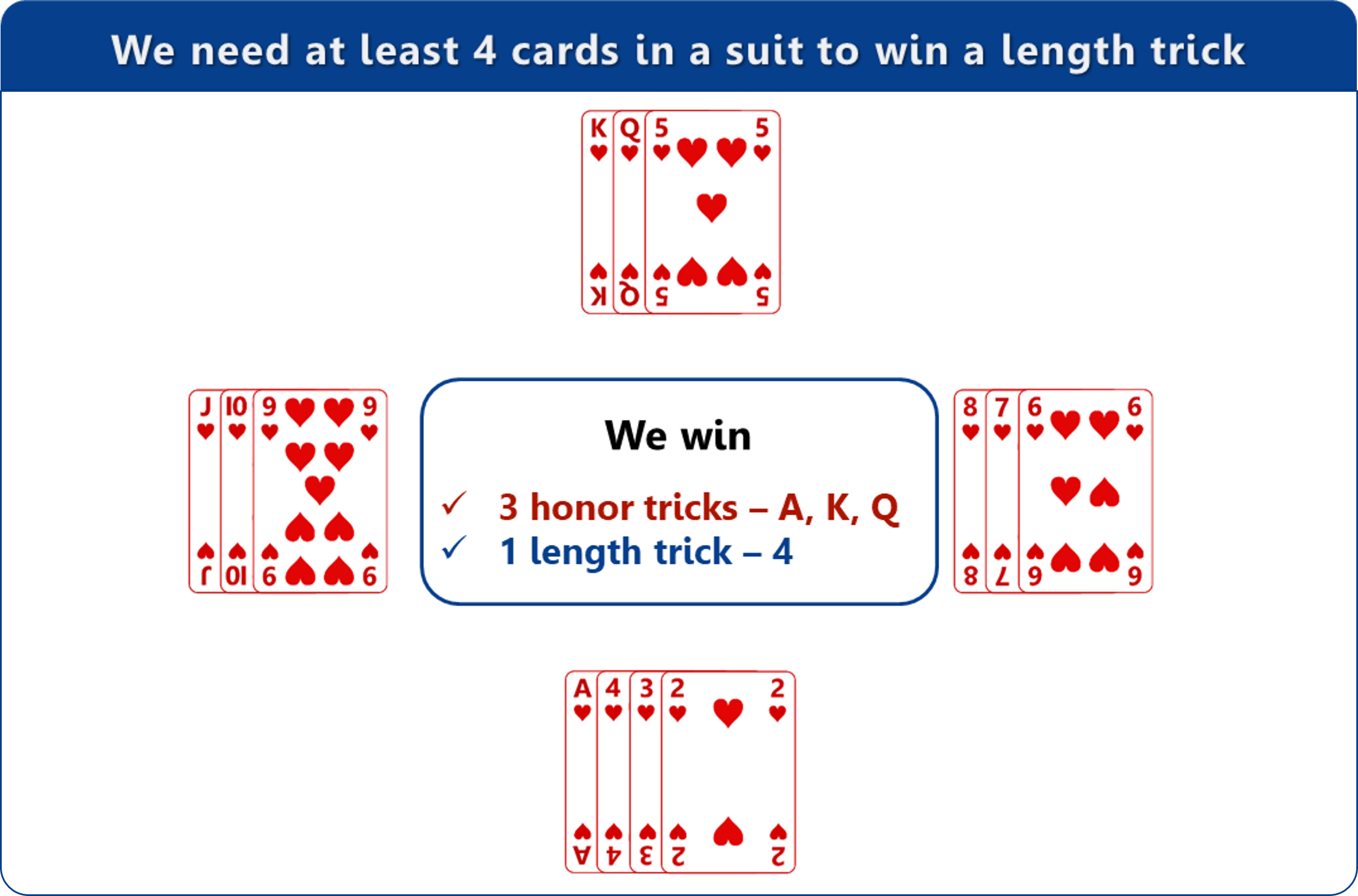
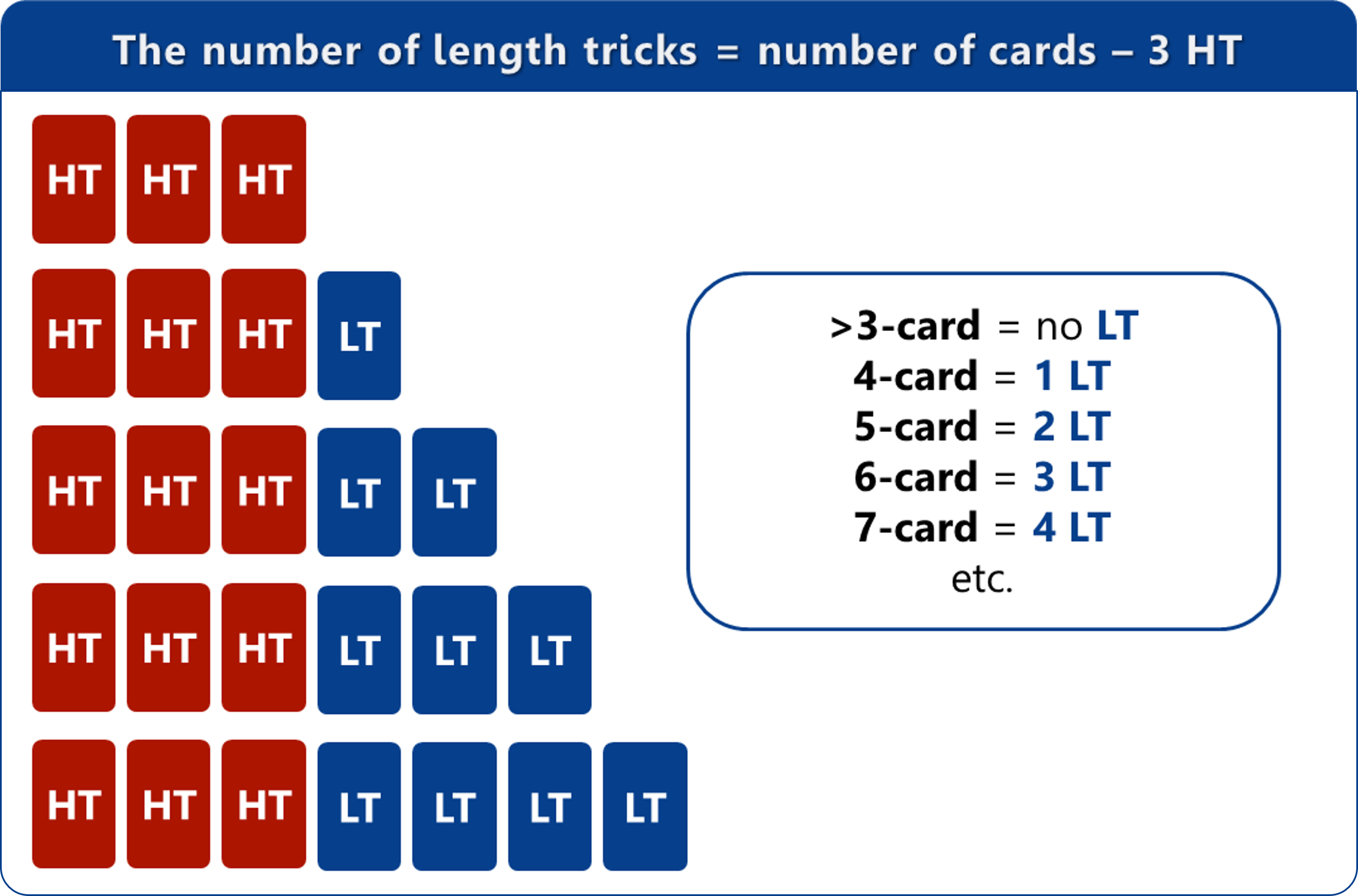
⇒ You must have a minimum of 4 cards to win a length trick
⇒ The more cards you have in the suit, the more length tricks you can win and the higher chance you have to win them.
⇒ We expect that the suit is distributed equally among other players.
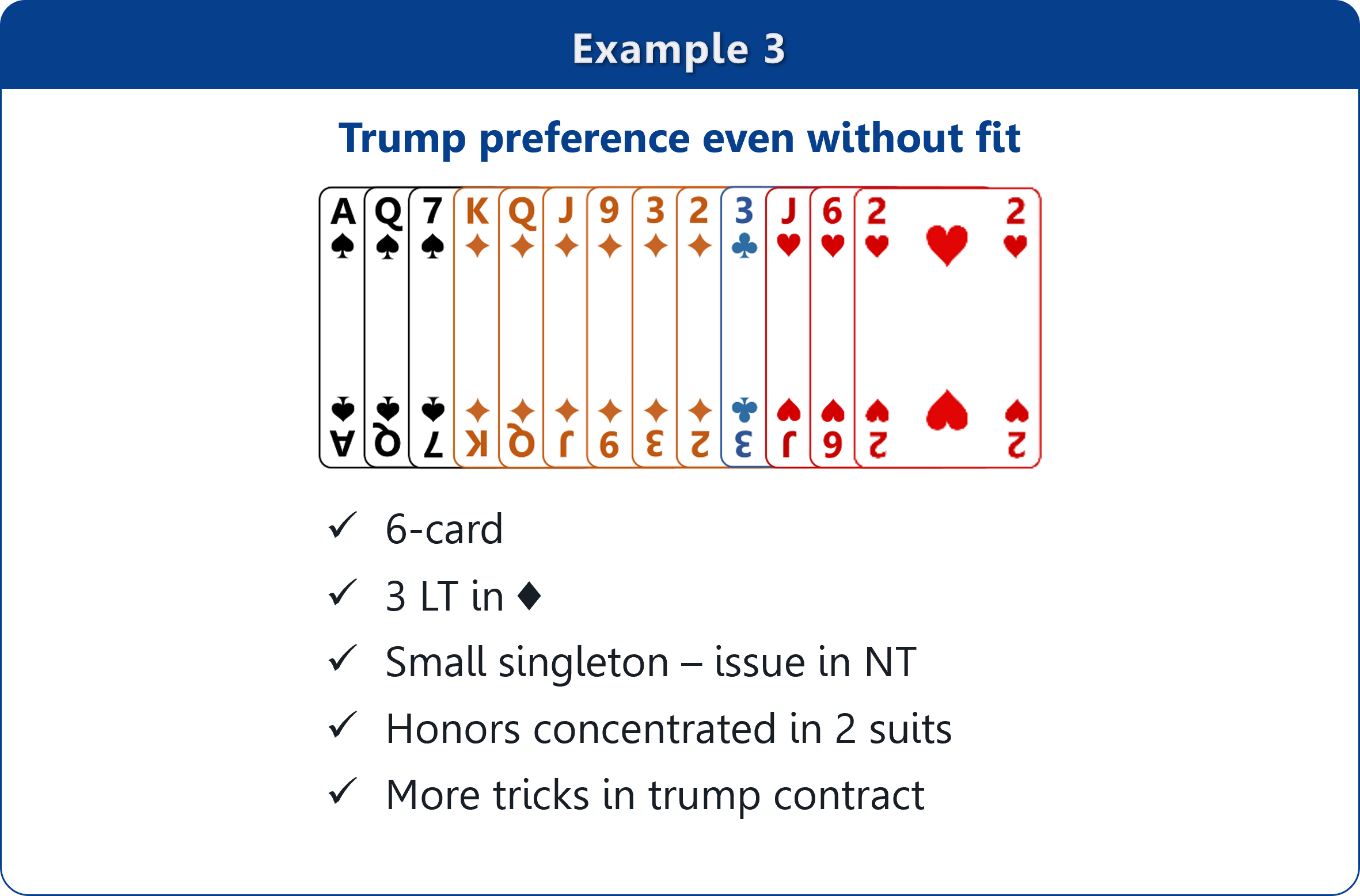
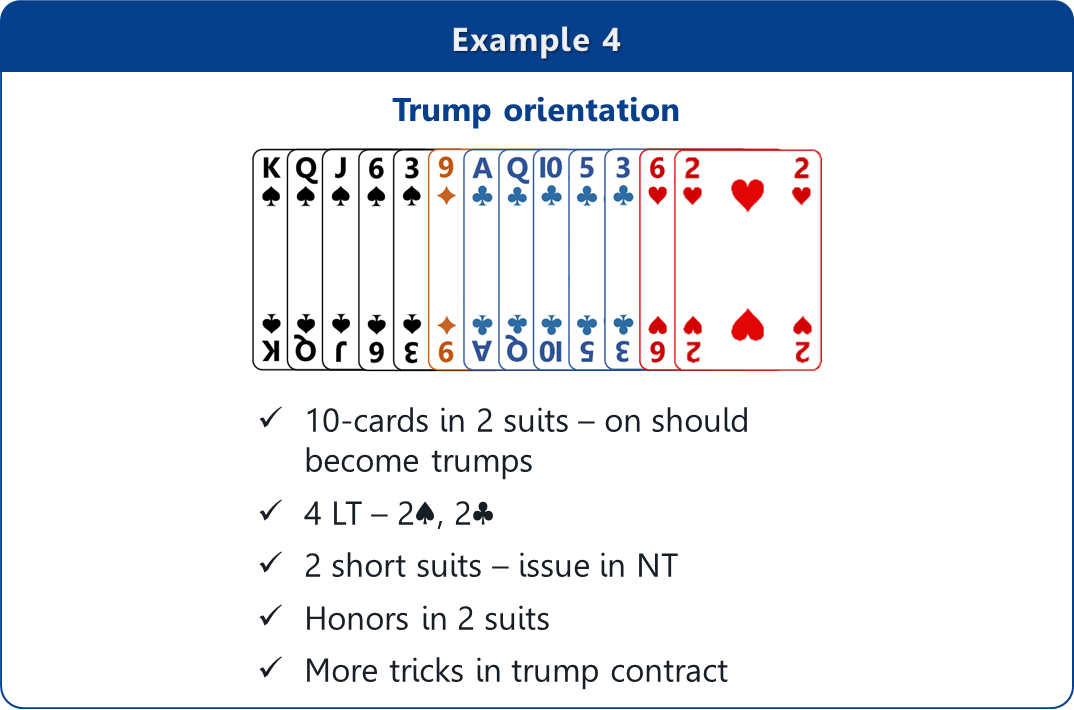
Remember
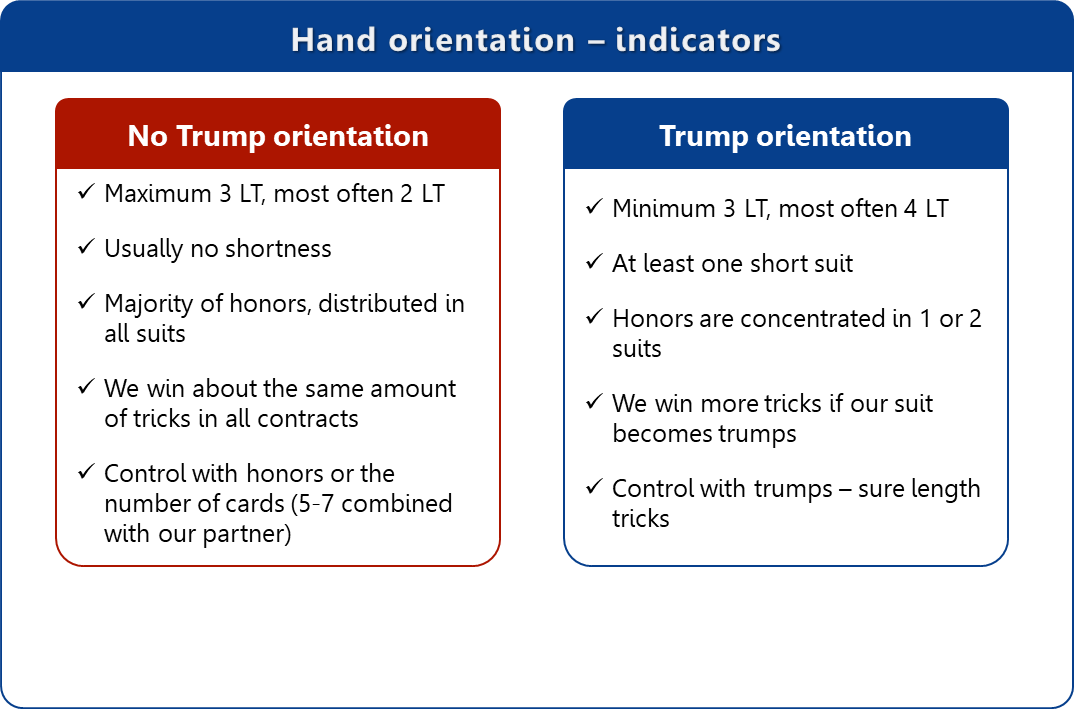
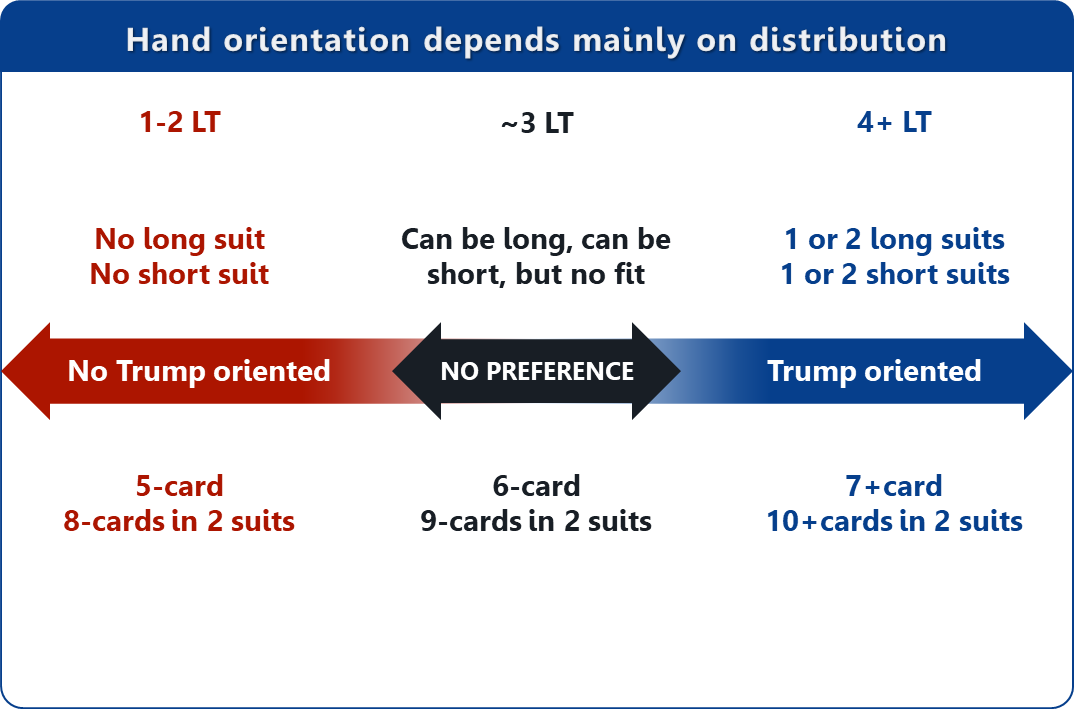
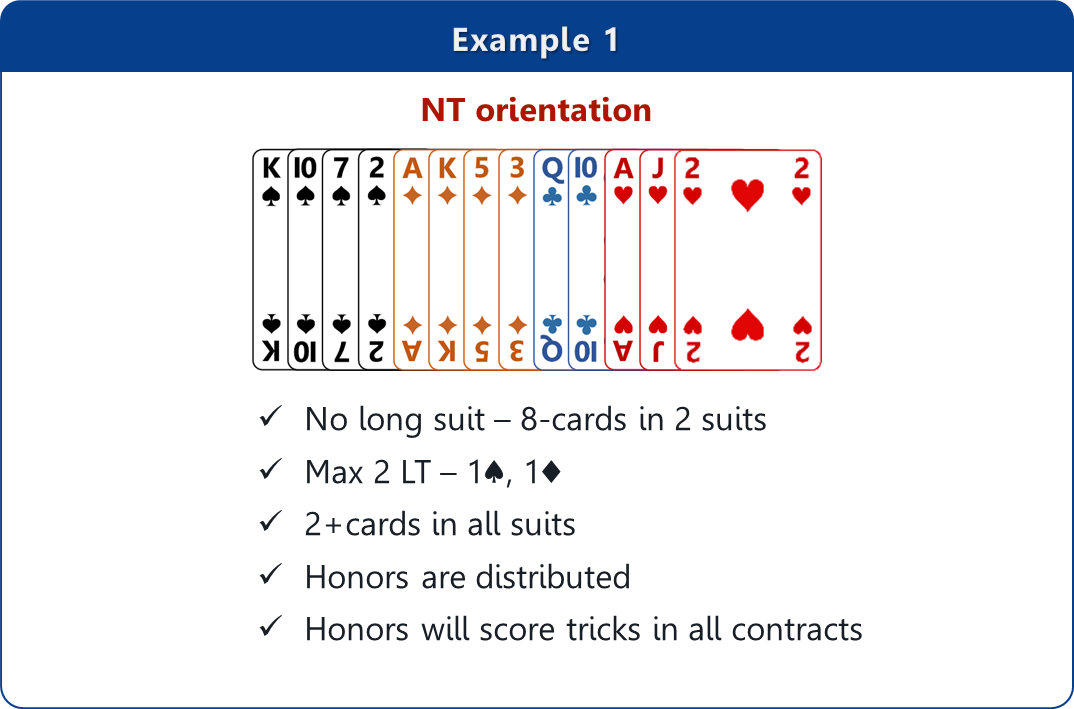
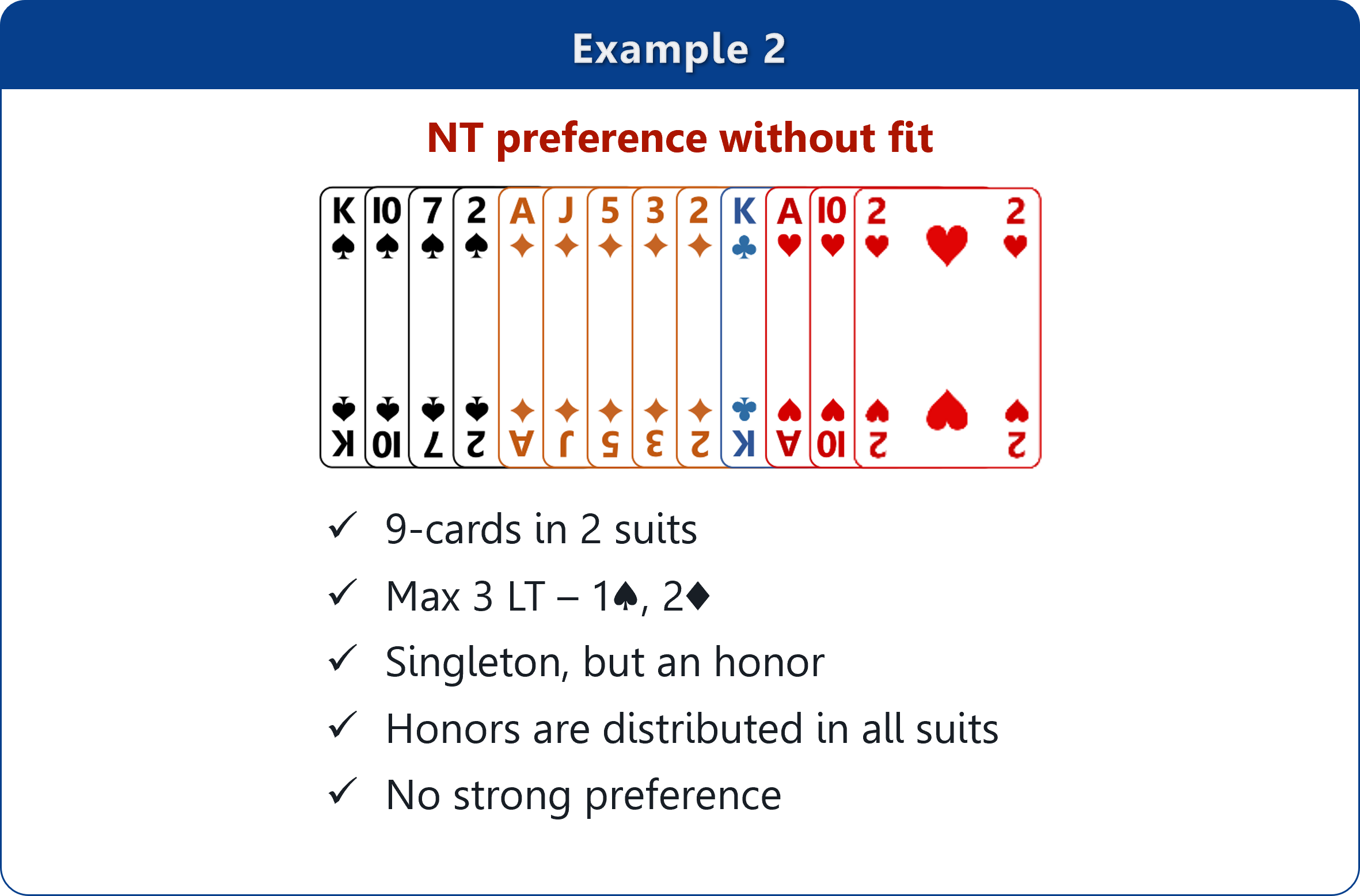
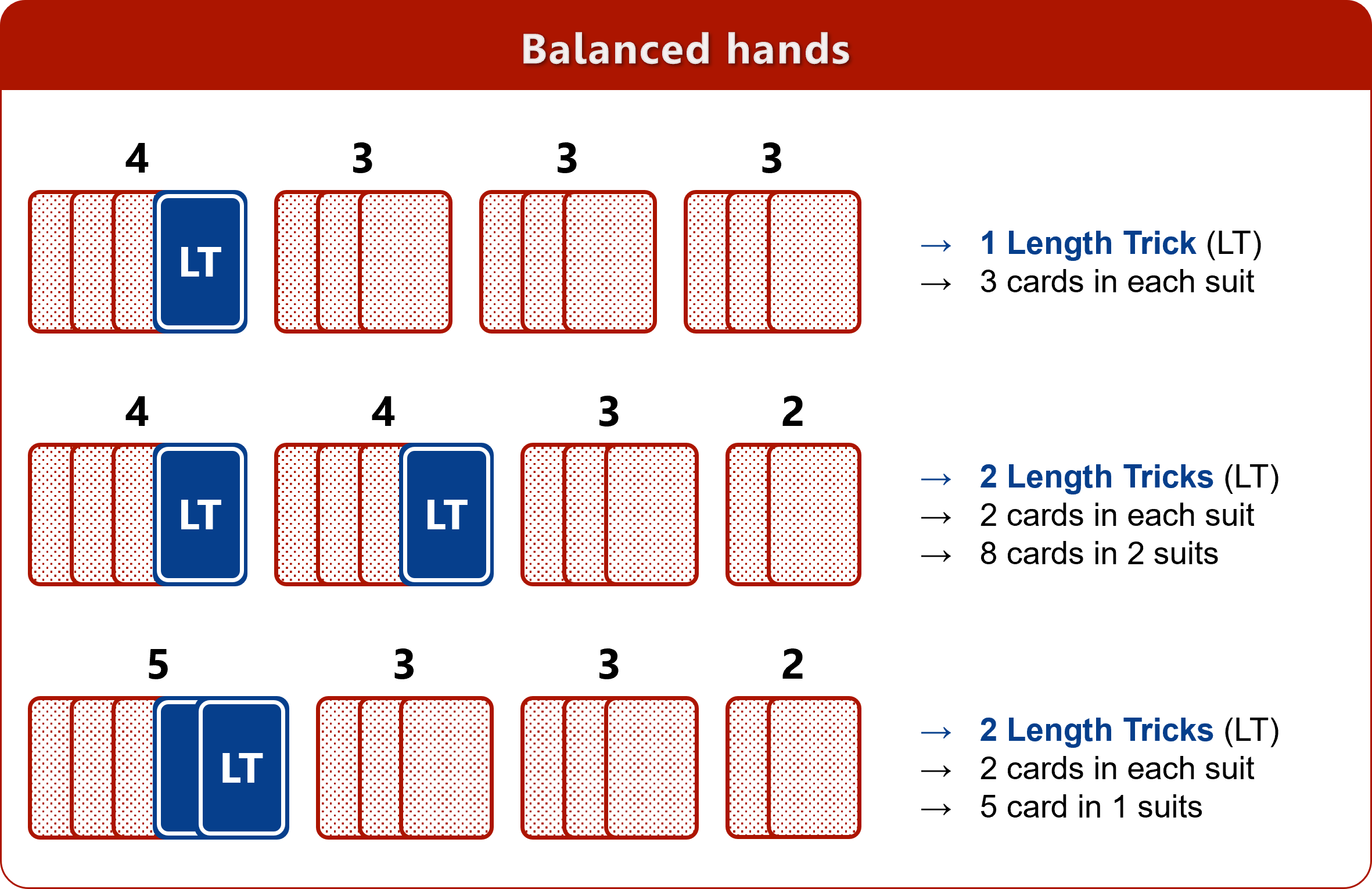
⇒ No trumps oriented (~balanced) – max 3 LT, no shortness, honors distributed, we win about the same amount of tricks in all contracts.
Mostly 4333, 4432, 5332 patterns, sometimes 5422, 6322 patterns, and special pattern that does not fit anywhere – 4441.
⇒ Trumps oriented (unbalanced) – (3)4+ LT, at least one shortness, Honors concentrated in 1-2 suits, we win more tricks if our suit becomes trumps.
Hands with 6+card in one suit or 9+ cards in 2 suits with shortness.
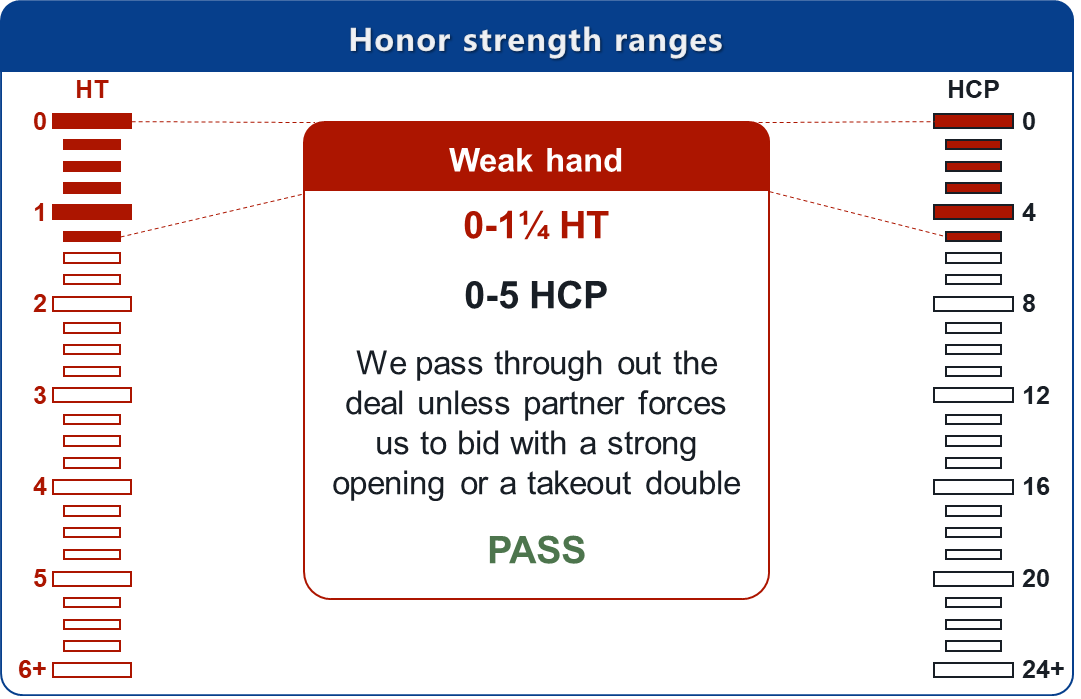
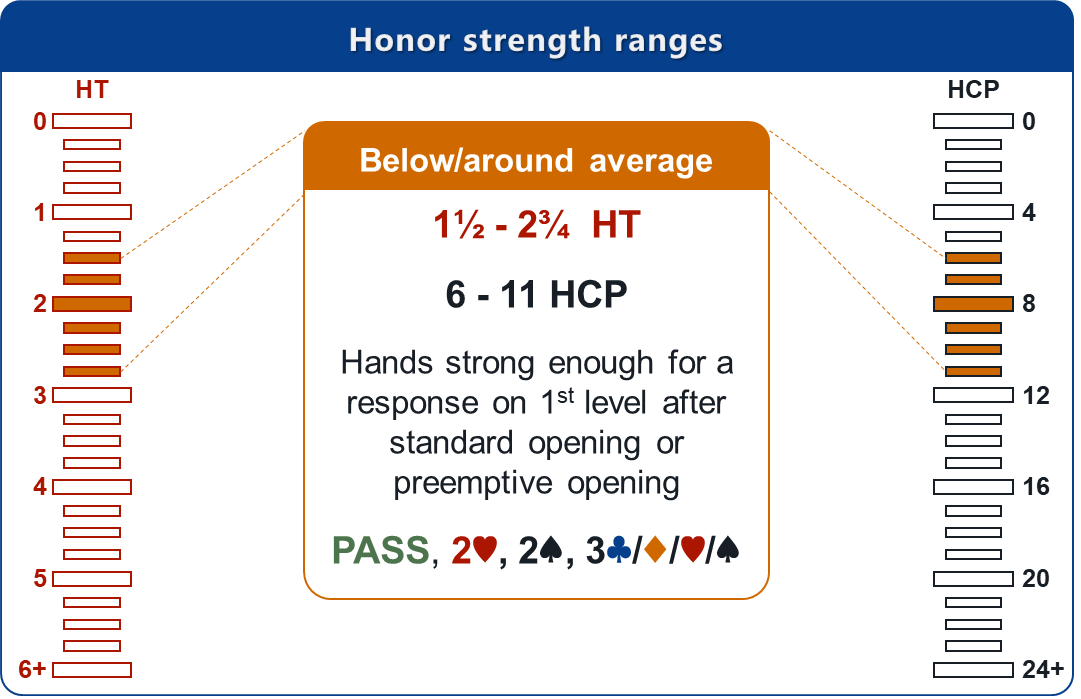
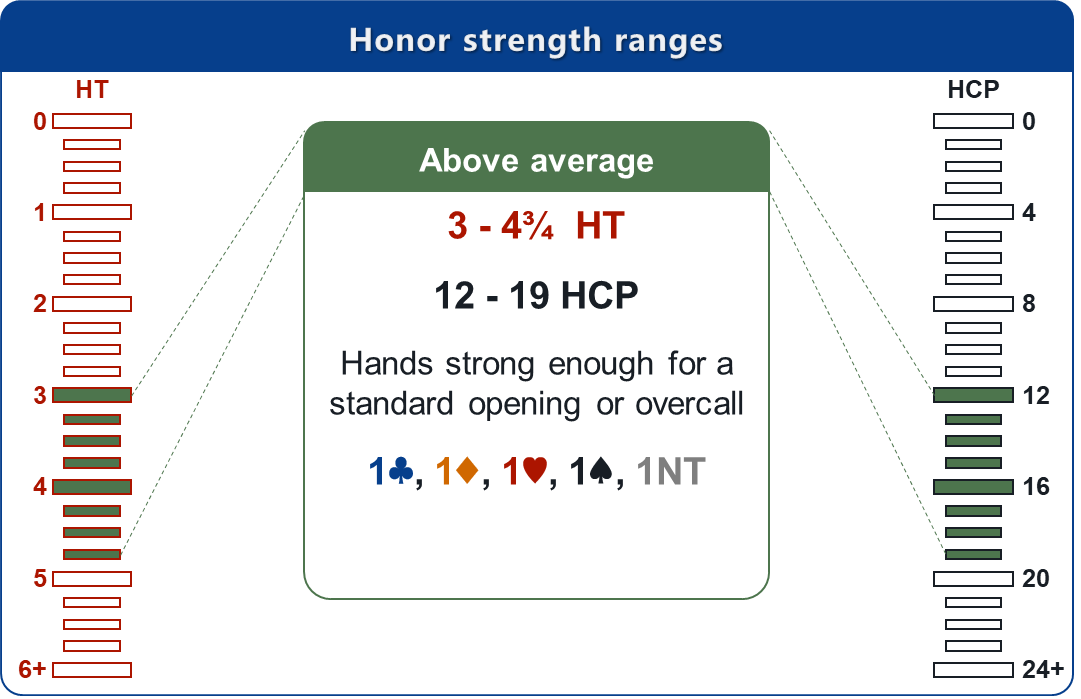
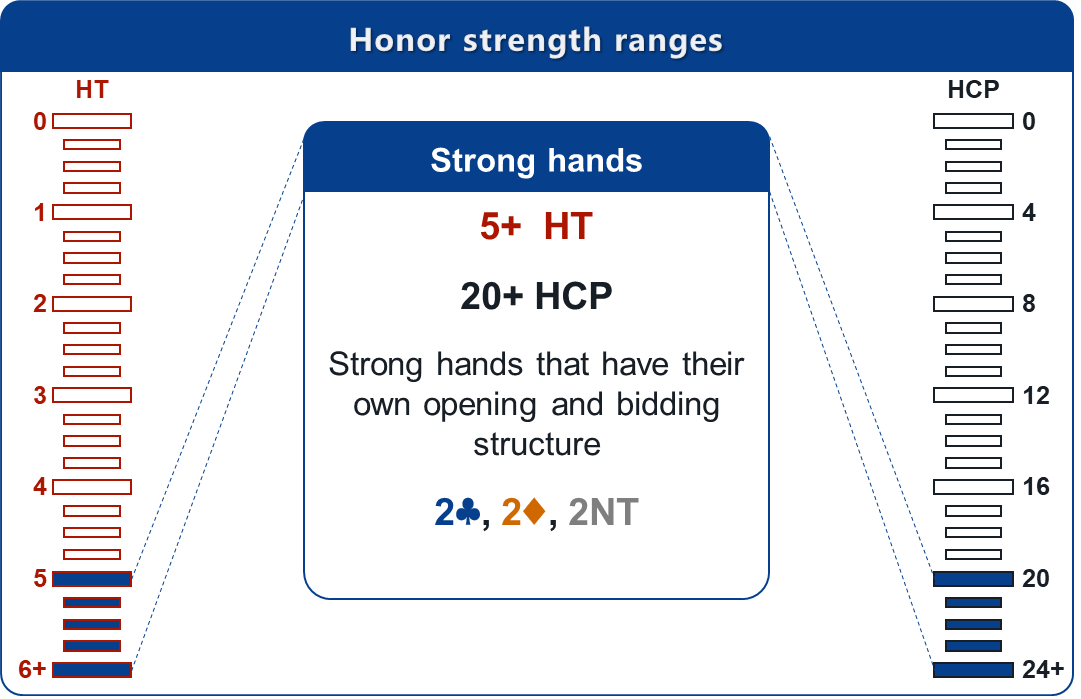
Remember
⇒ Weak – 0-5 HCP, 0-1.25 HT
⇒ Below/around average – 6-11 HCP, 1.5-2.75 HT
⇒ Above average – 12-19 HCP, 3-4.75 HT
⇒ Strong – 20+ HCP, 5+ HT
⇒ Each of the ranges/intervals can be narrowed down to: a minimum, extras, a maximum
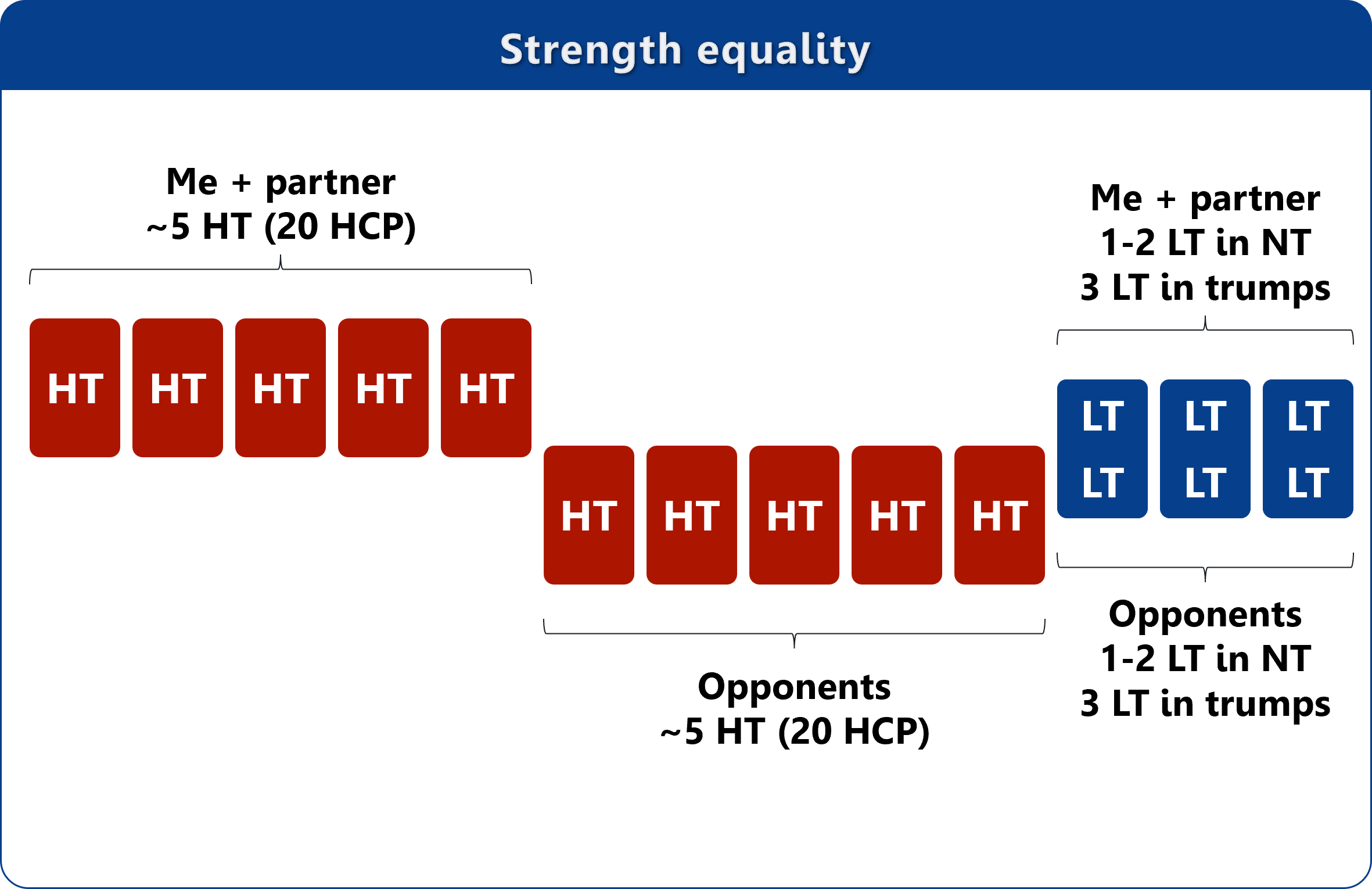
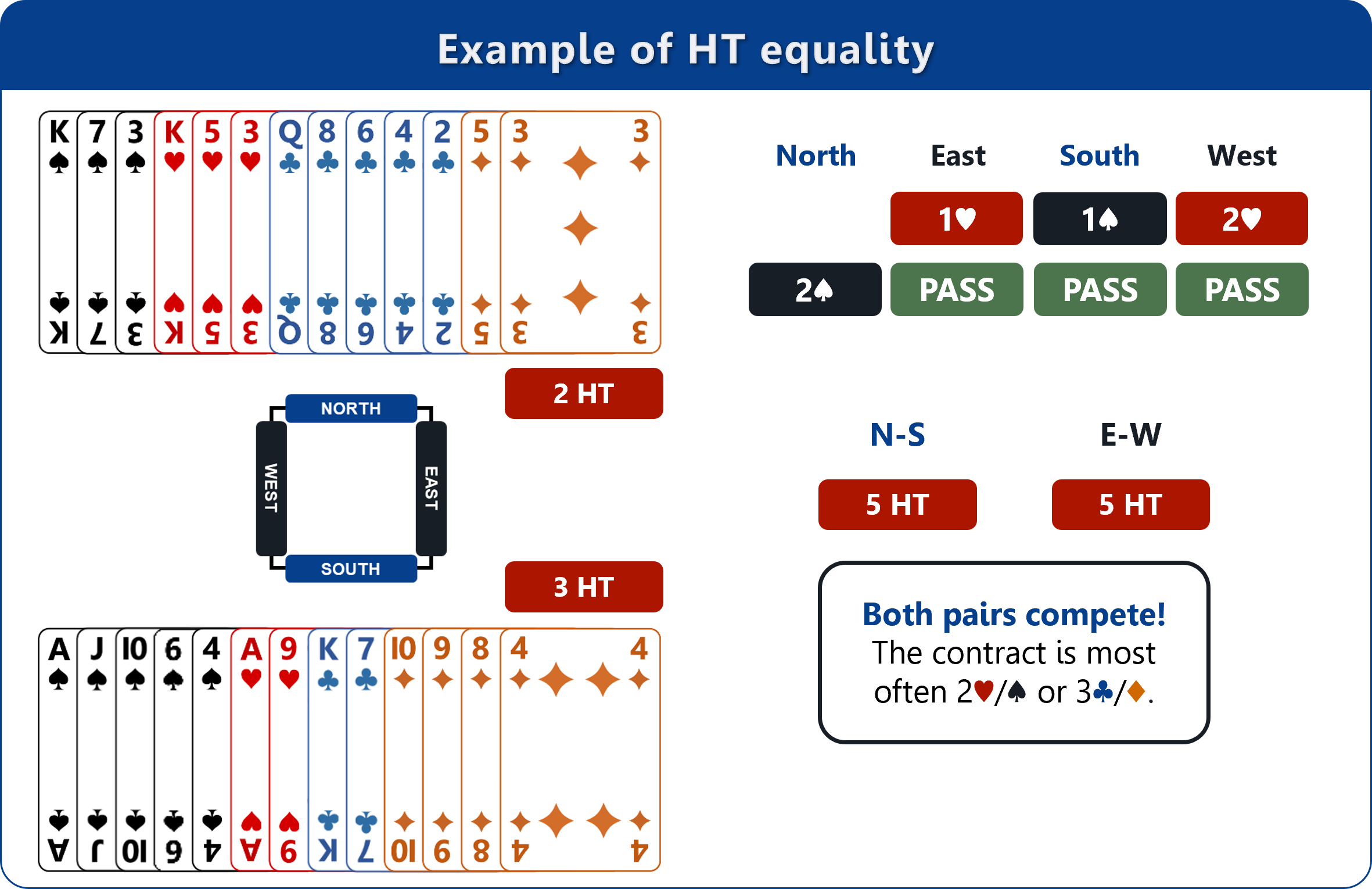
Remember
⇒ Strenght equality – ~5 HT (~20 HCP) for both pairs. There is most often a fight for the contract and for the length tricks.
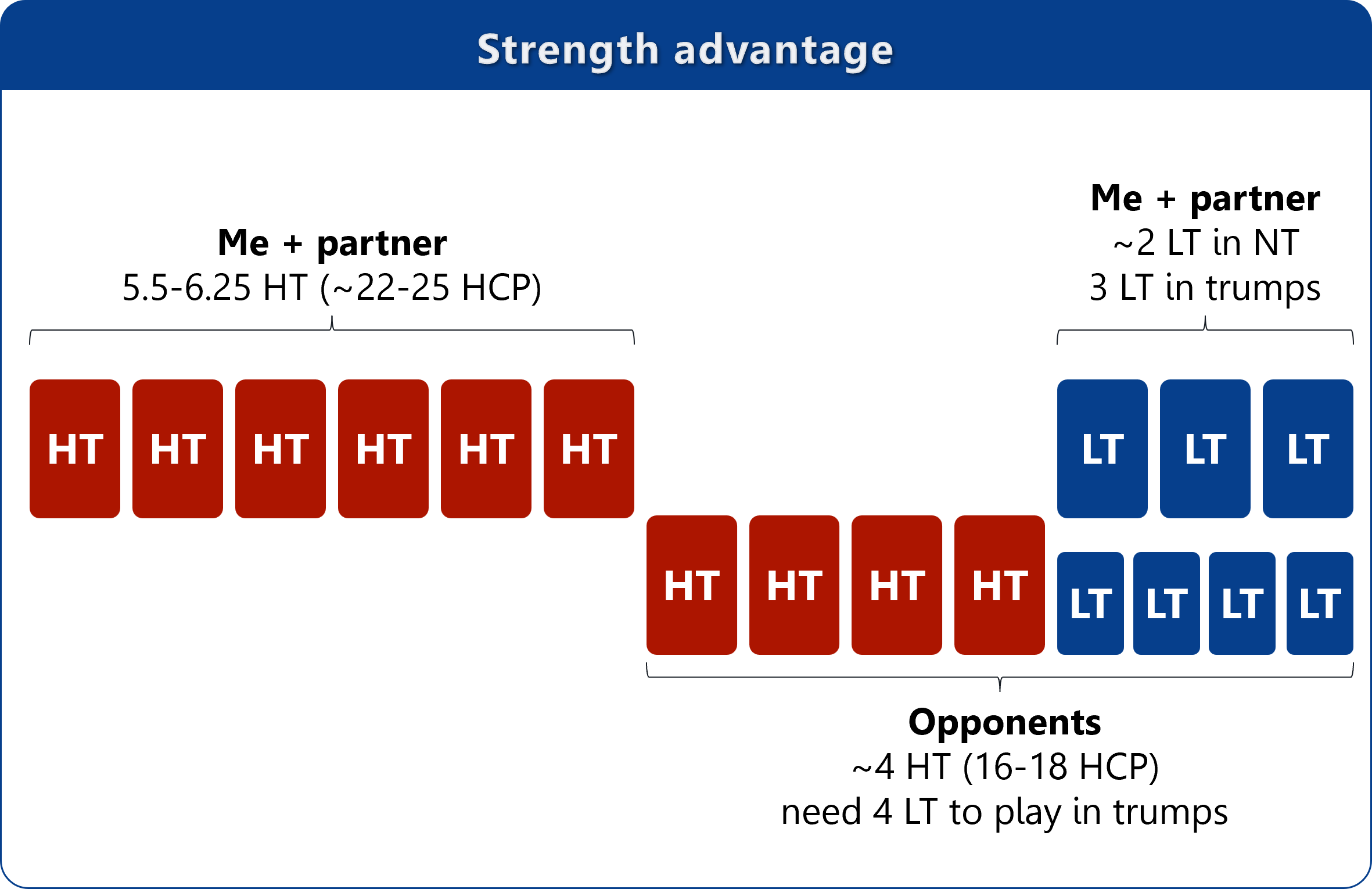
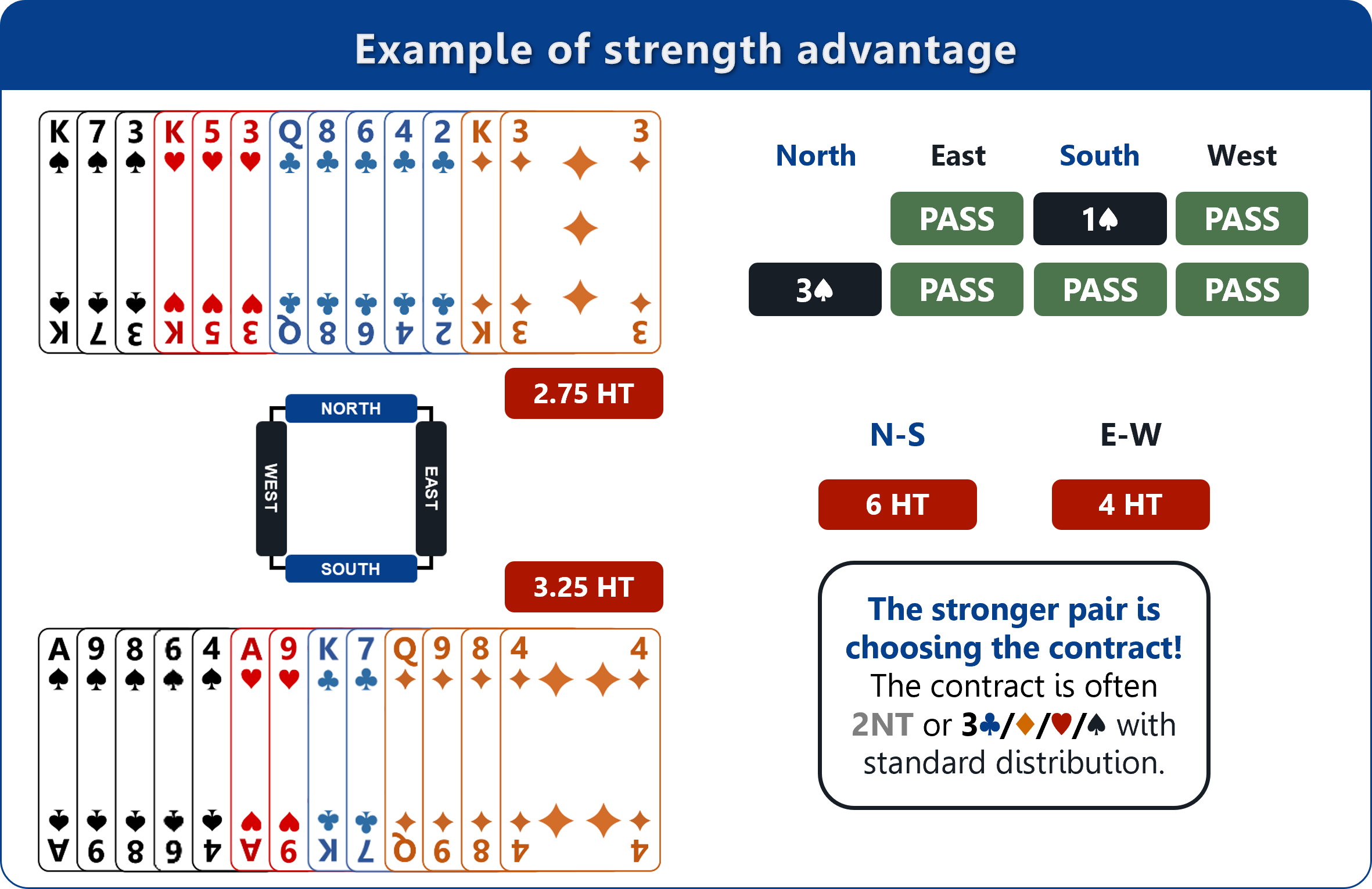
⇒ Strength advantage – 5.5-6.25 HT (22-25 HCP) in favor of one pair. That pair often wins the bidding in 2NT or 3rd level trump contract. The weaker pair need 4+ LT for making a contract.
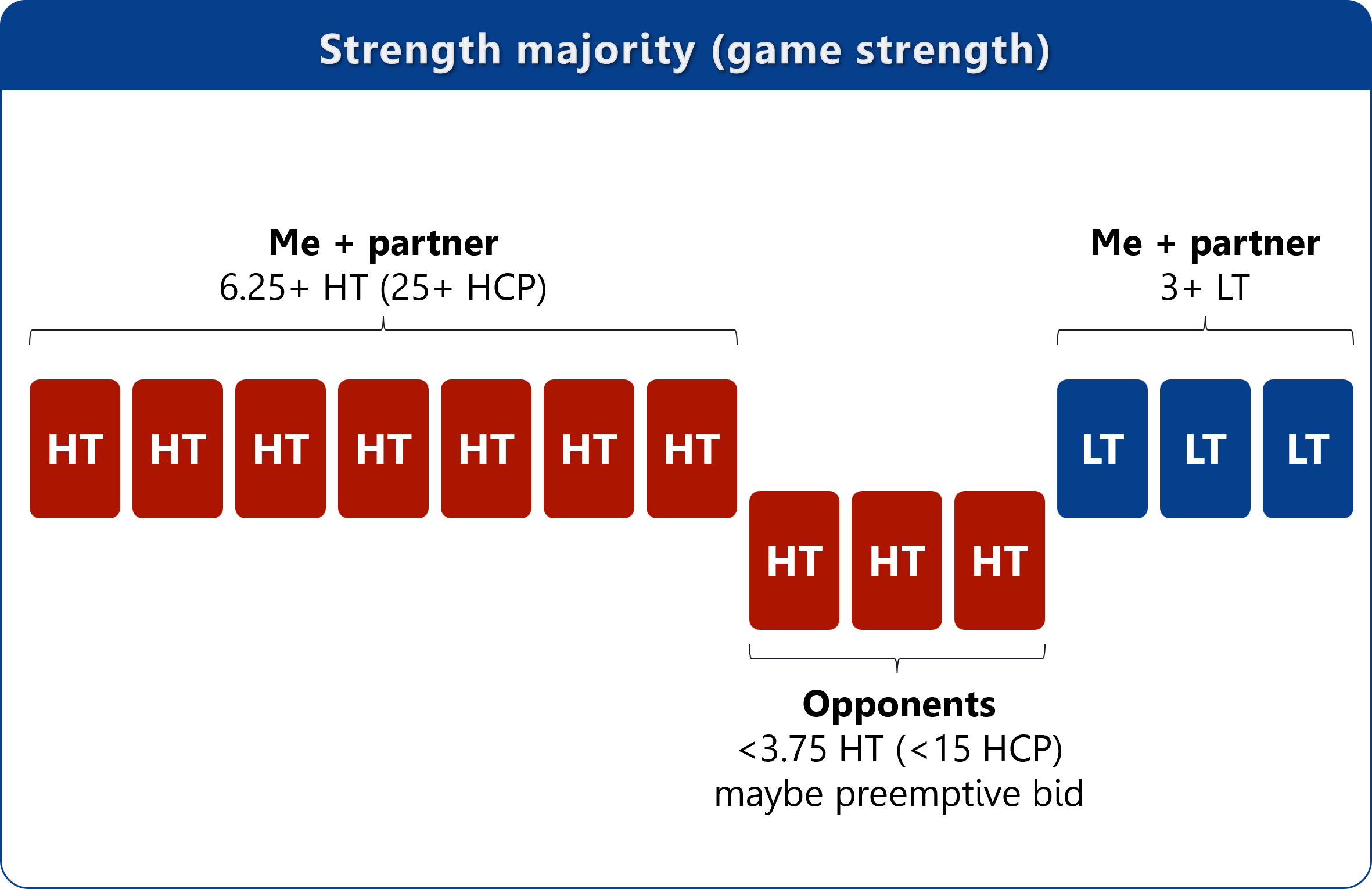
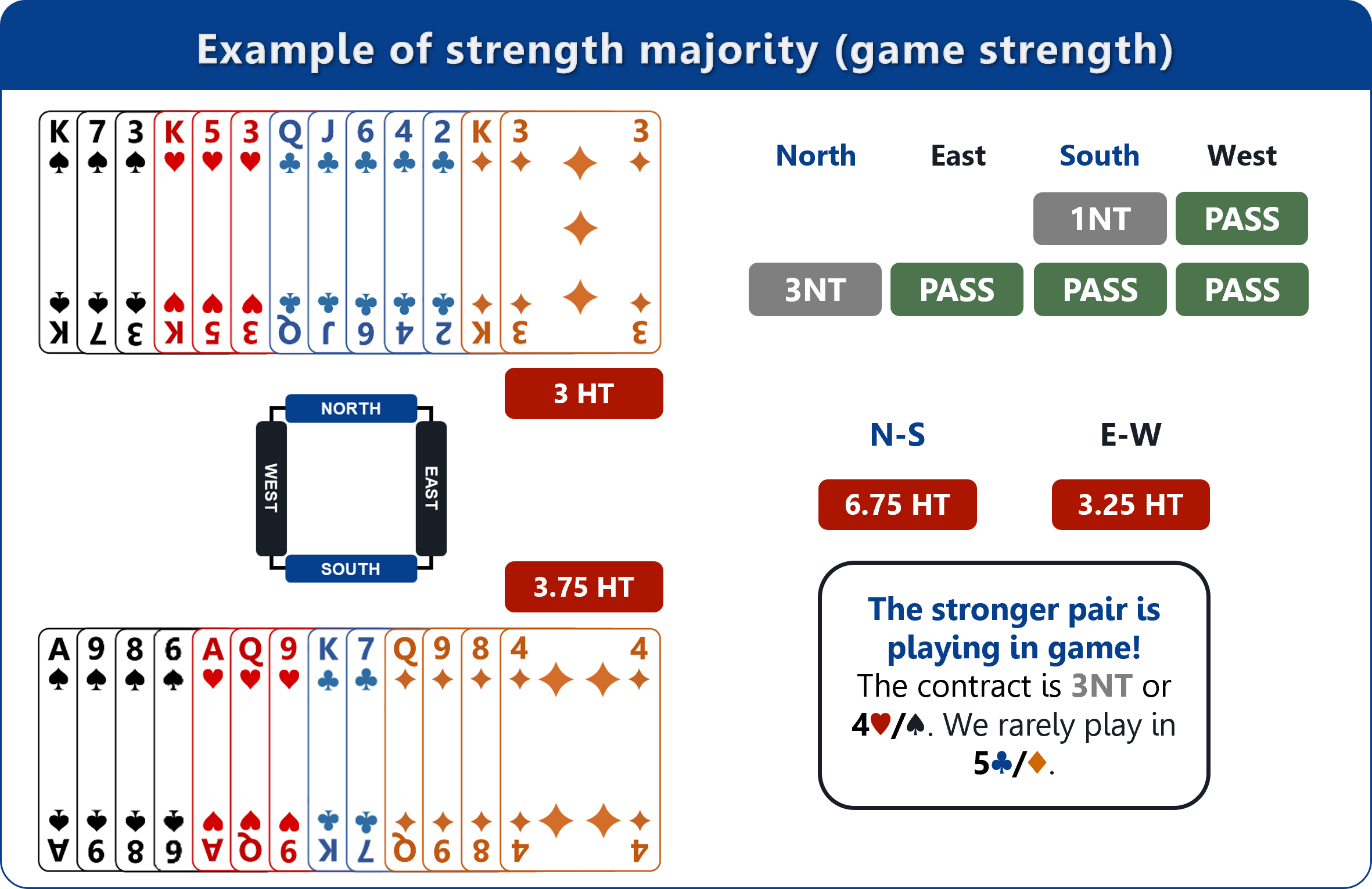
⇒ Strength Majority (game strength) – 6.25+ HT (25+ HCP) in favor of one pair. That pair is playing in a game, most often 3NT or 4♥/4♠. The weaker pair might bid/preempt, but not win a contract undoubled.
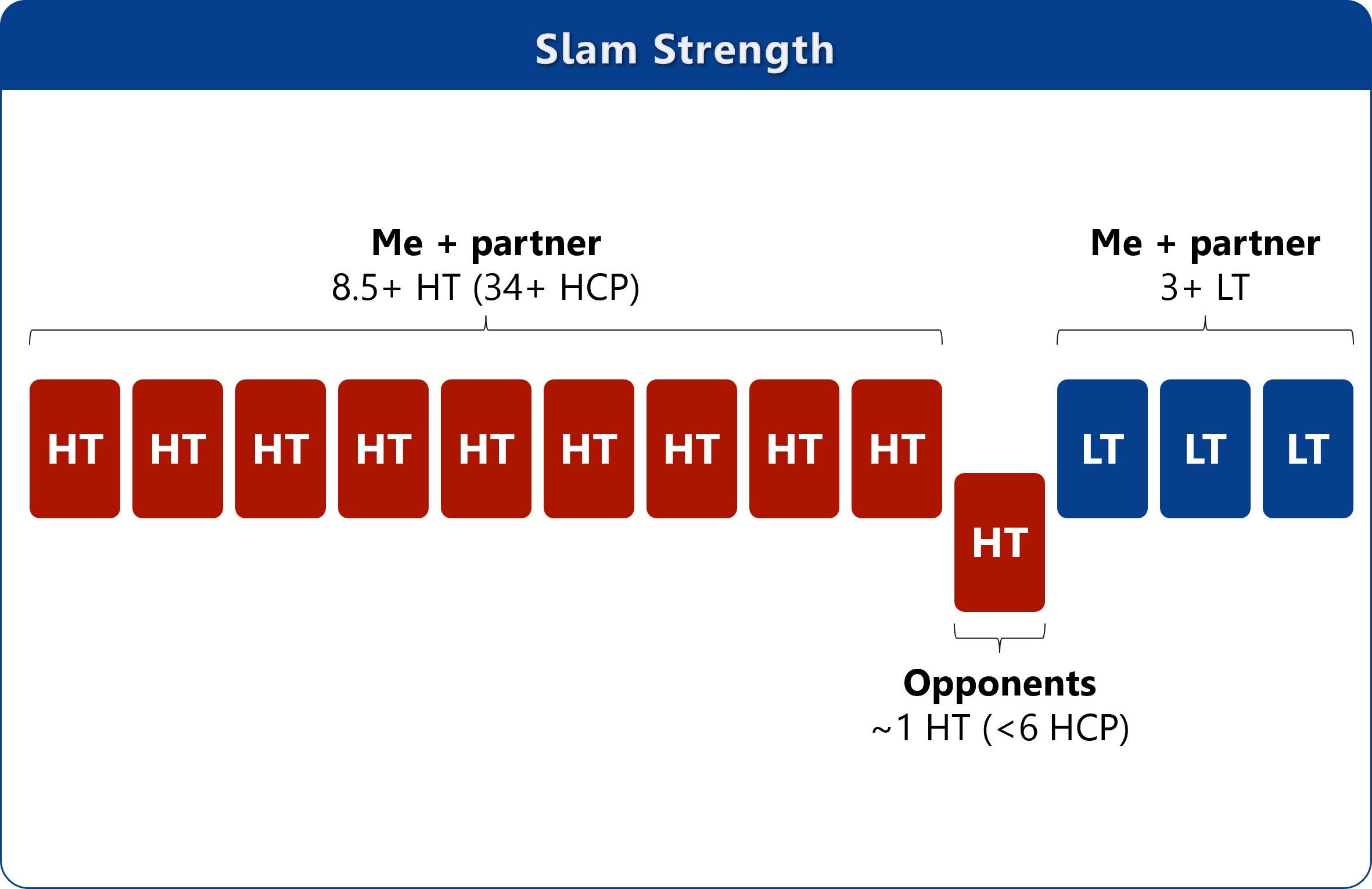
⇒ Slam strength – 8.5+ HT (34+ HCP). One pair has almost all tricks and should try for a slam bonus. Contract on 6th level, potentially grand slam on 7th level.
Advanced hand evaluation
Remember
There are 4 different groups of hand types:
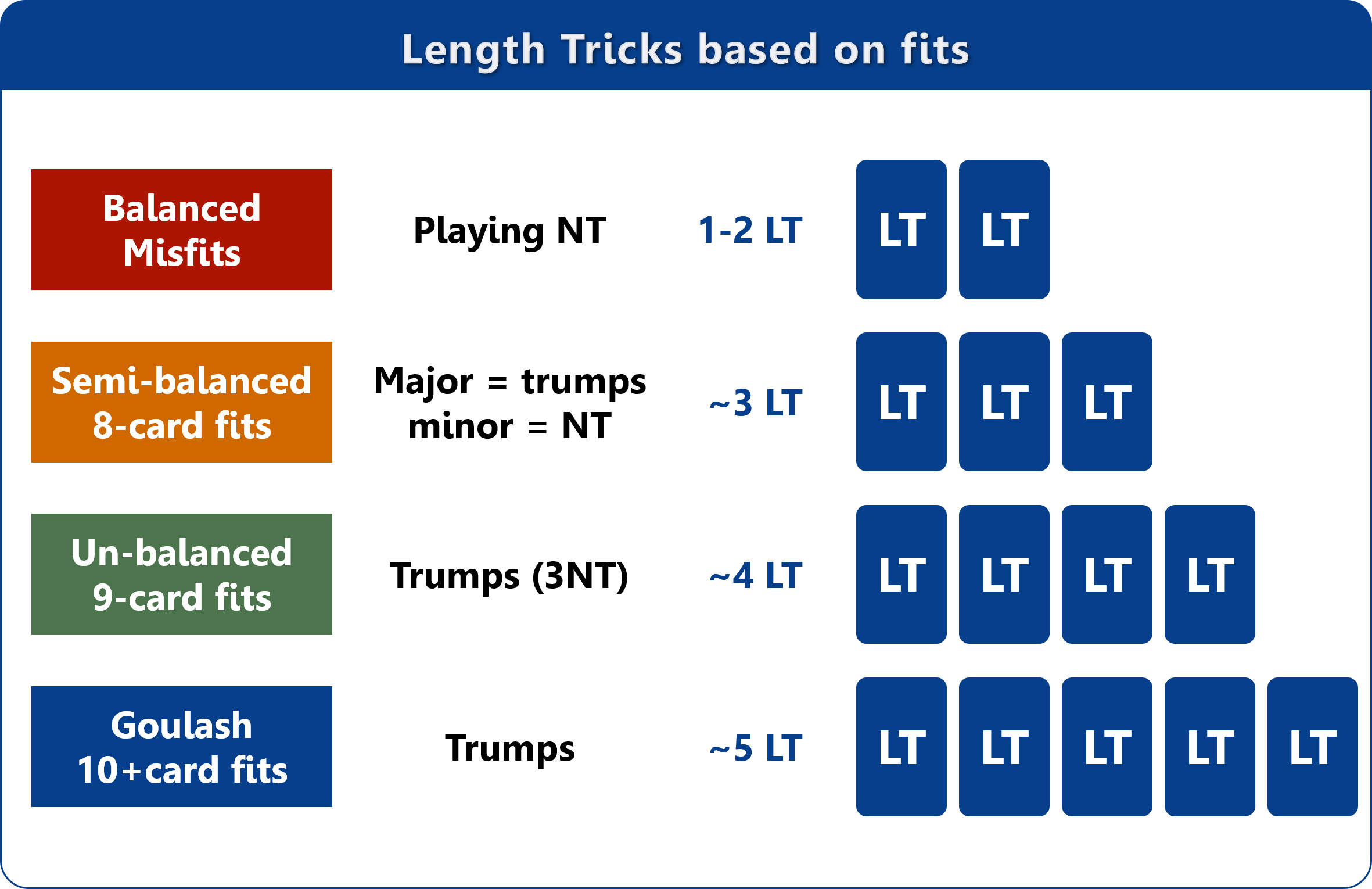
⇒ Balanced hands (BAL) – 4432, 5332, 4333
→ 1-2 LT, 2+ cards in each suit, 8 cards in 2 suits or 5 cards in 1 suit
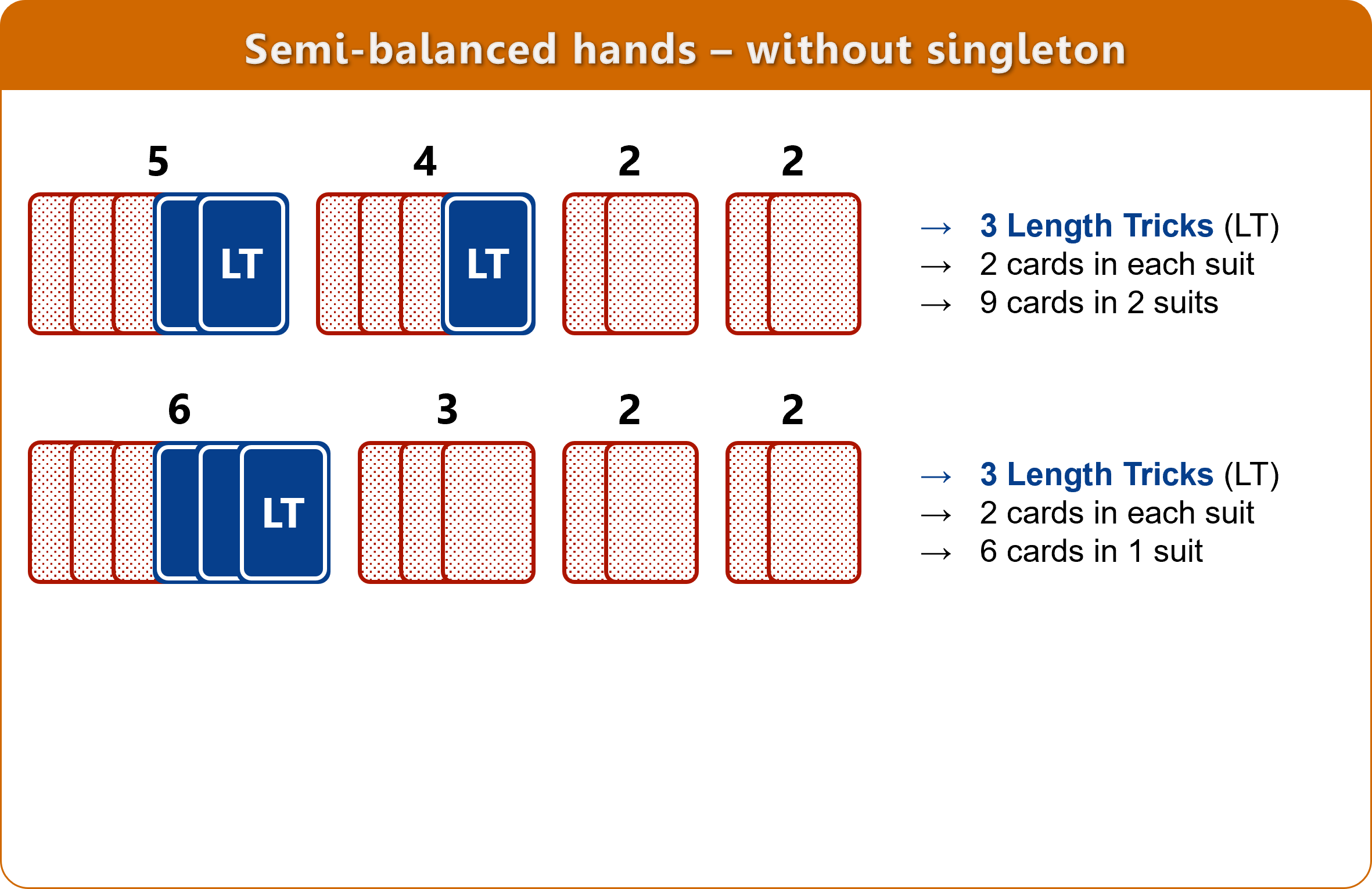
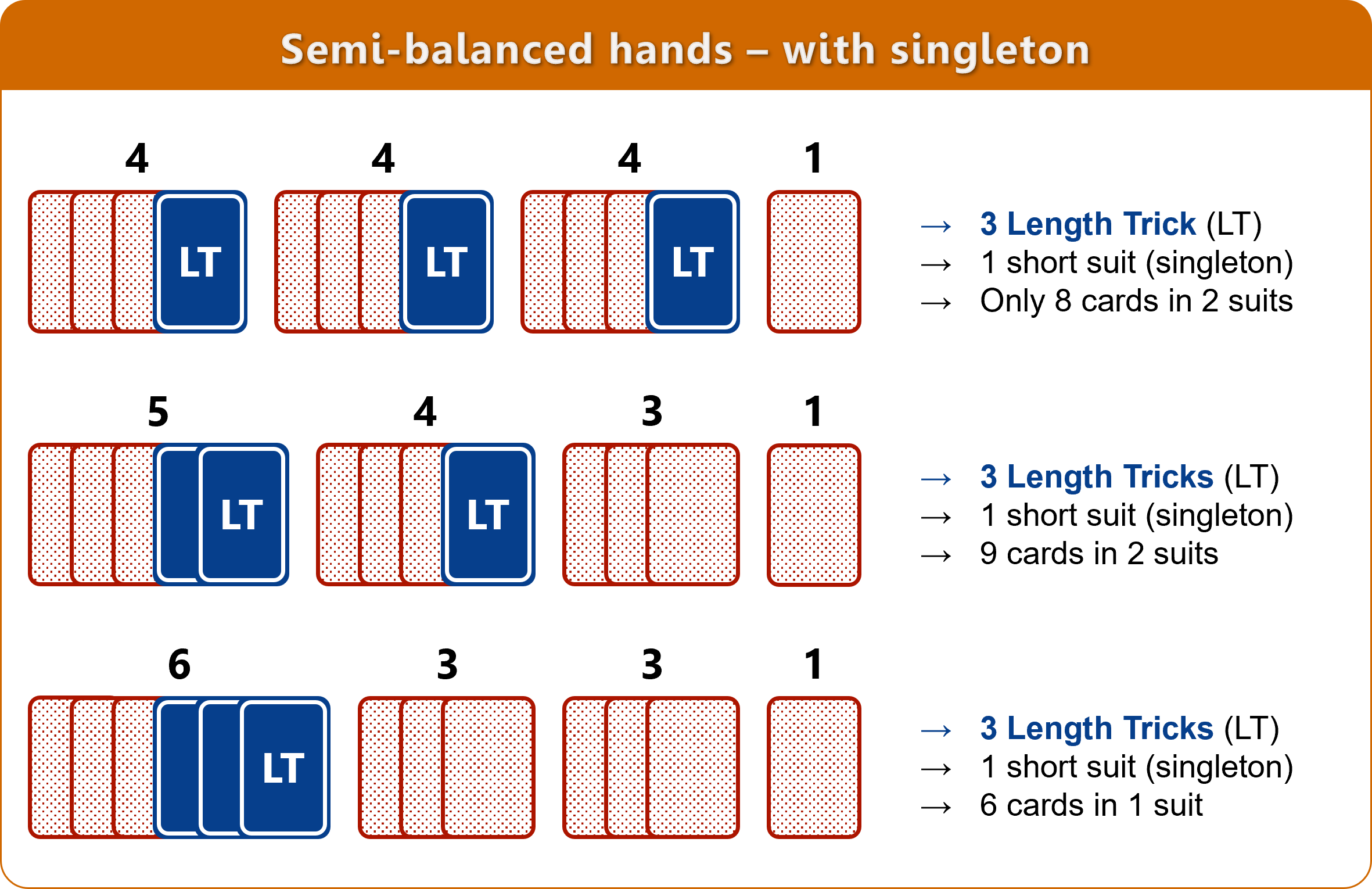
⇒ Semi-balanced hands (SEB) – 5422, 5431, 6322, 6331, 4441
→ 3 LT, 1 singleton or 2 doubletons, 9 cards in 2 suits or 6 cards in 1 suit
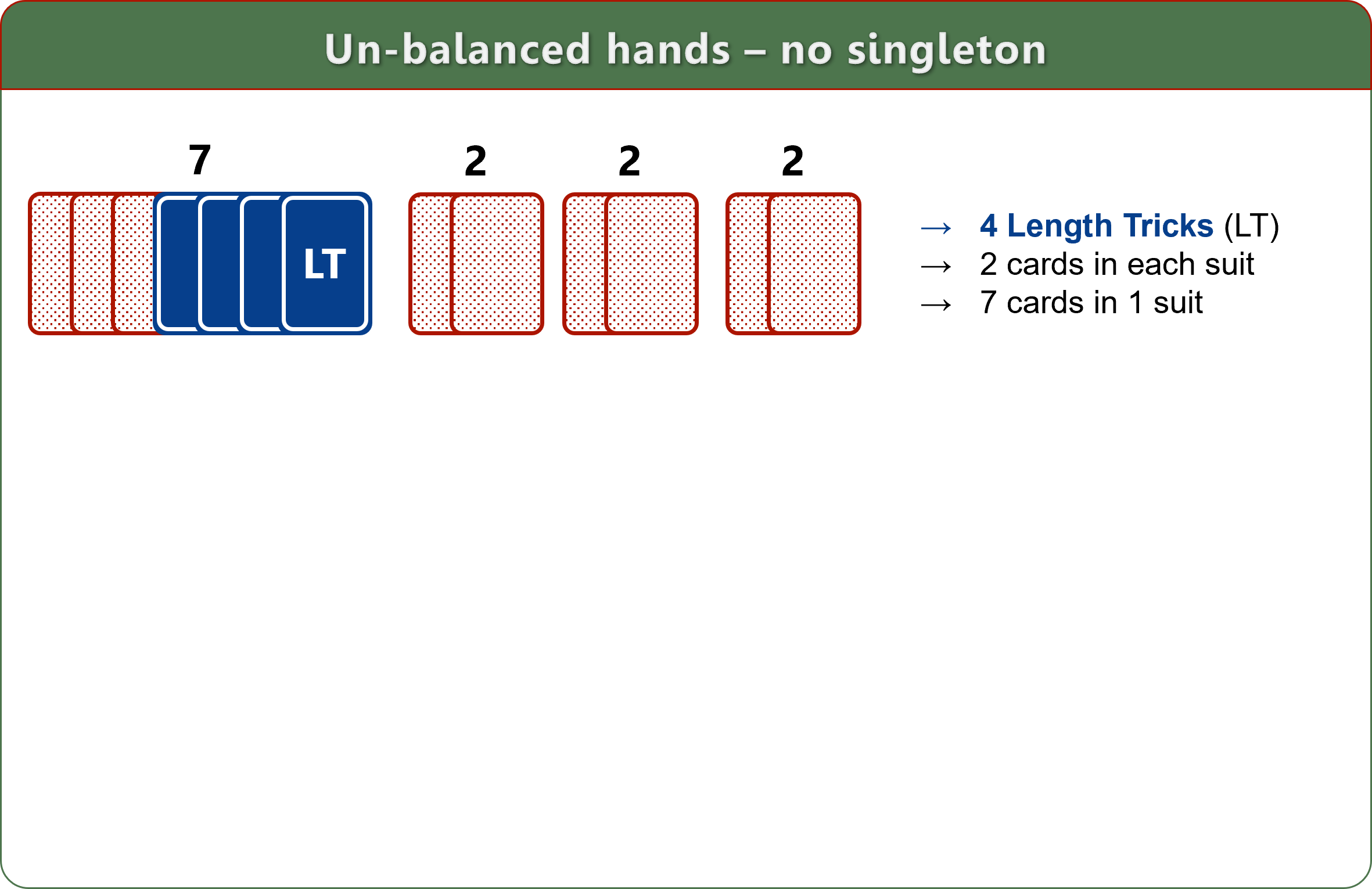
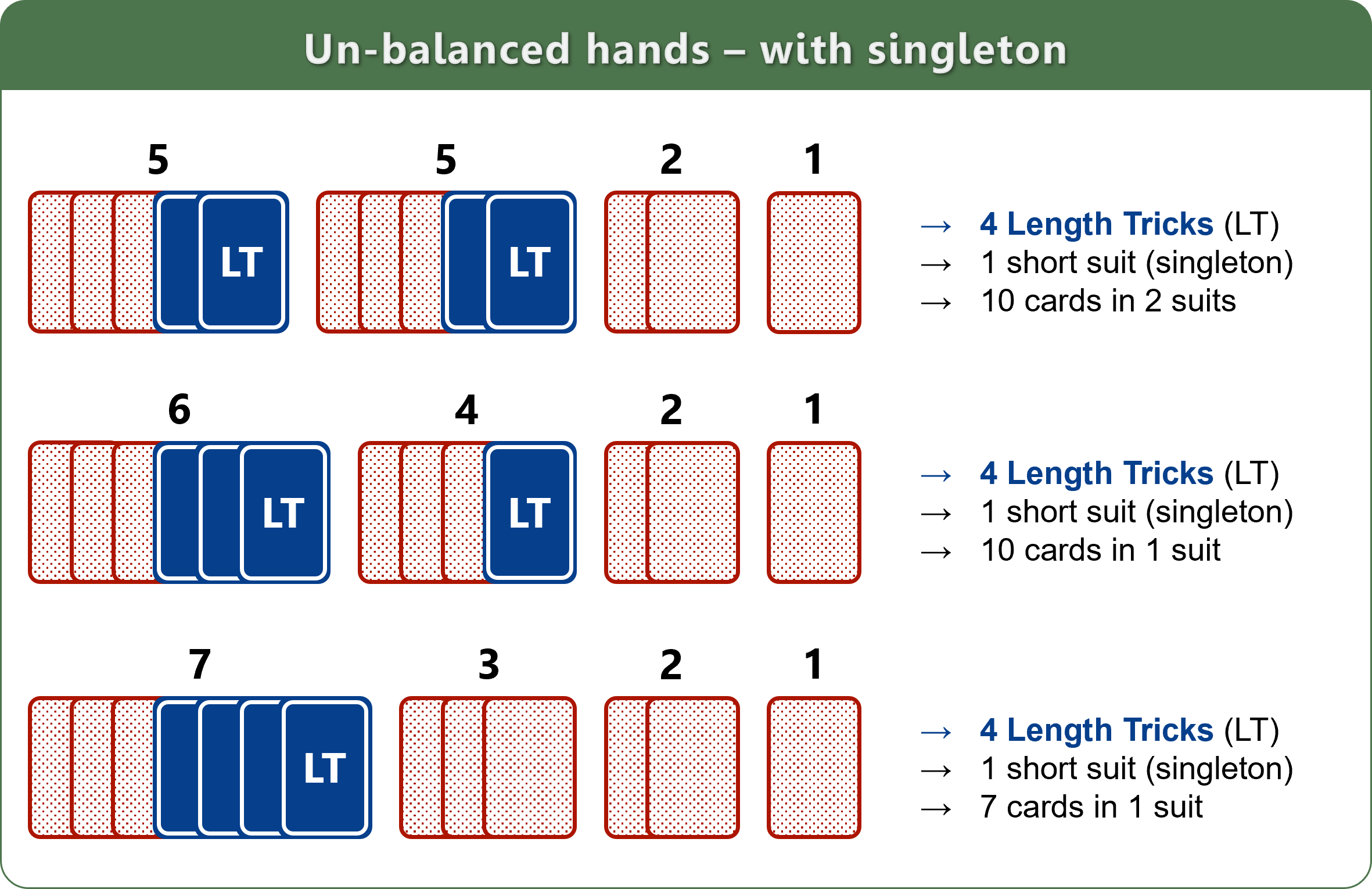
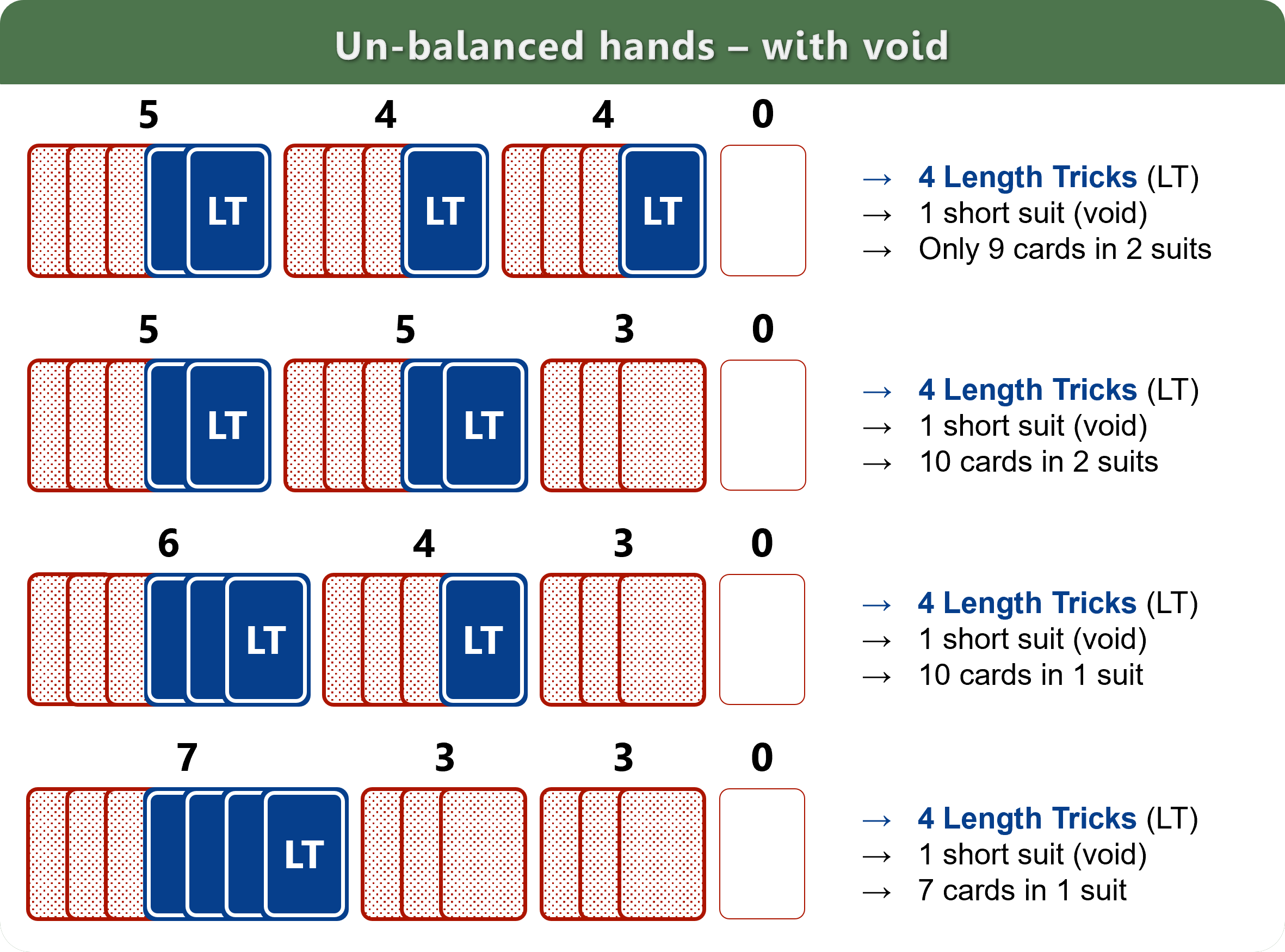
⇒ Un-balanced hands (UNB) – 5521, 5530, 6421, 6430, 7222, 7321, 7330, 5440
→ 4 LT, 1 void or singleton+doubleton, 10 cards in 2 suits or 7 cards in 1 suit
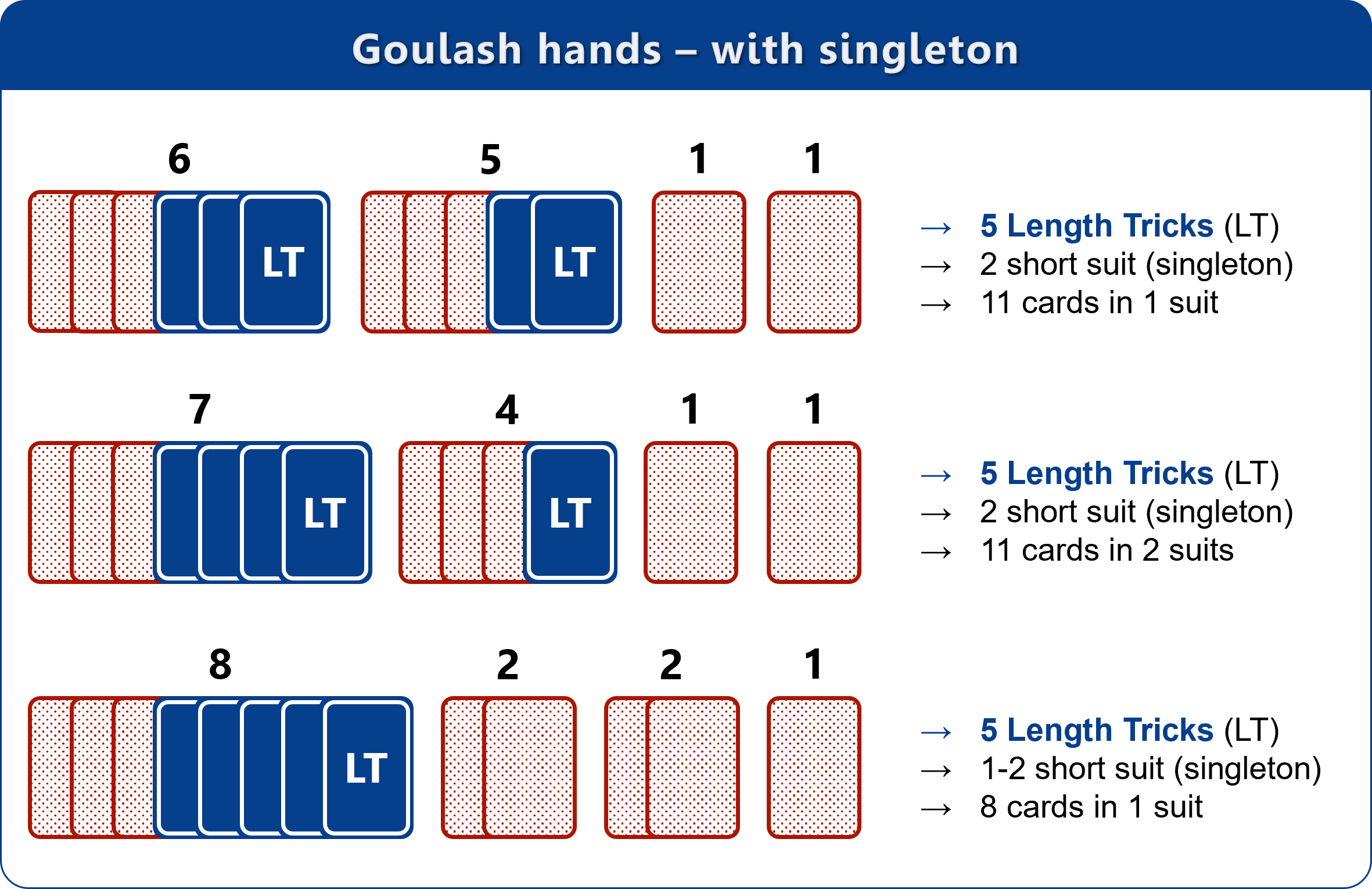
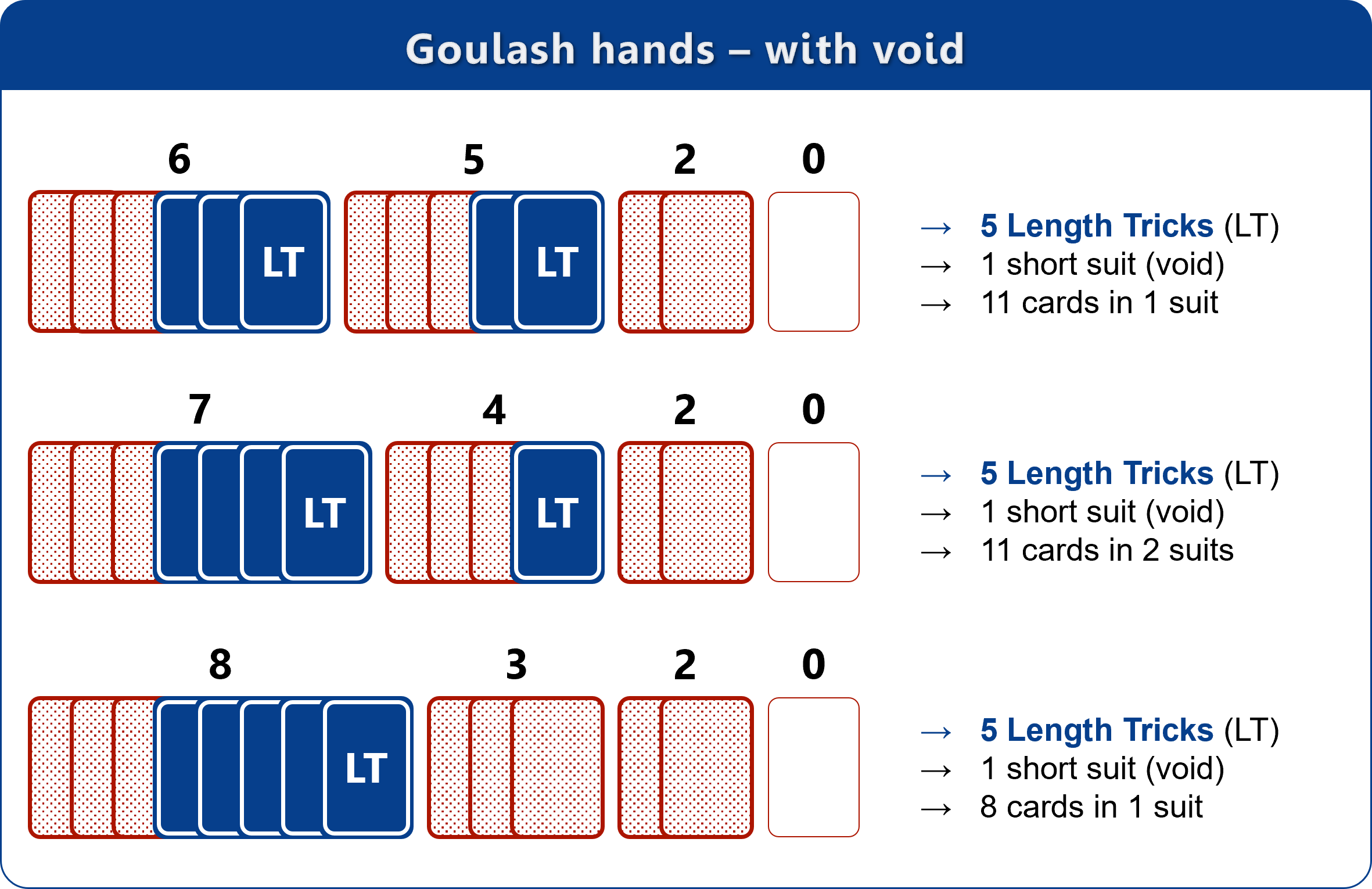
⇒ Goulash hands (GOU) – 65+, 74+, 8+
→ 5 LT, 1 void or 2 singletons, 11 cards in 2 suits or 8 cards in 1 suit
Card play practice
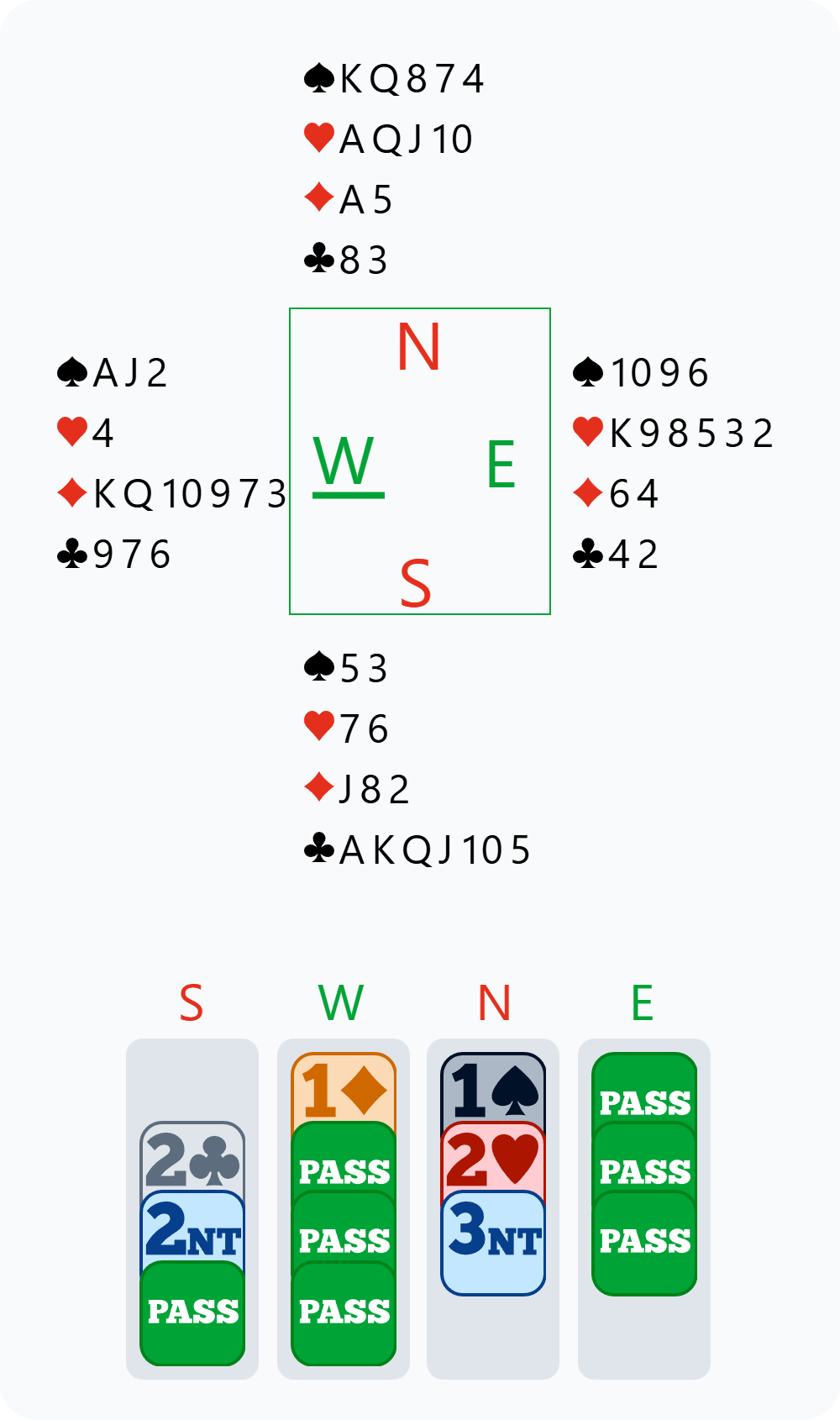
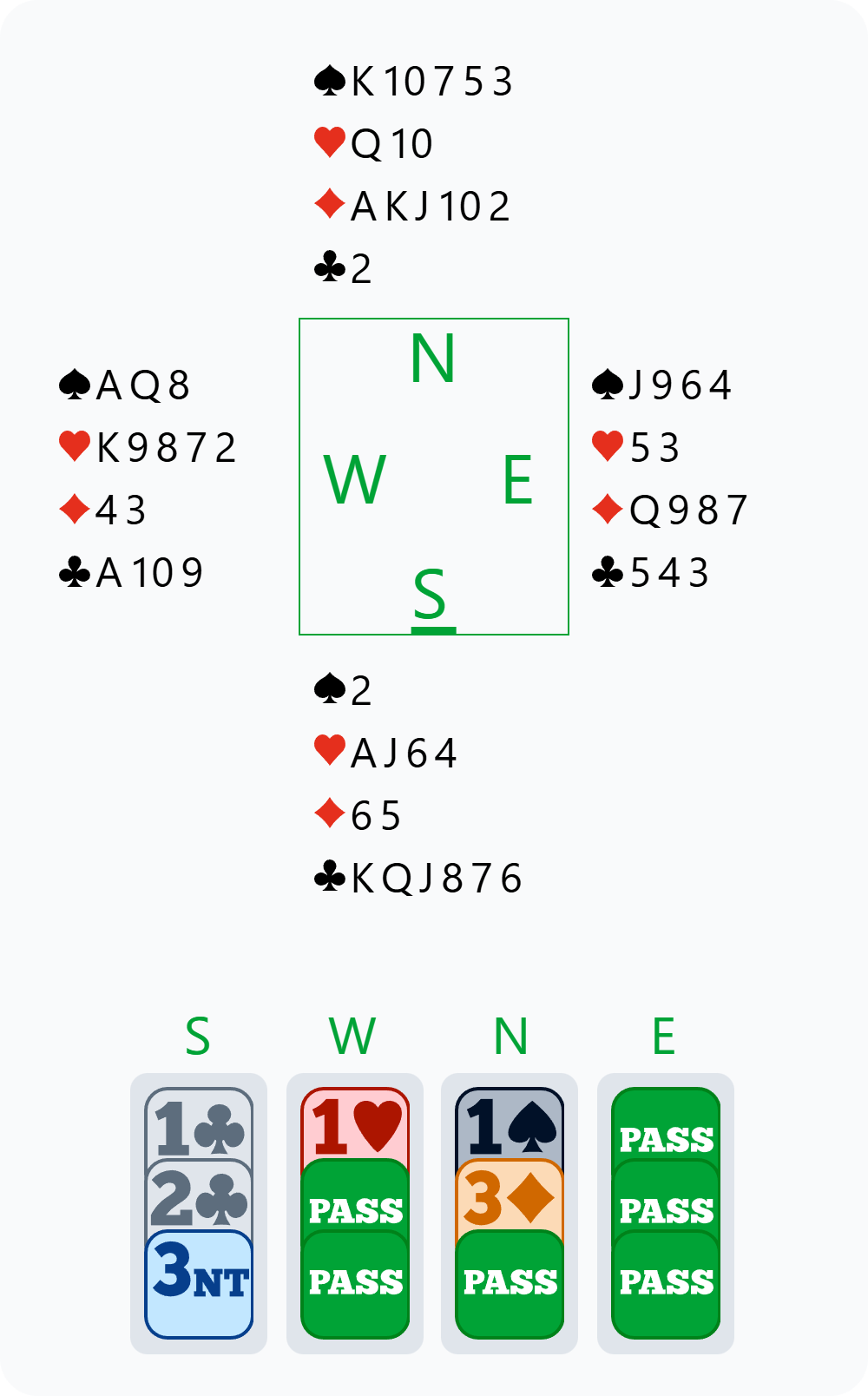
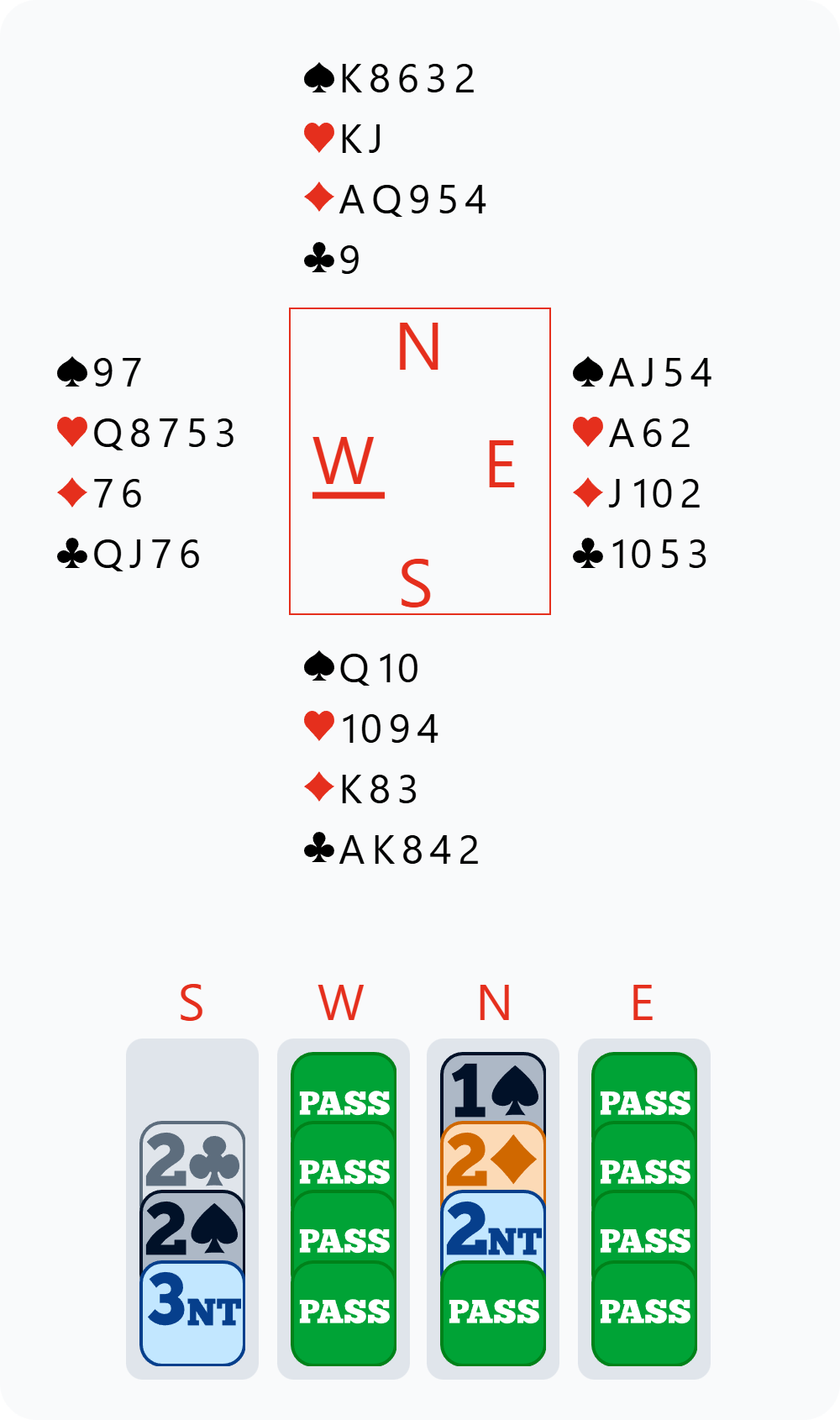
Card play – pre-duplicated
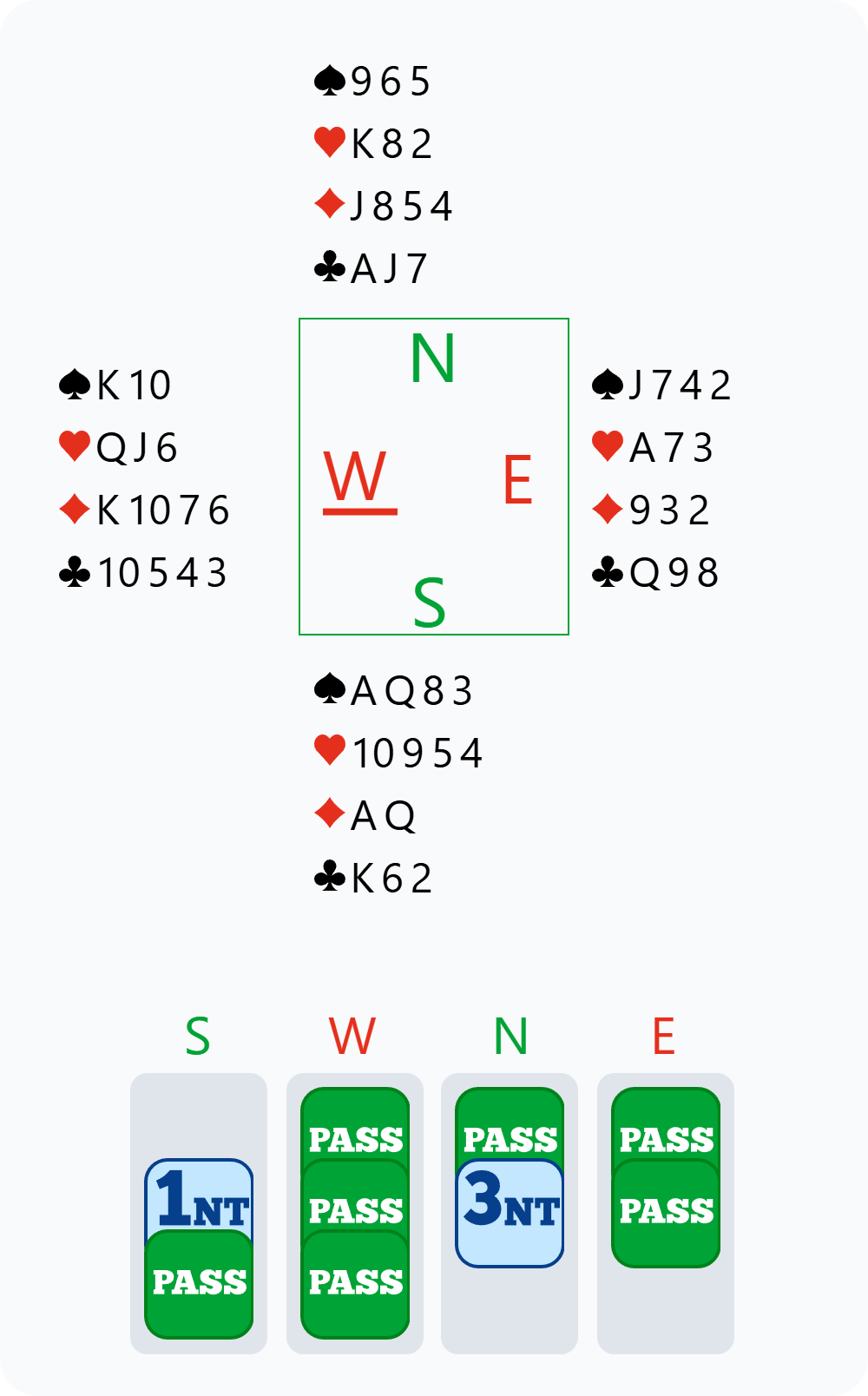
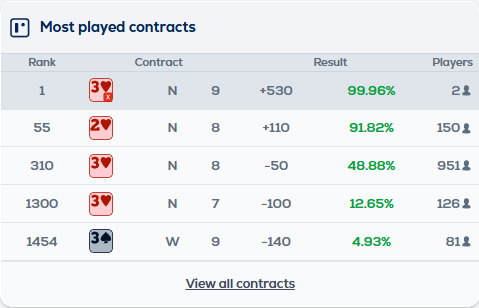
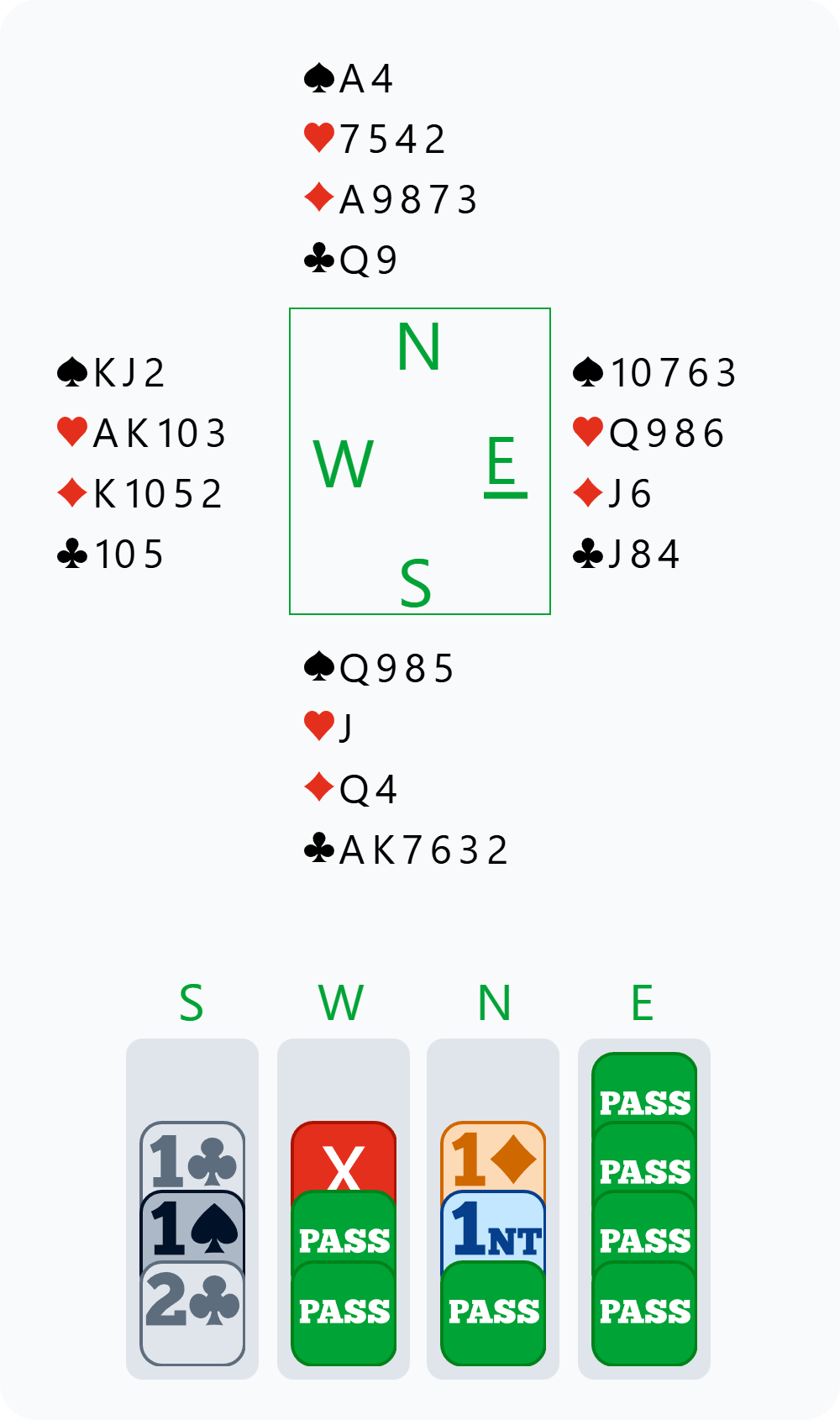
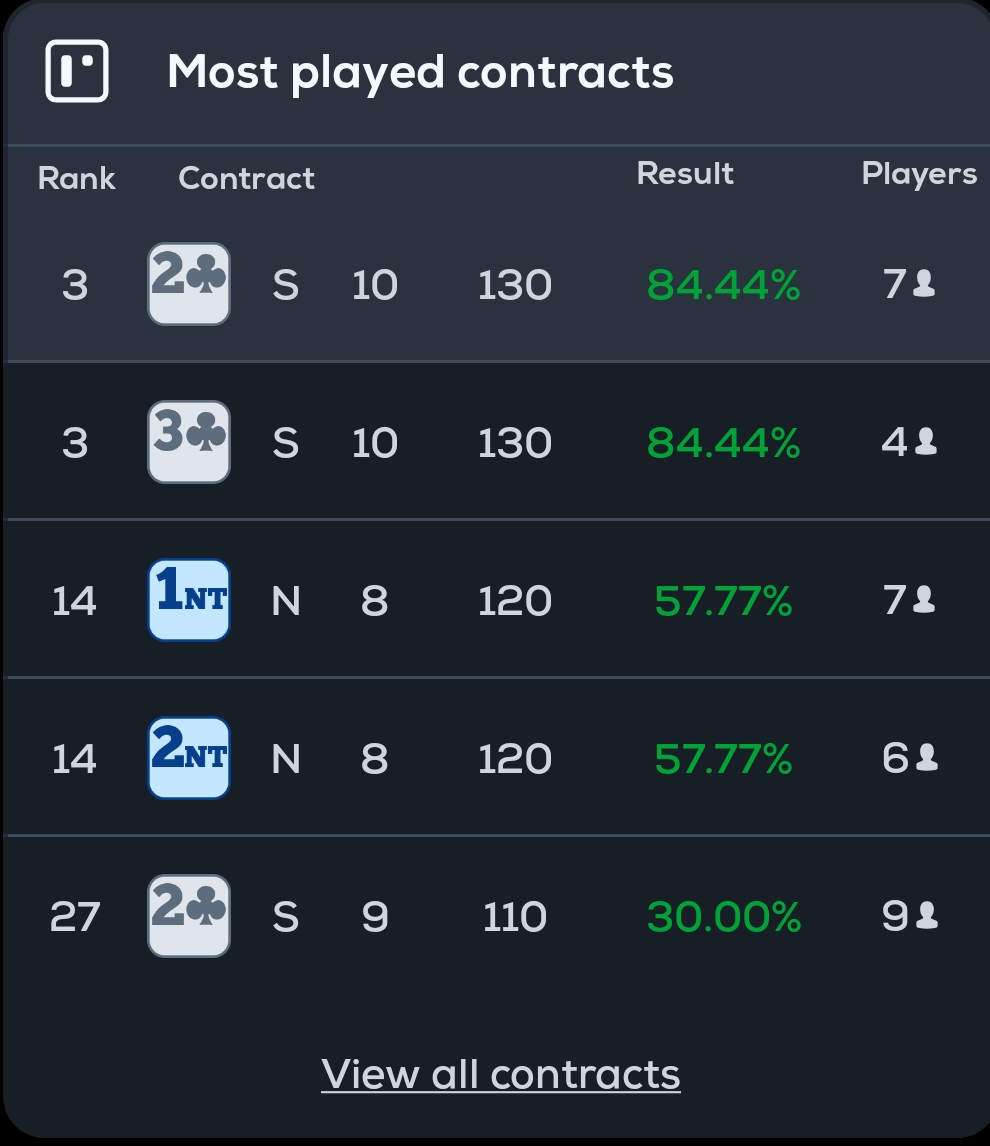
Card play – bonus to play online
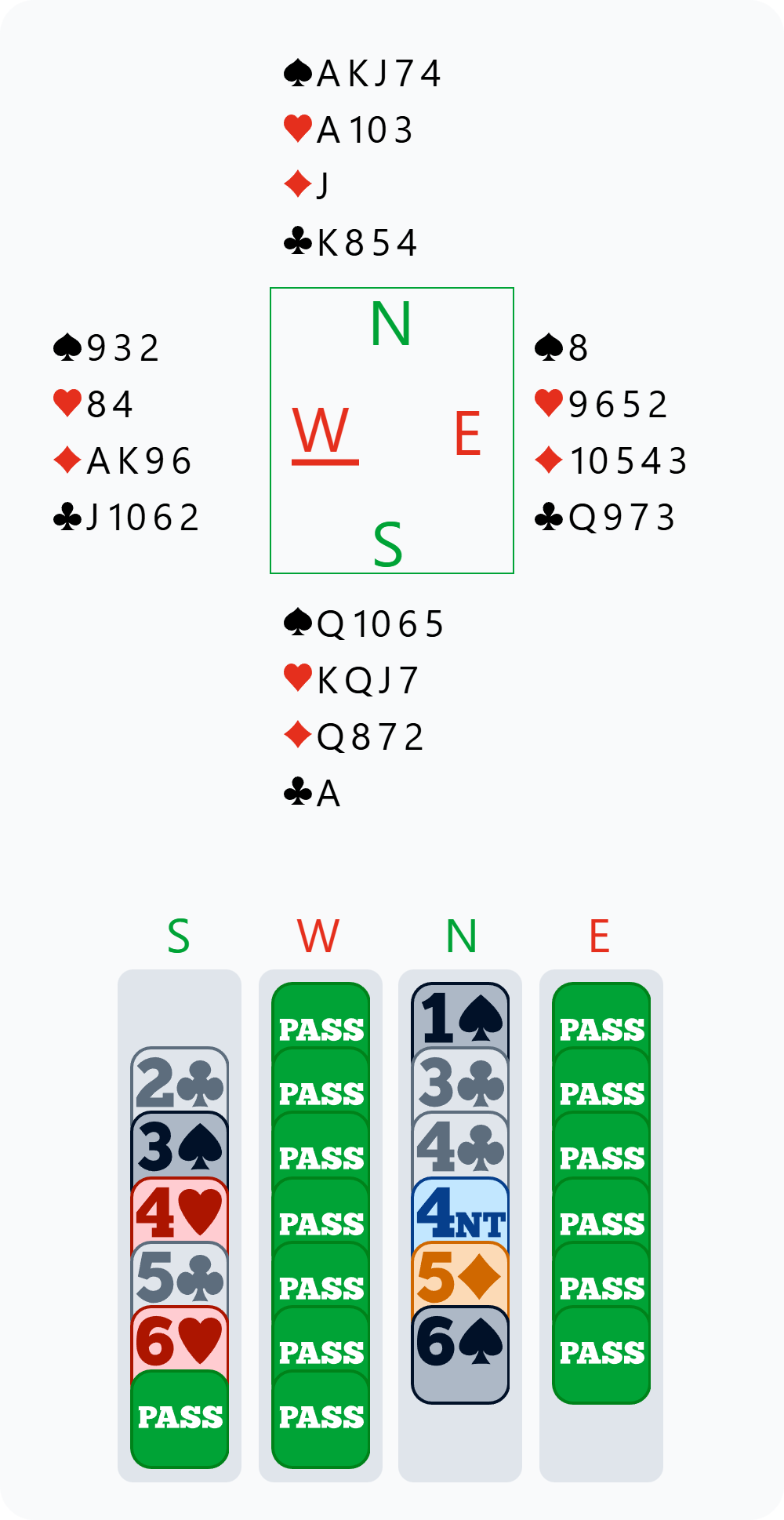
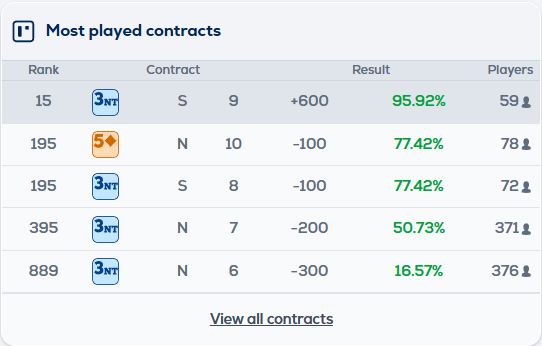
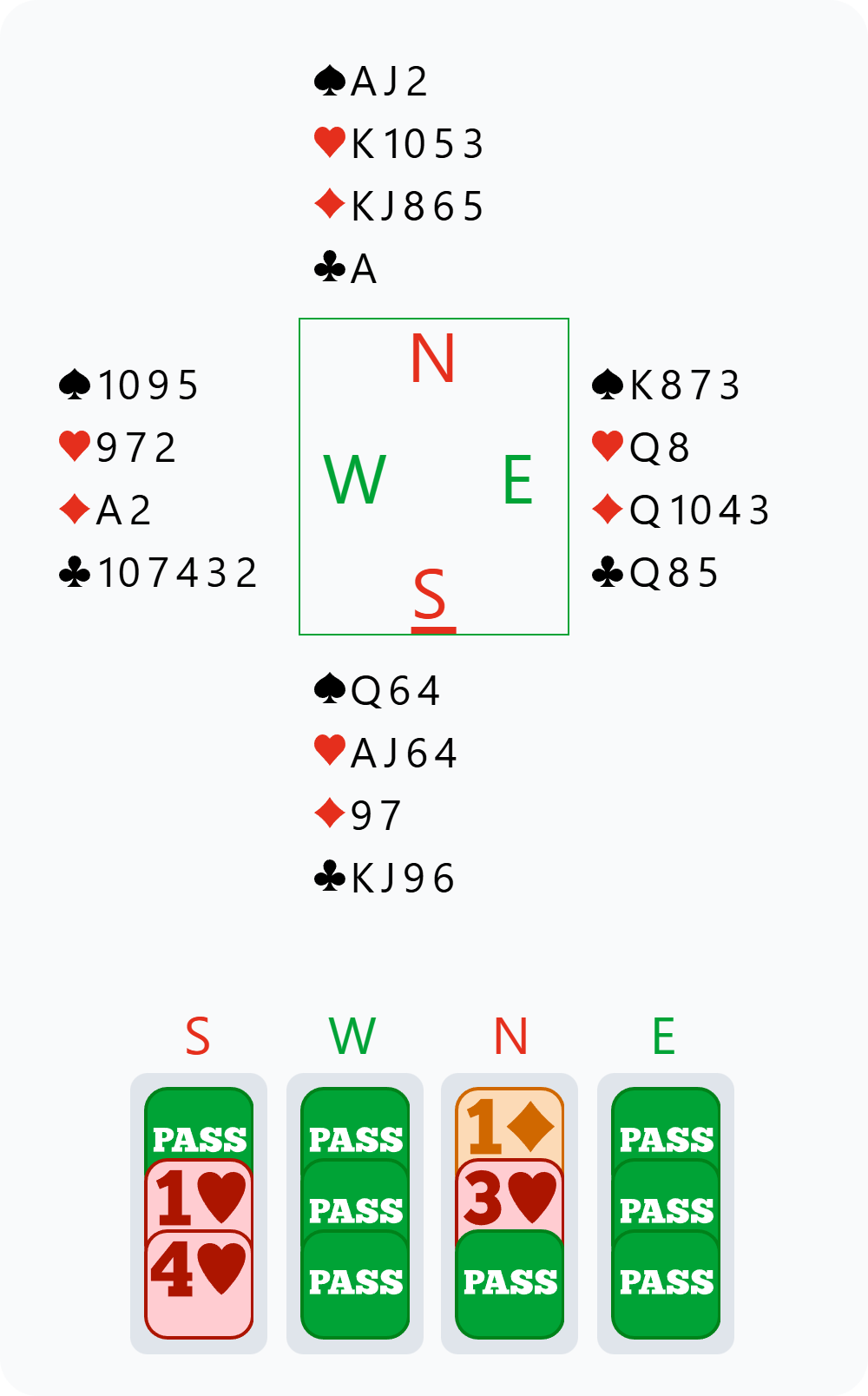
Raising Major/Competitive bidding – pre-duplicated
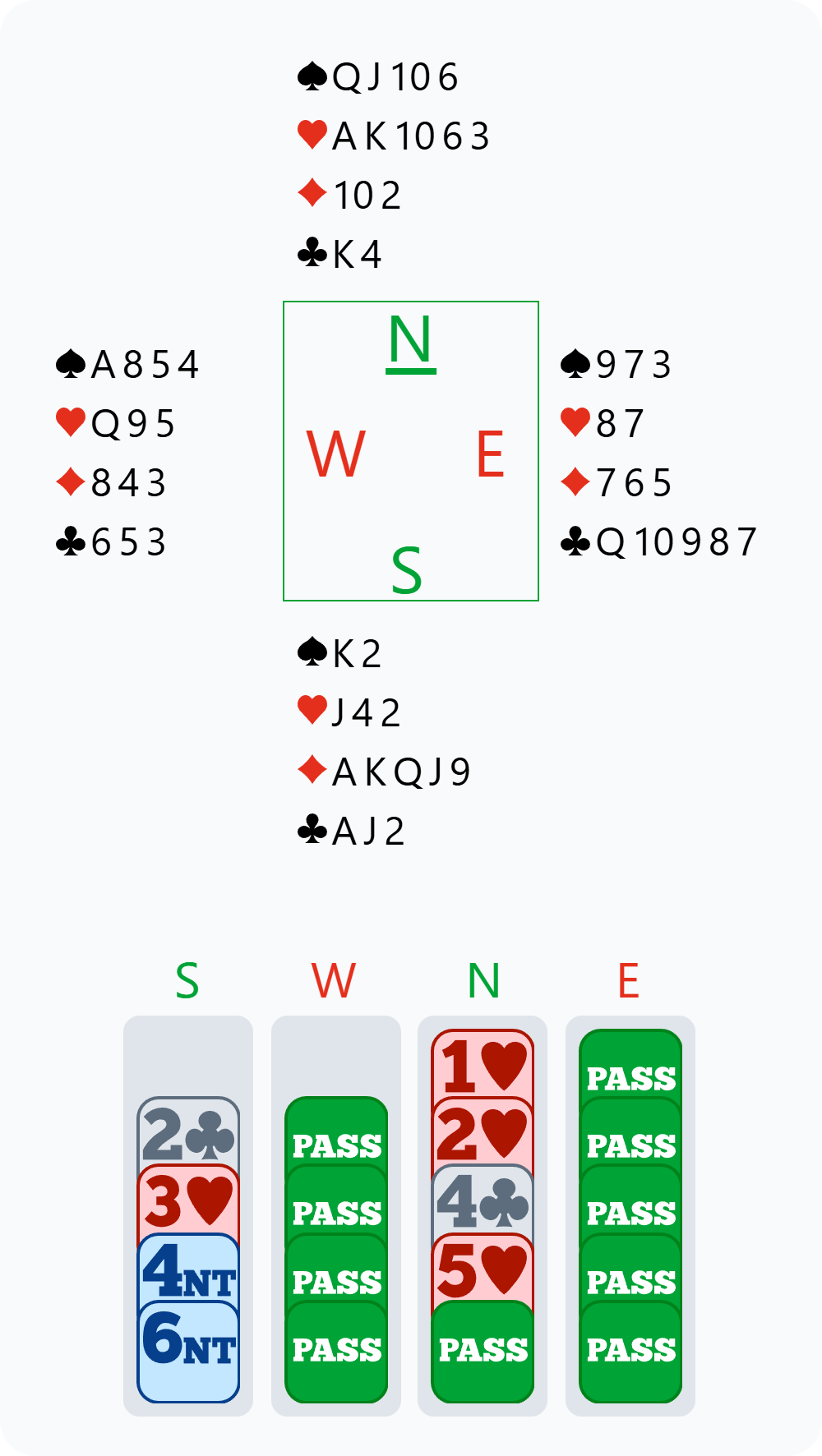
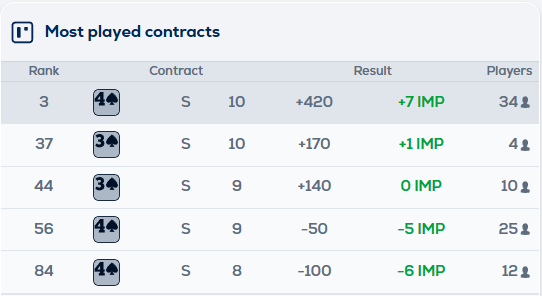
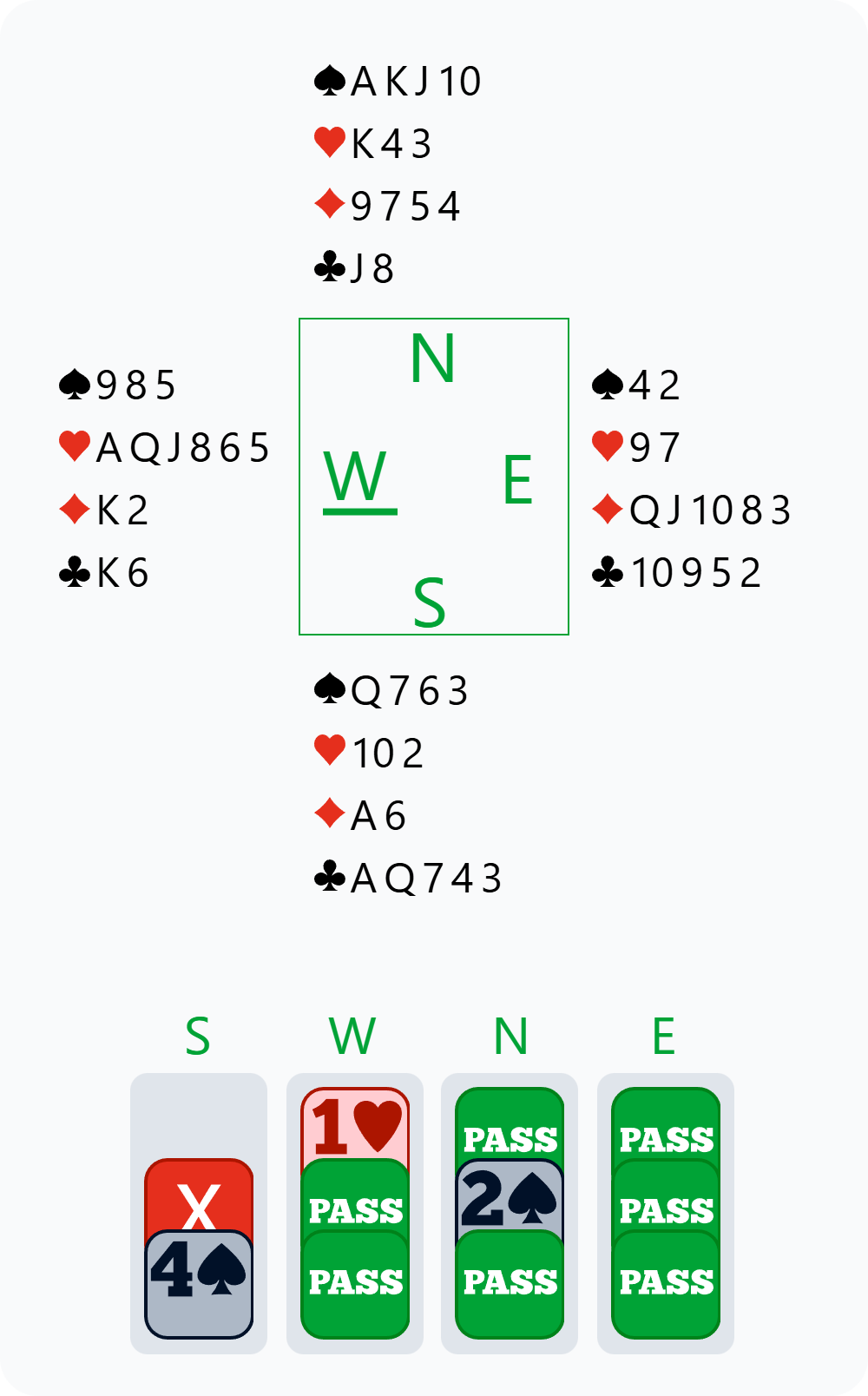
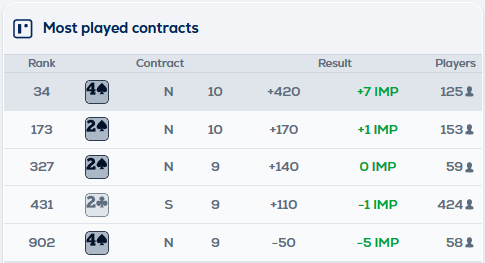
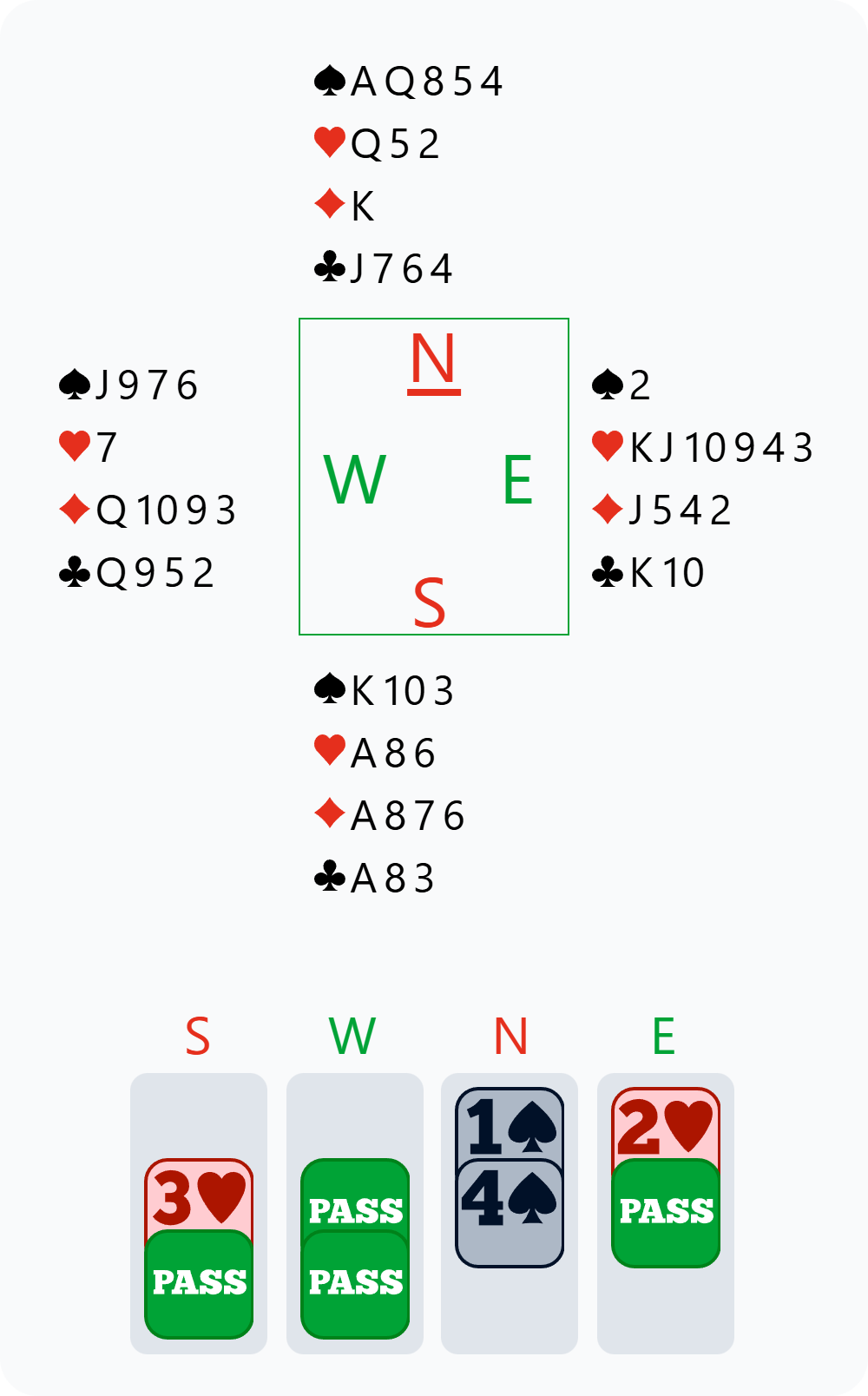
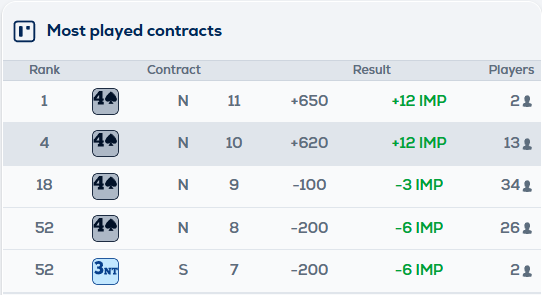
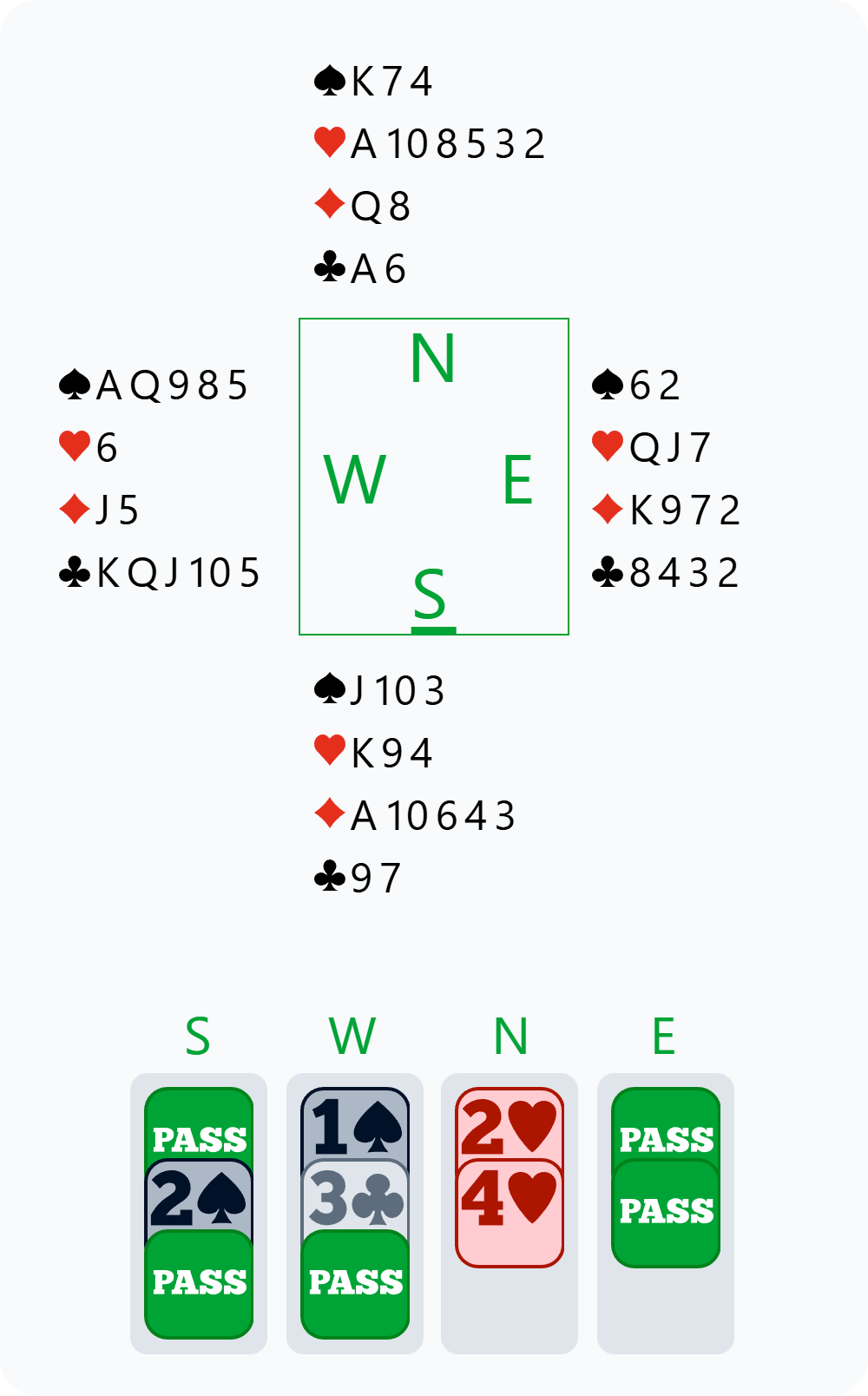
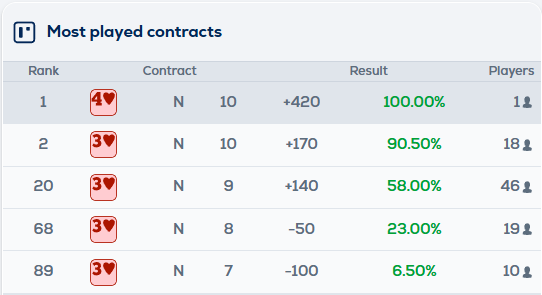
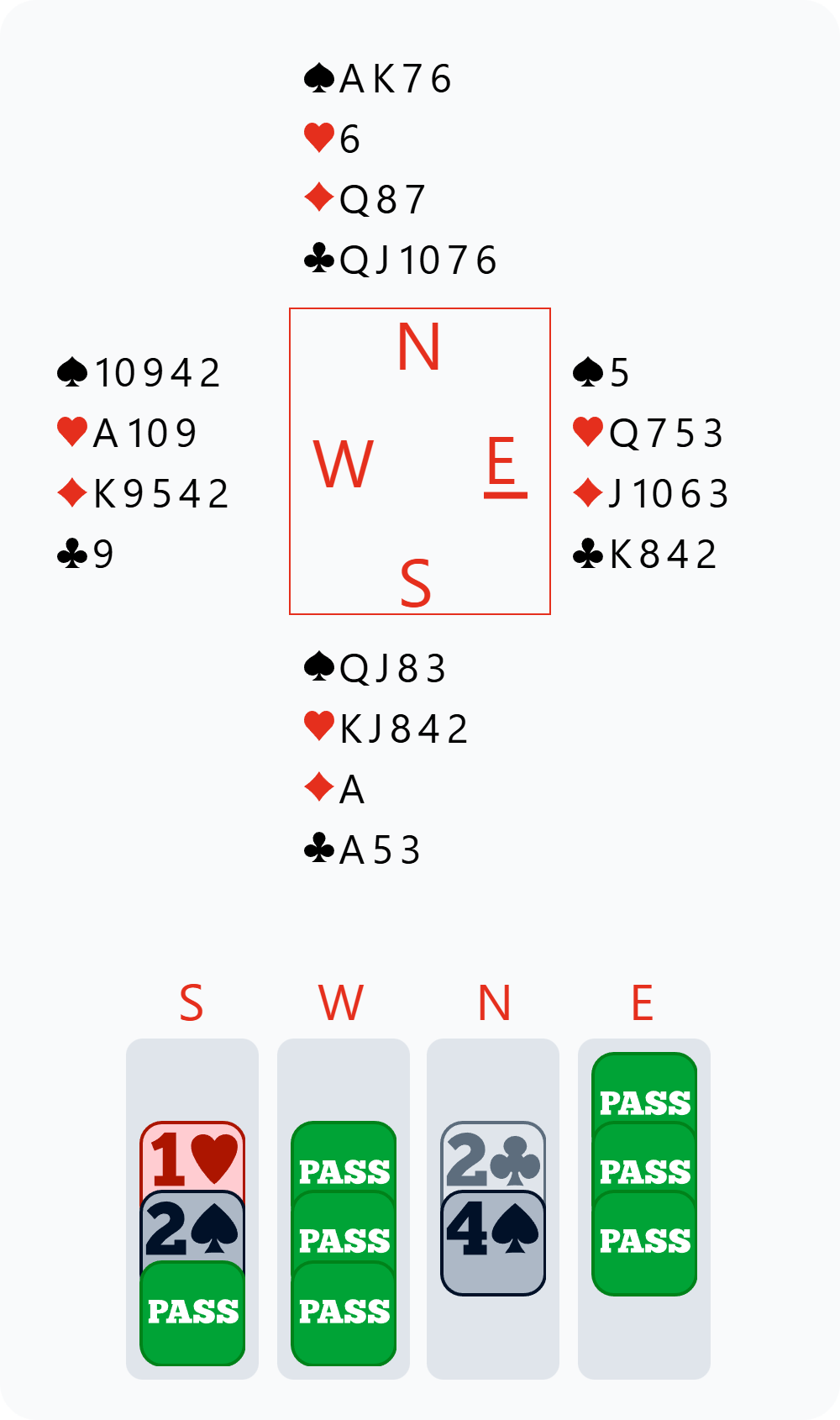
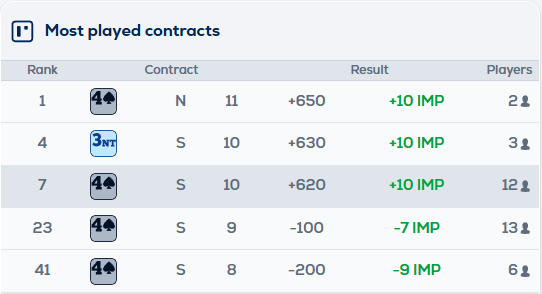
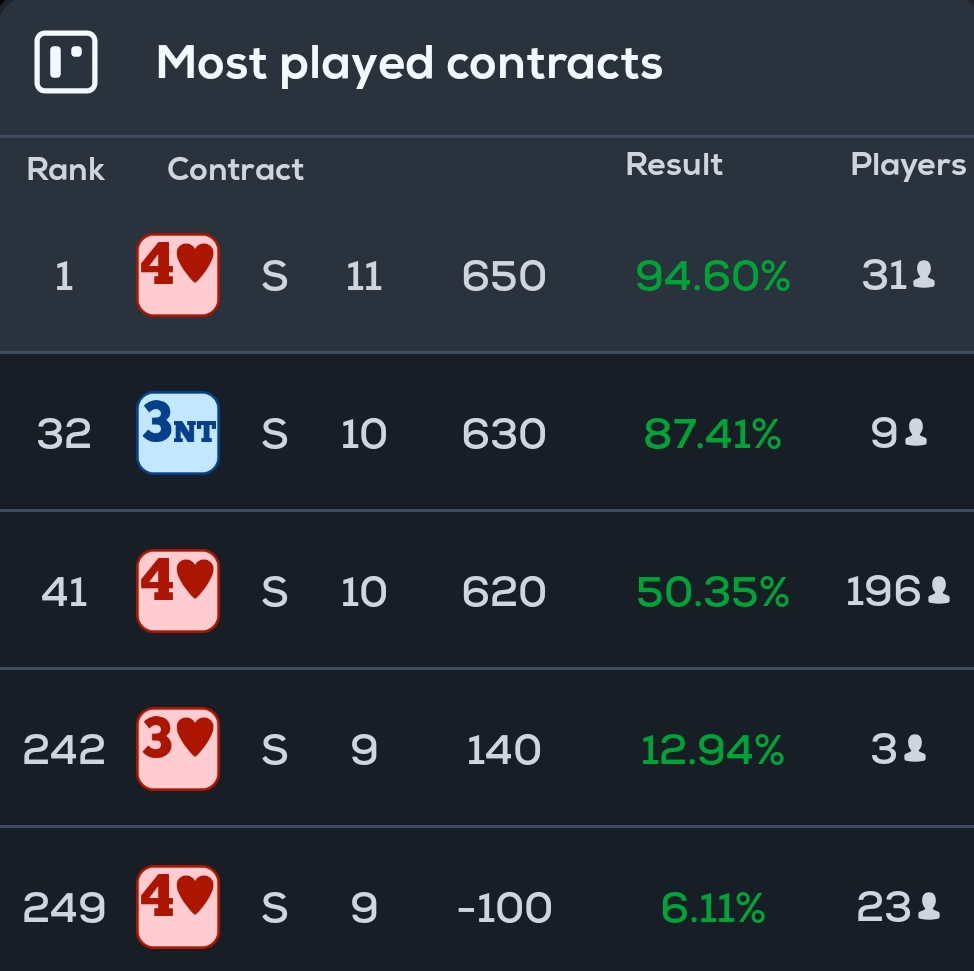
Preempts – pre-duplicated
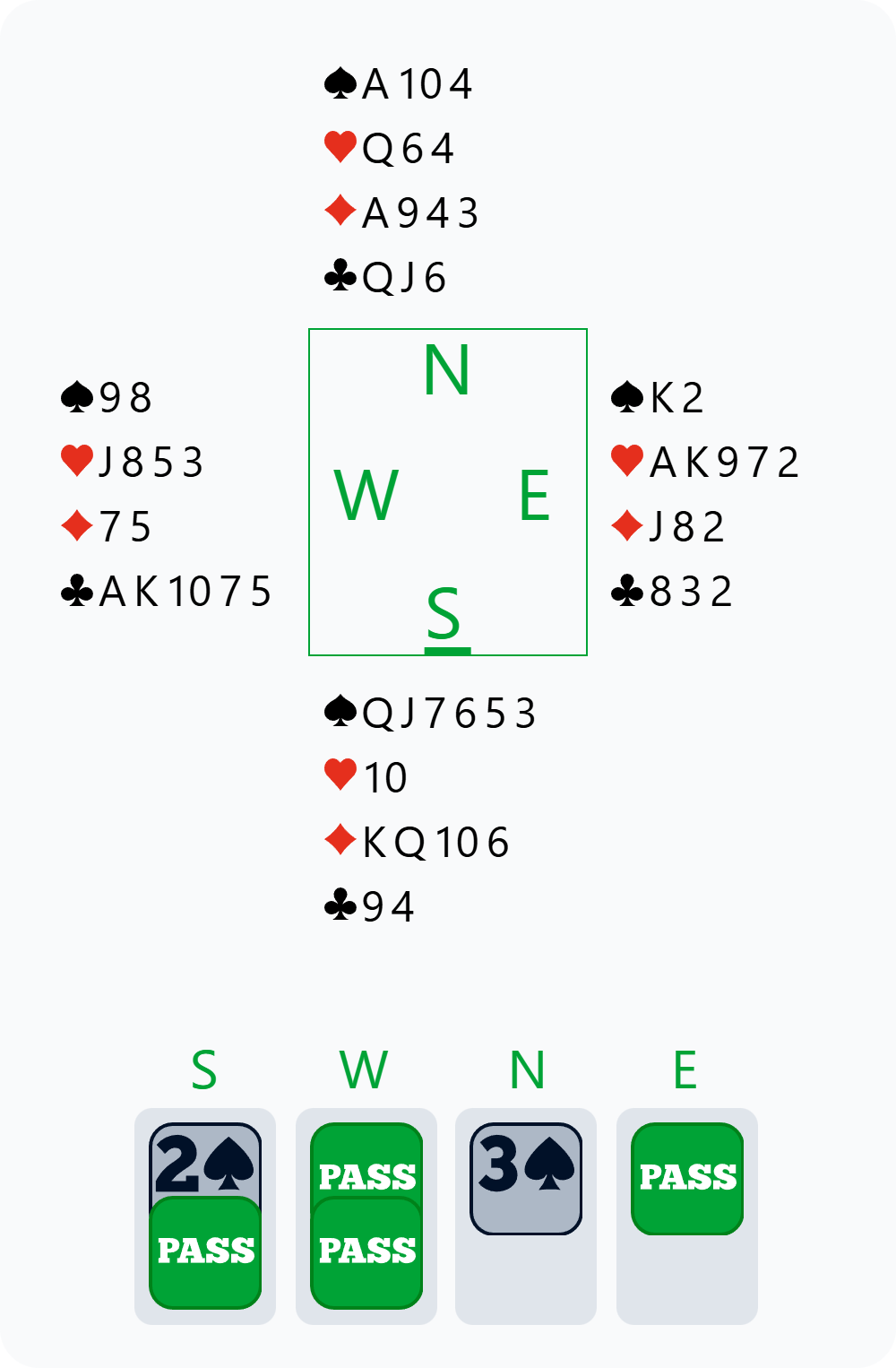
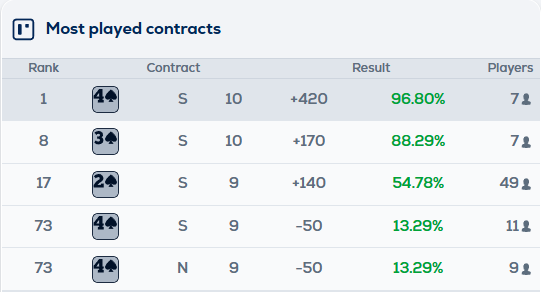
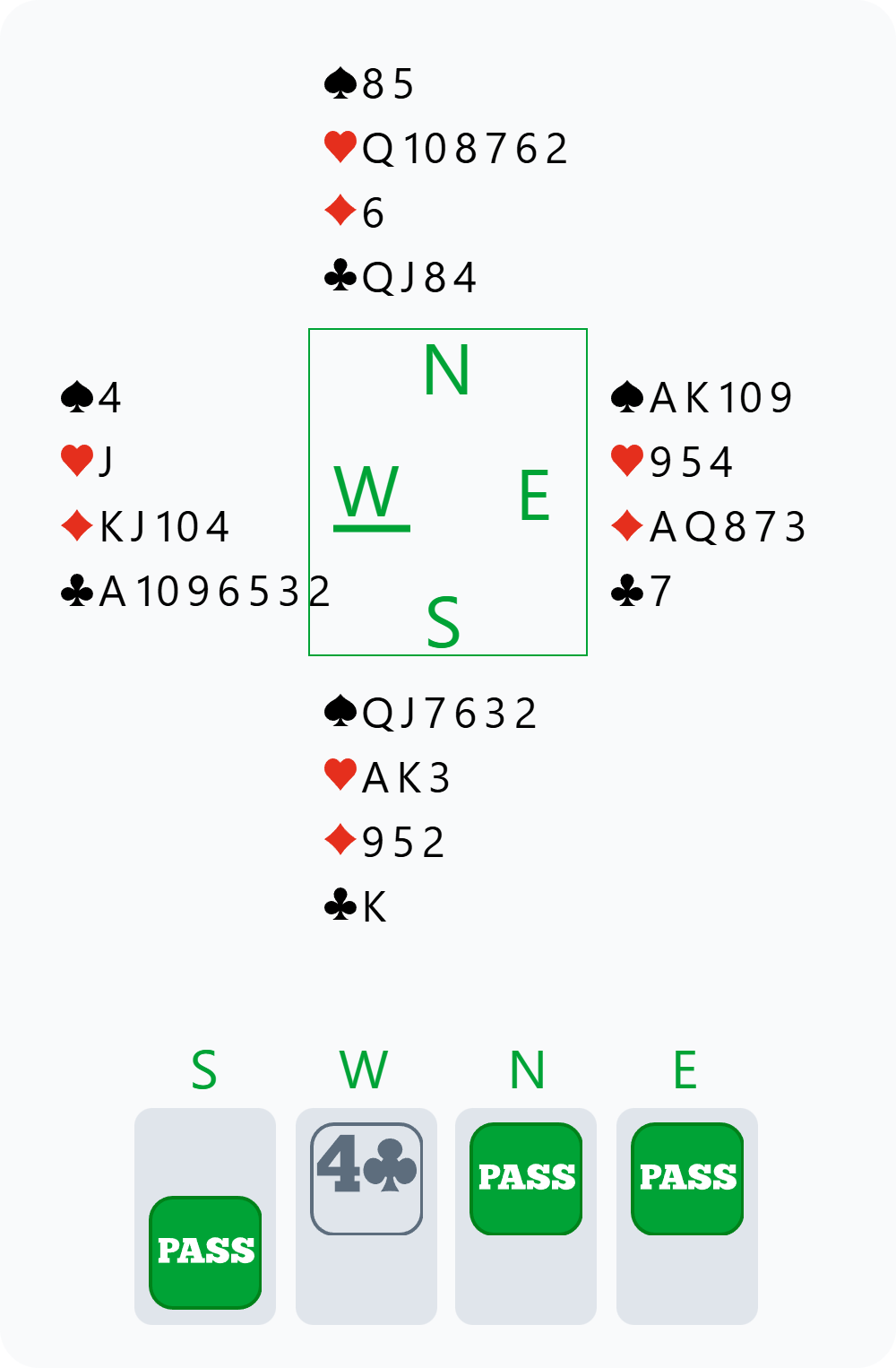
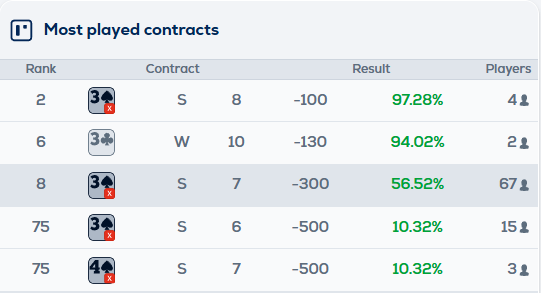
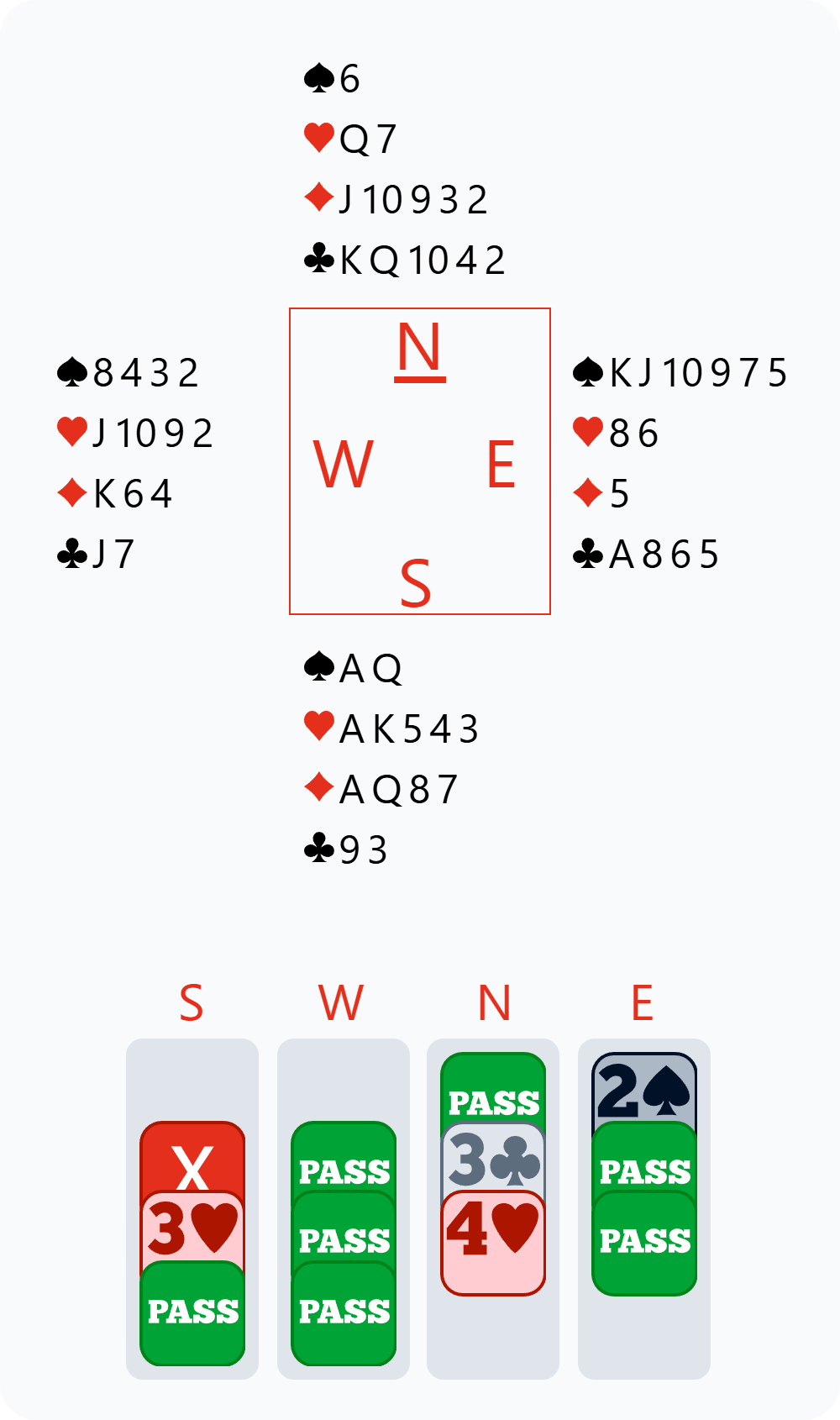
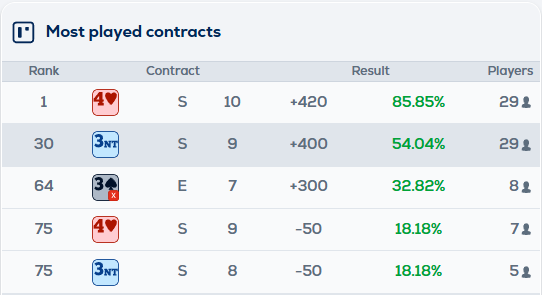
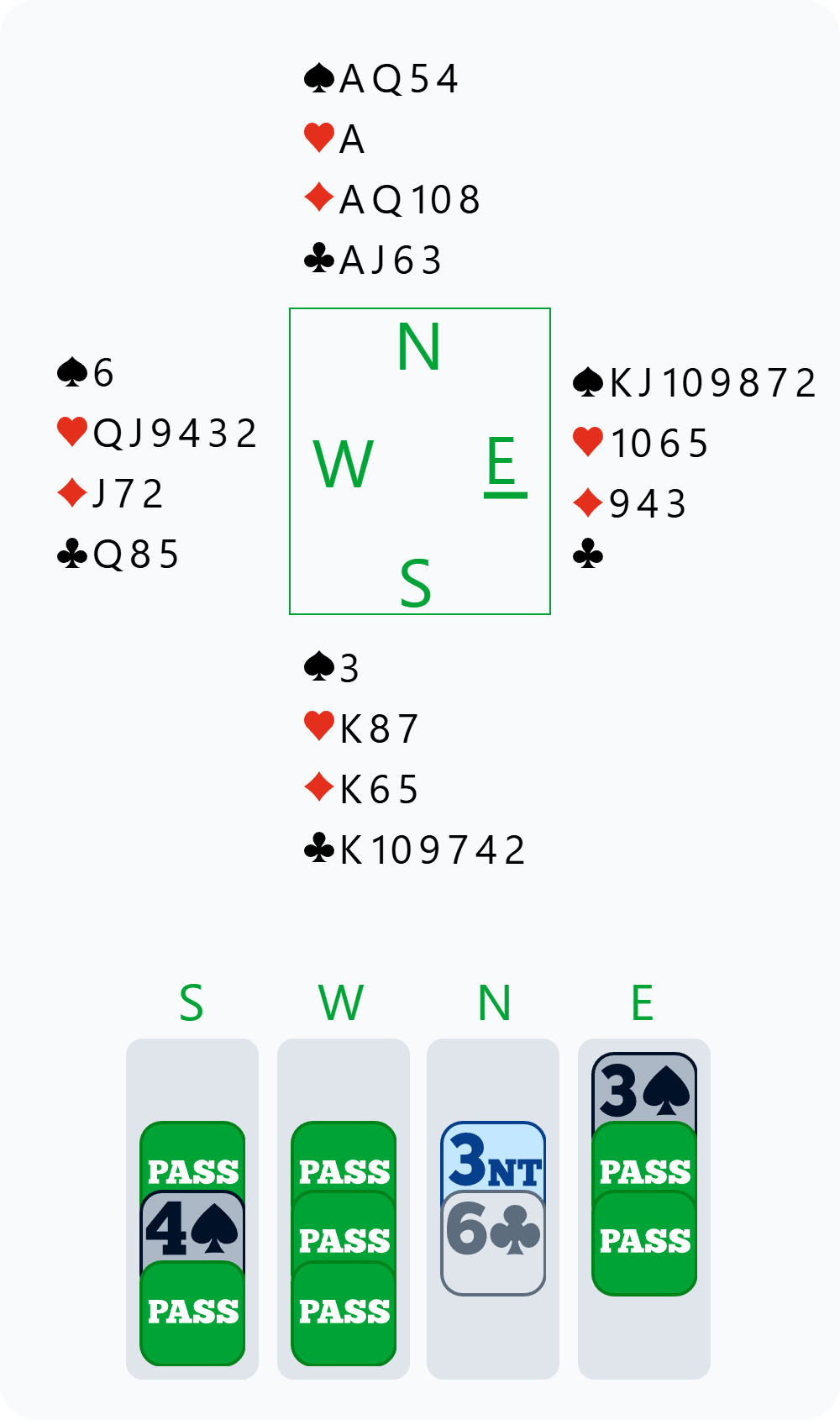
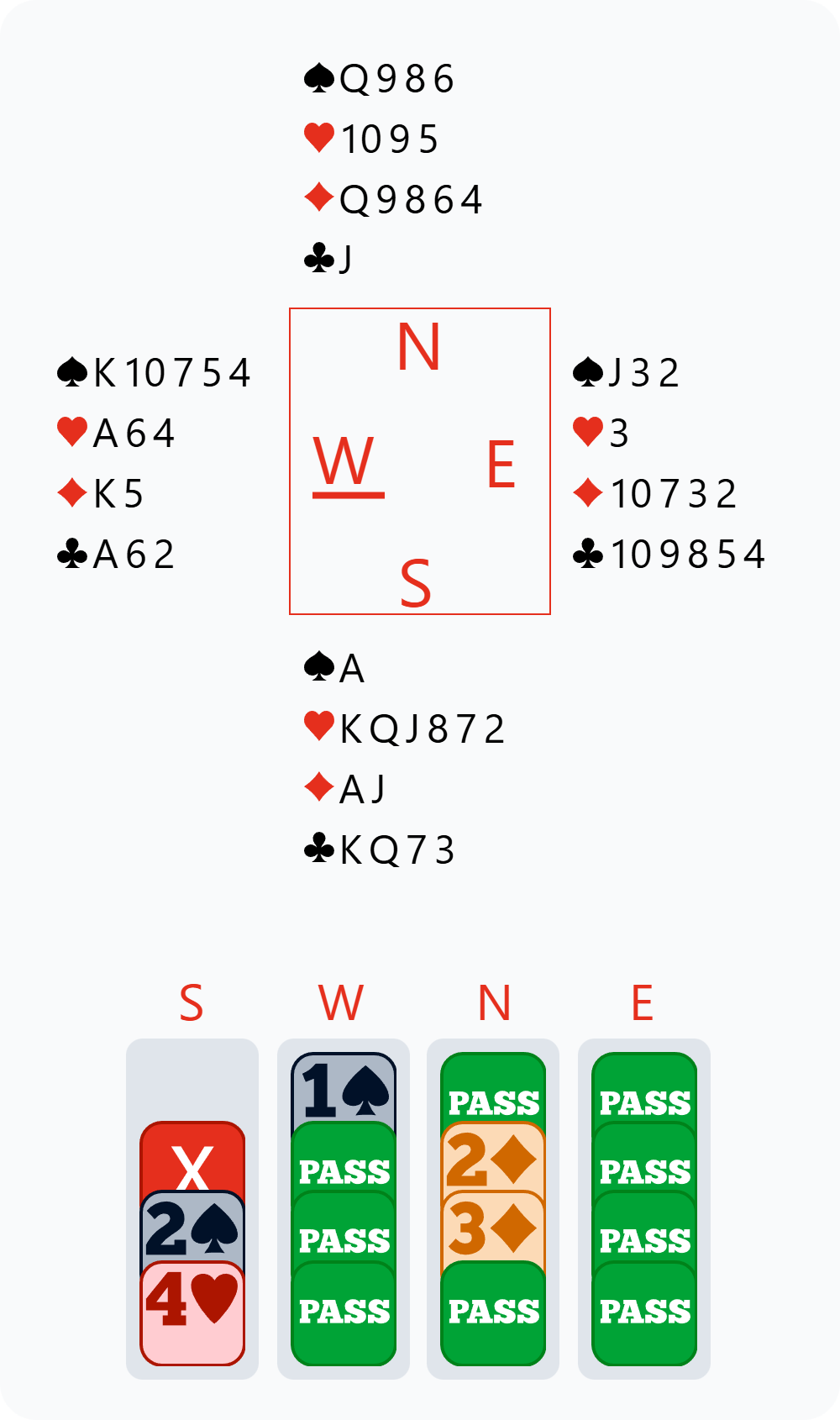
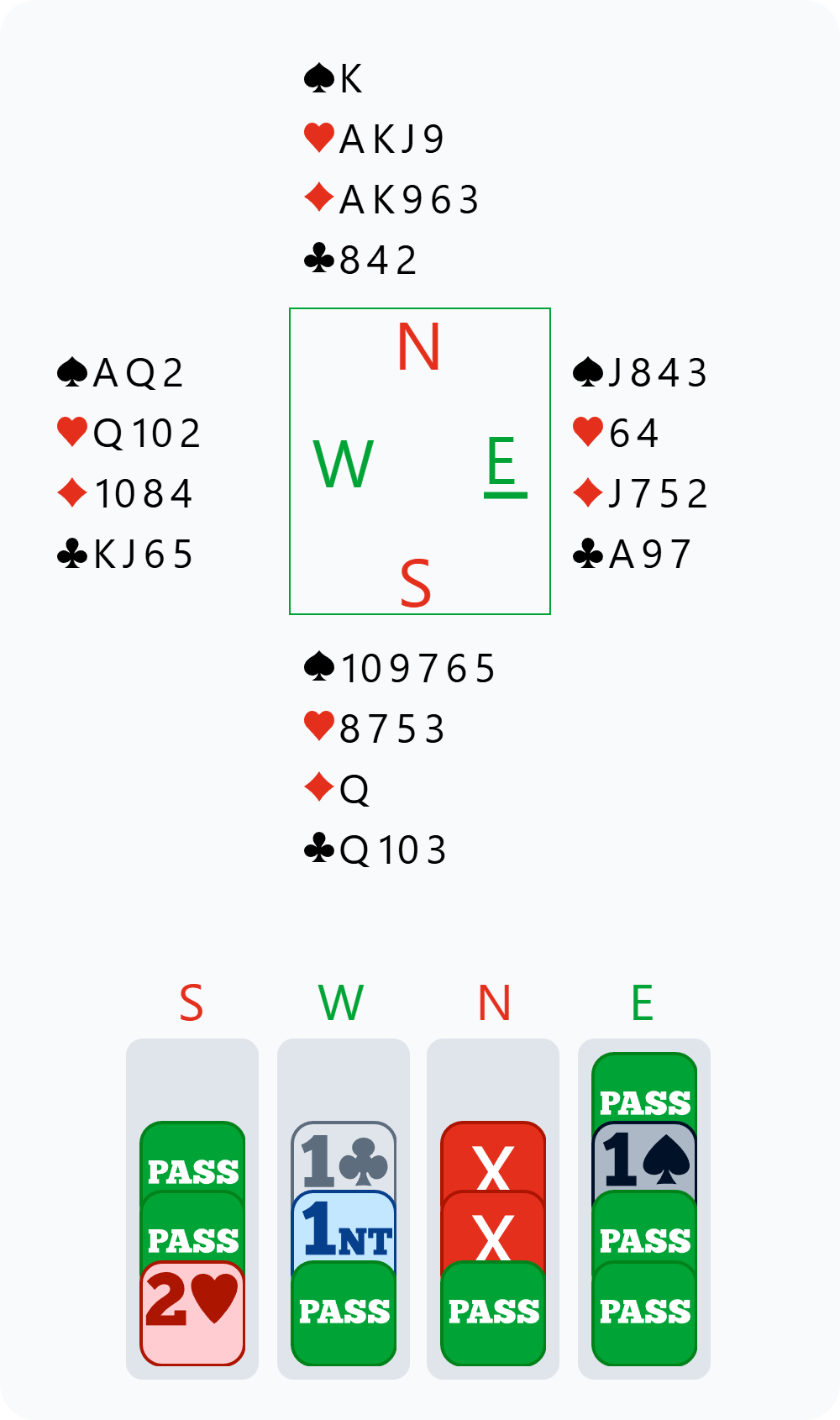
Deal 15/31
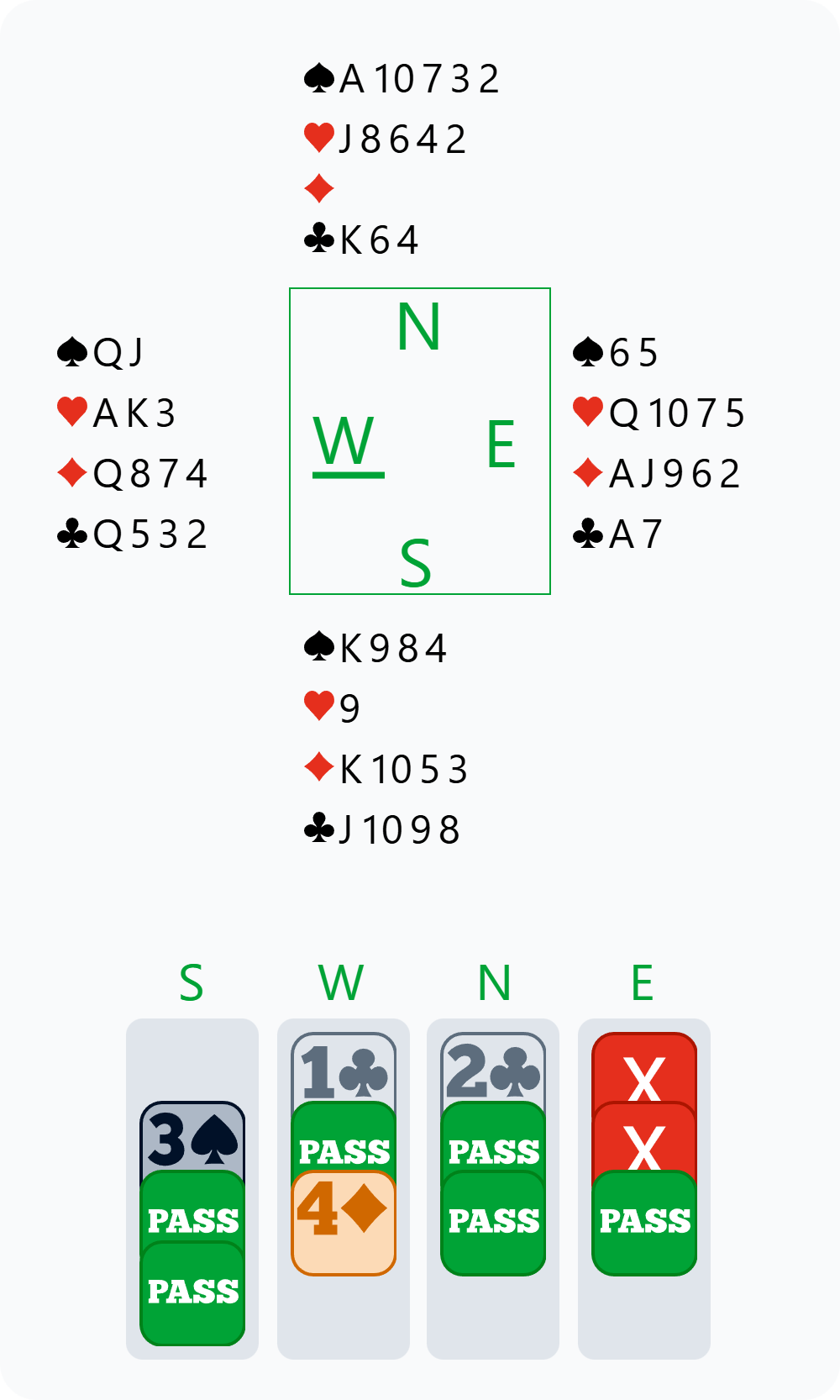
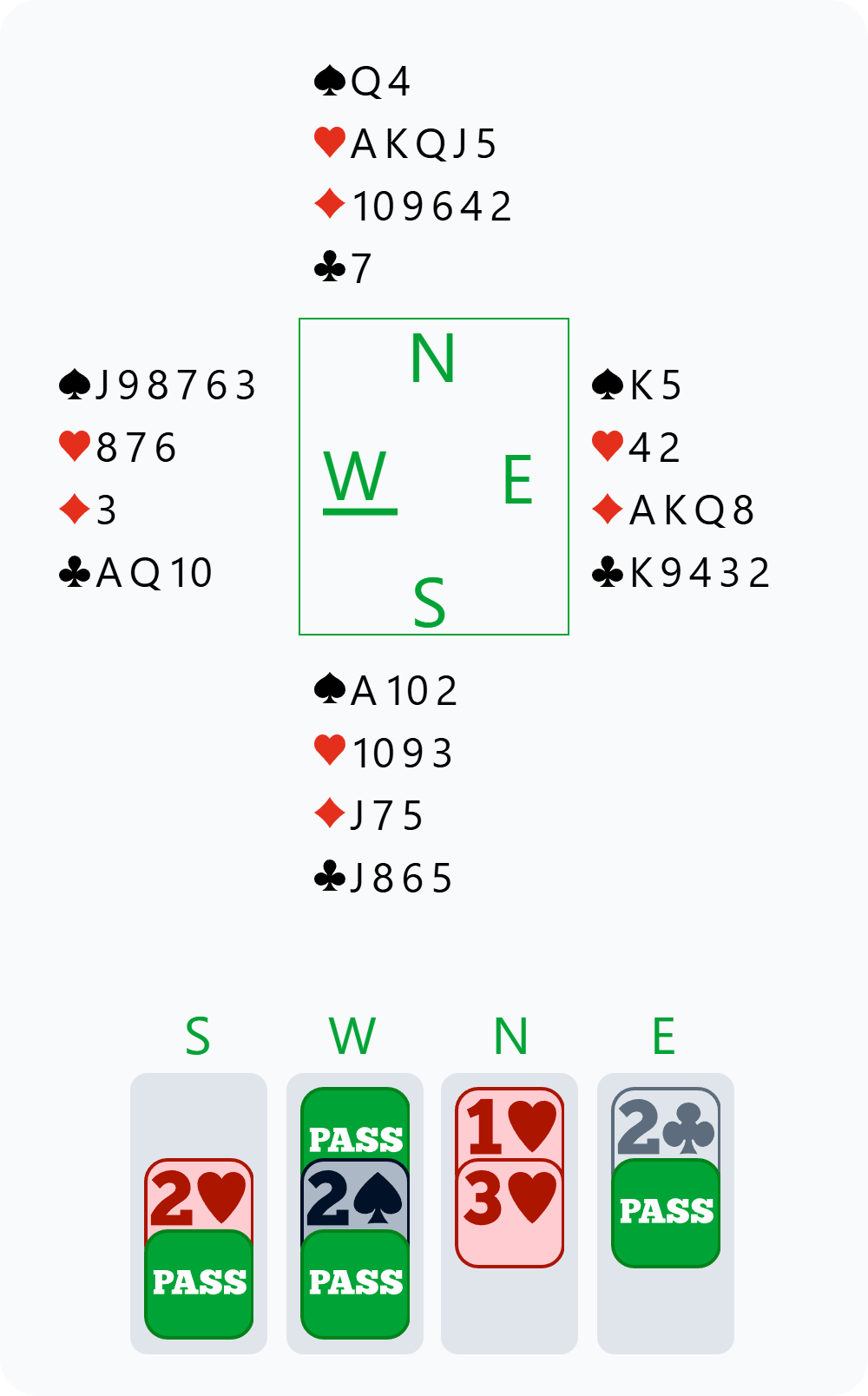
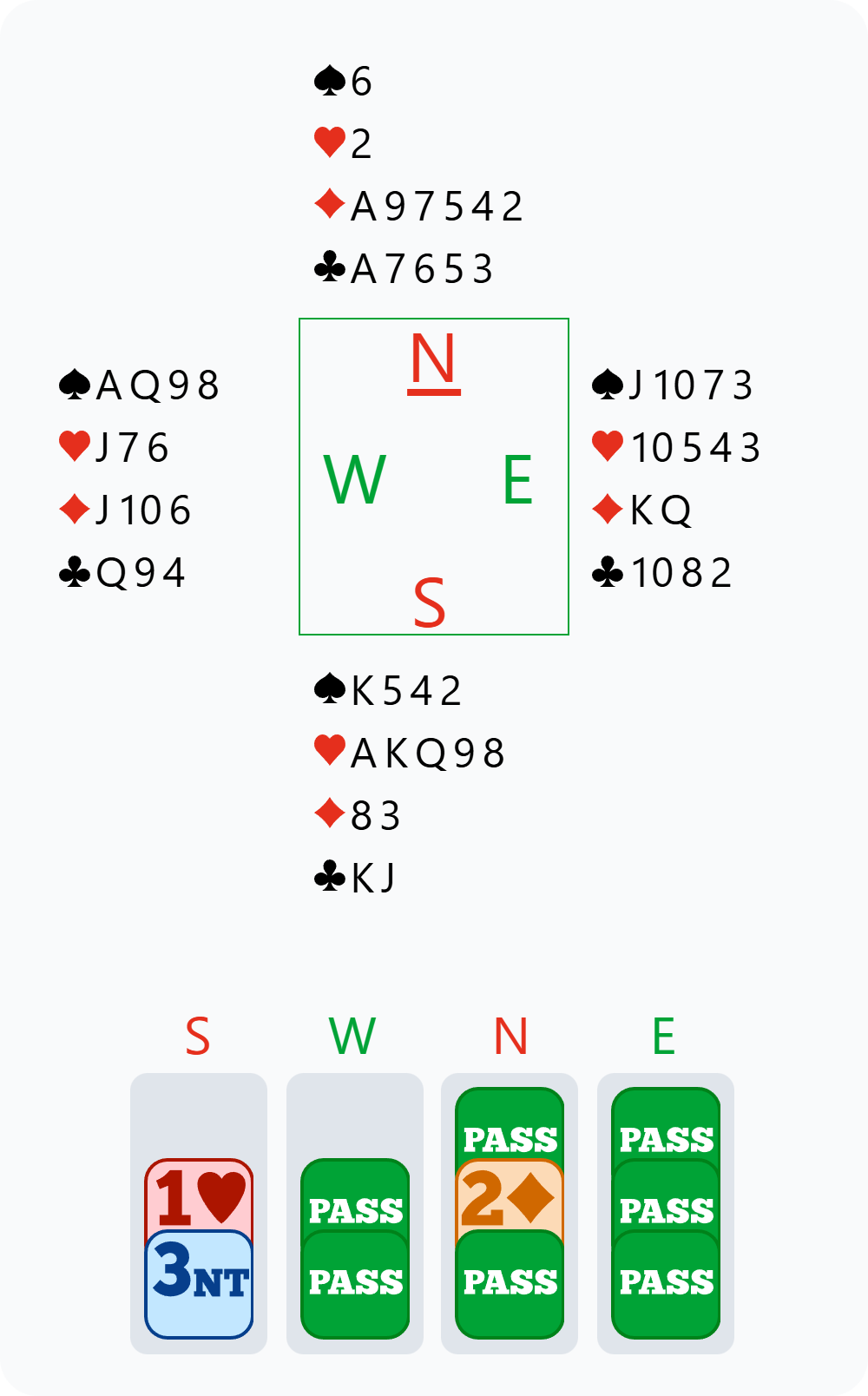
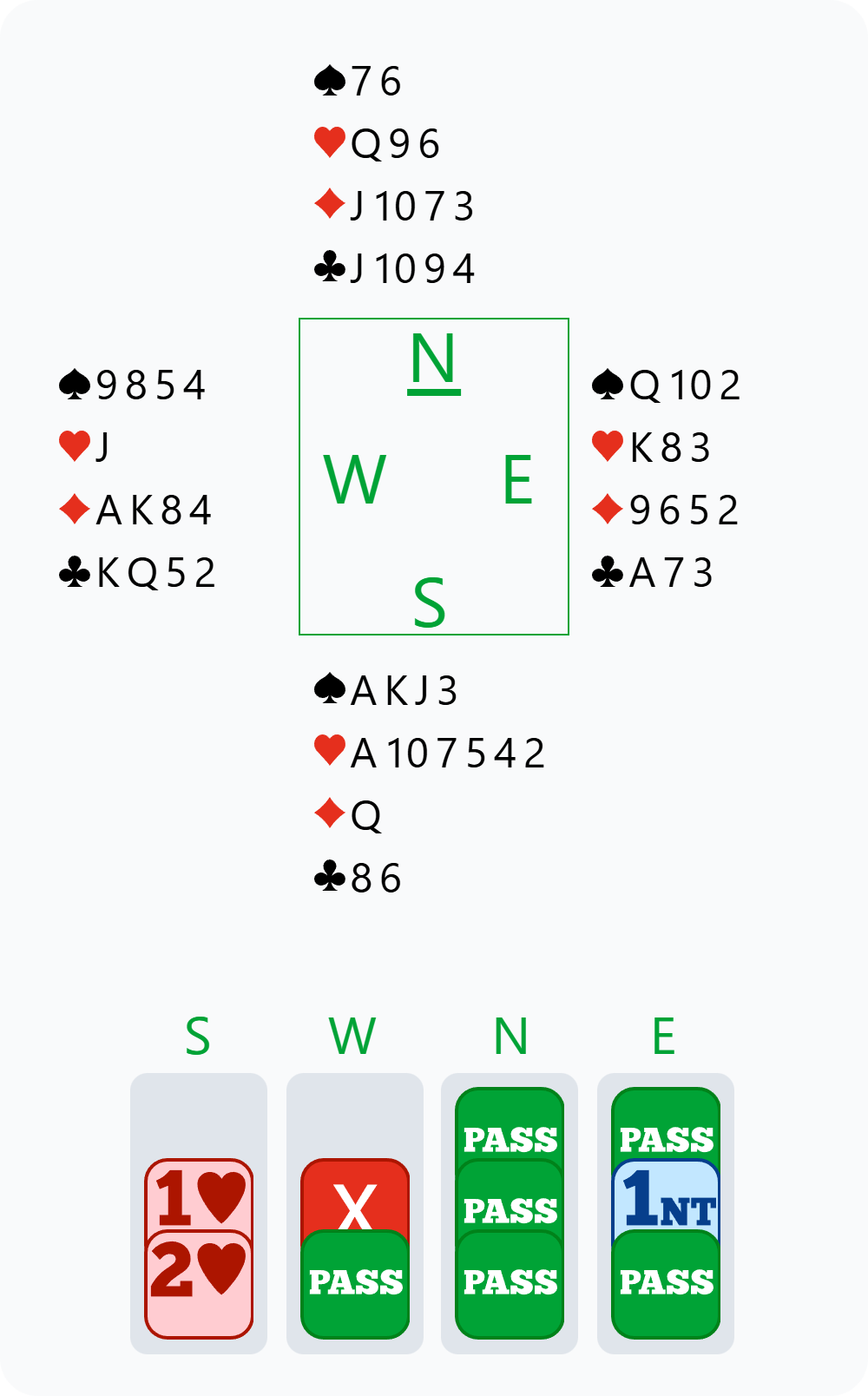
It can end up badly if you dont have a convention 3D that asks for 3-card Major.
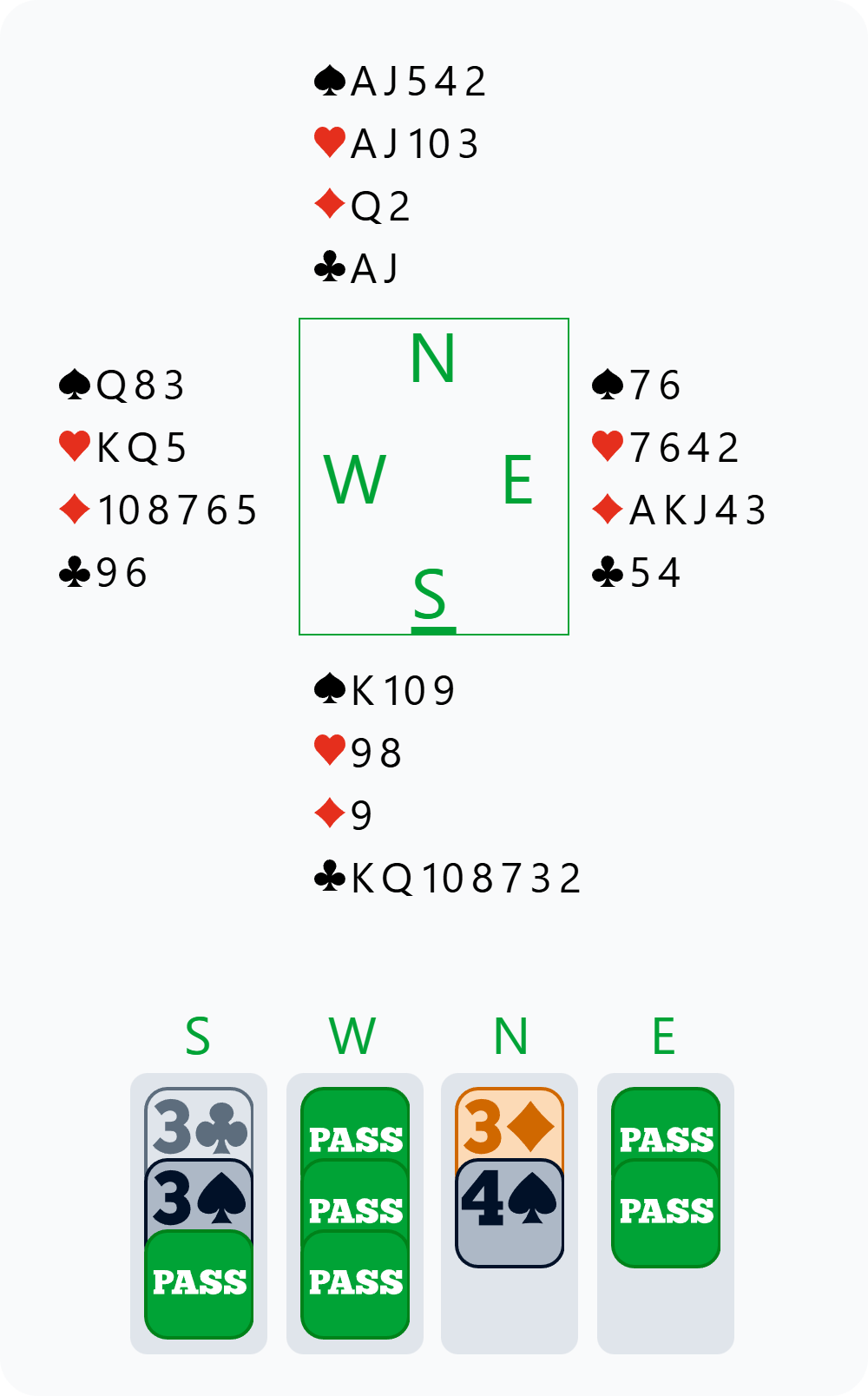
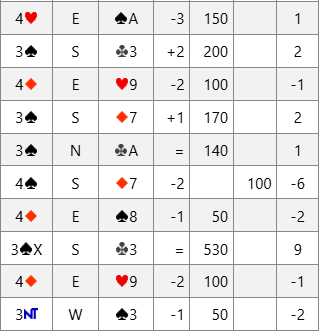
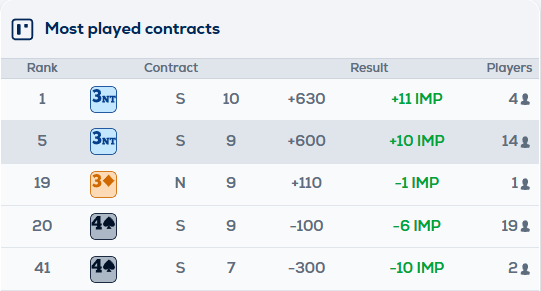
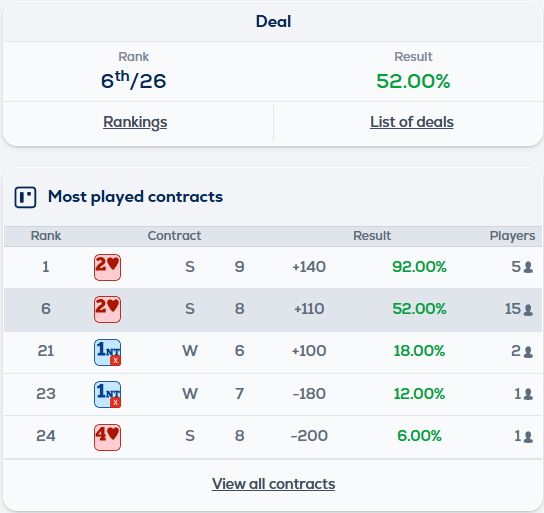
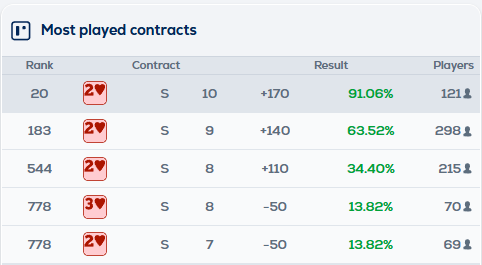
Results are rotated - all scores should be for NS