Make a declarer's plan in NT
Why should you make a plan?
Declaring NT contracts is generally more difficult than playing with trumps. We do not have complete control over the opponent's long suits so we must make a plan both for our side and the opponent's side.
The most difficult contract to declare is 1NT. Both sides have about the same honor strength and we fight in all 4 suits for length tricks and for winning lower honors.
The declaring strategy can be either passive or active. With passive strategy, we don't start playing new suits. It is OK to lose a trick and let the opponents lead a new suit. Following to the trick on the 2nd and 4th seats has a significant advantage. We must play actively when the opponents can establish more length tricks in their suit. In that case, we play our long suits as soon as possible and try to win the top honors in the other suits.
Make a plan step by step
Count your sure winners
Count your opponnent's sure winners
Count the remaining potential
Identify our potential and choose the suit to play first
Analyze the lead and count potential for the opponents
Repeat step 1-5 whenever you lose a trick
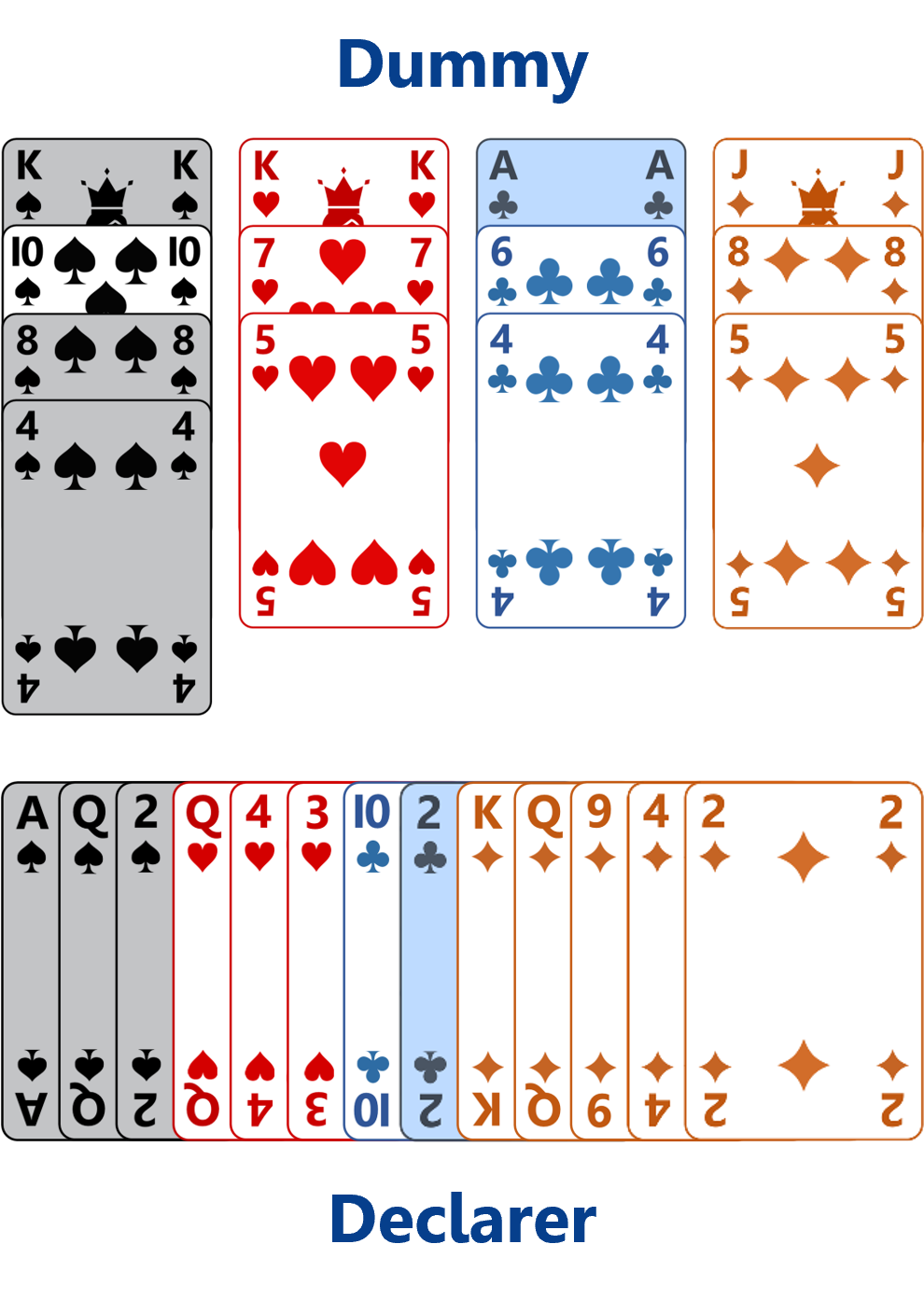
Count sure winners for your side first.
Sure winners are tricks that we can cash at any point without the opponent's interference. We start with Aces, Kings, Queens, and potentially other tricks if they are guaranteed.
Don't forget to count a card for each sure trick in the opposite hand.
We have 4 sure winners:
♠AKQ, ♣A
Count sure winners for the opponents.
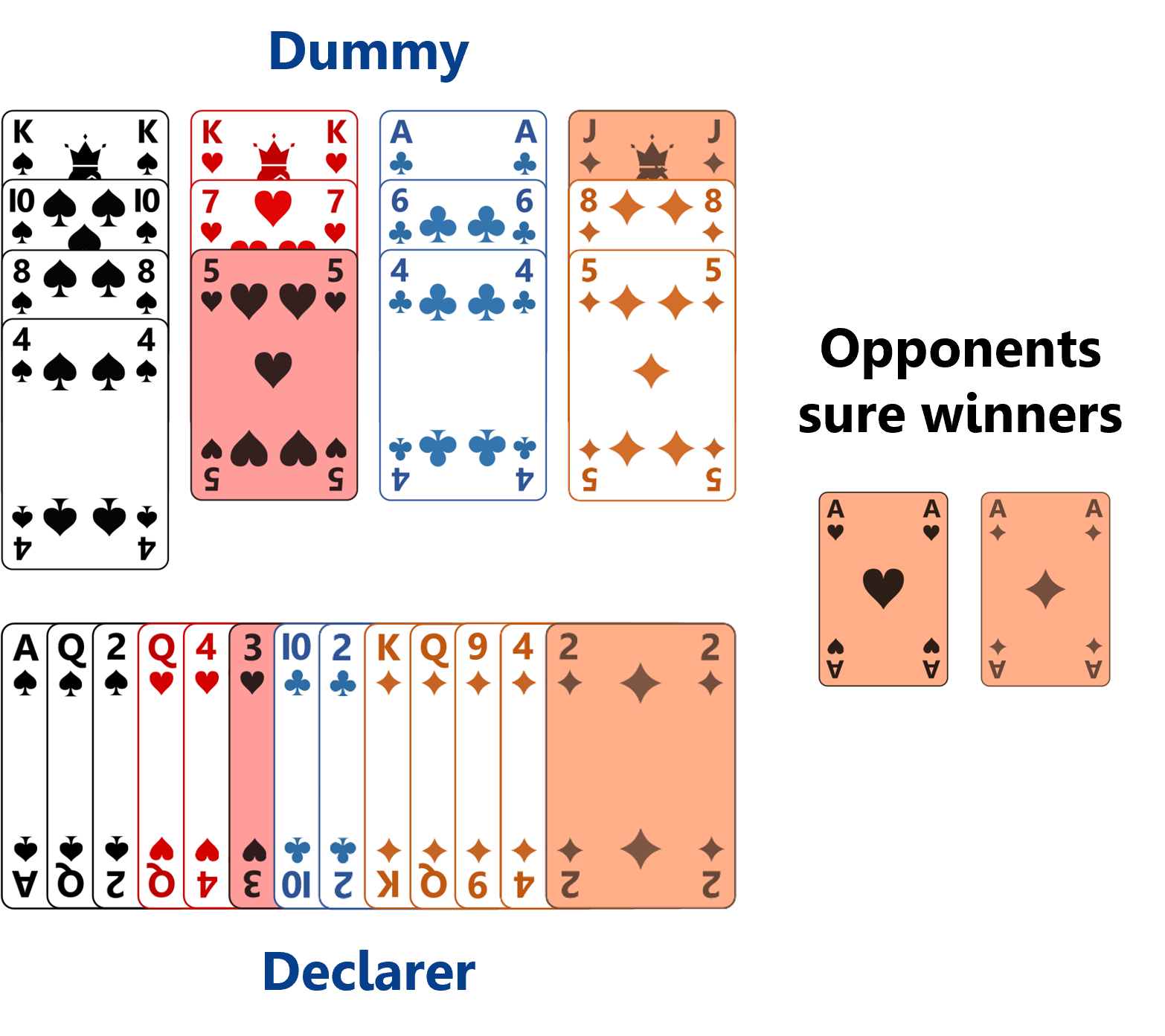
Again, we count the aces, kings, queens, and also length tricks if we know the opponents have them.
Don't forget to count one card in each hand for the opponent's winners.
The opponents have 2 sure winners:
♥A, ♦A
Count the remaining tricks that we can win.
Add sure winners for both sides and subtract it from 13 to get the number of potential tricks.
4 + 2 = 6 - 13 = 7 potential tricks
Look for potential tricks.
Identify potential tricks in each suit.
Always pair the length trick winner with a card from the opposite hand.
♠10 (Dummy's hand) – Declarer discard ♥3
♥H (any hand)
♦KQ94 (Declarer's hand) – Dummy discard ♣64
= 6 potential tricks
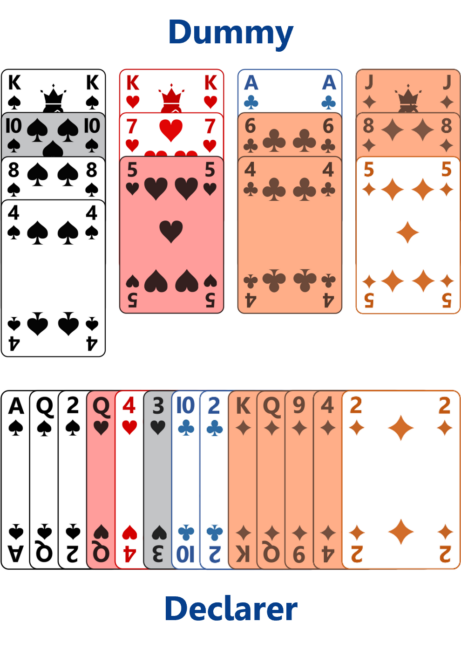
- We can get ♠ trick without losing another trick → take the chance at the end
- We can get ♥ trick if we lose the tempo with ♥A → not our suit, don't play ♥ unless you have tempo
- We can get four ♦ tricks if the suit breaks or the ♦10 drops → play diamonds at the first opportunity
Analyze the lead and count potential tricks for the opponents.
Option 1: If West leads ♥2, we can win with the ♥Q and play diamonds. The opponents have no other extra tricks if the ♦A is with East or if the ♥A is with West. We can fight for 9-11 tricks depending if they continue ♥ or switch to ♣.
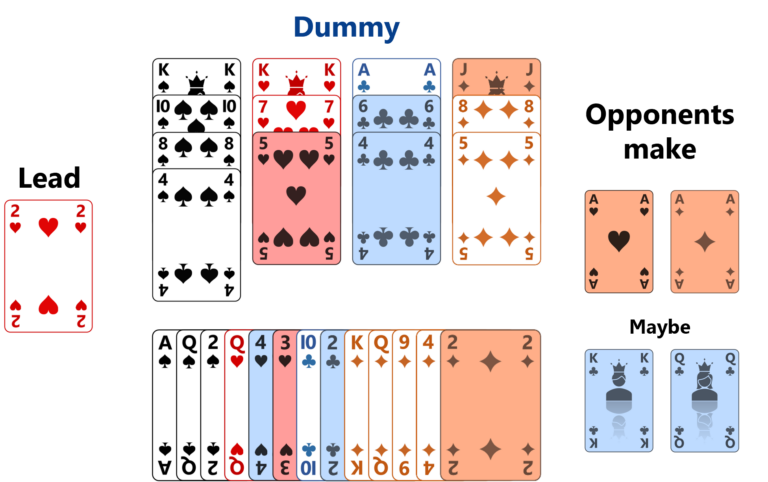
Option 2: If West leads ♣3, we should identify if the lead is from a 4-card or a 5-card. Even if we duck 2 rounds, we expect to lose 3-4 ♣ tricks and two aces. We have to adjust the potential number of tricks for our side. We play on diamonds first and make 7-8 tricks depending on ♣ split. We don't get a ♥ trick or a ♠ trick if clubs split 5-3 because the opponents make 6 tricks before we can establish our tricks.
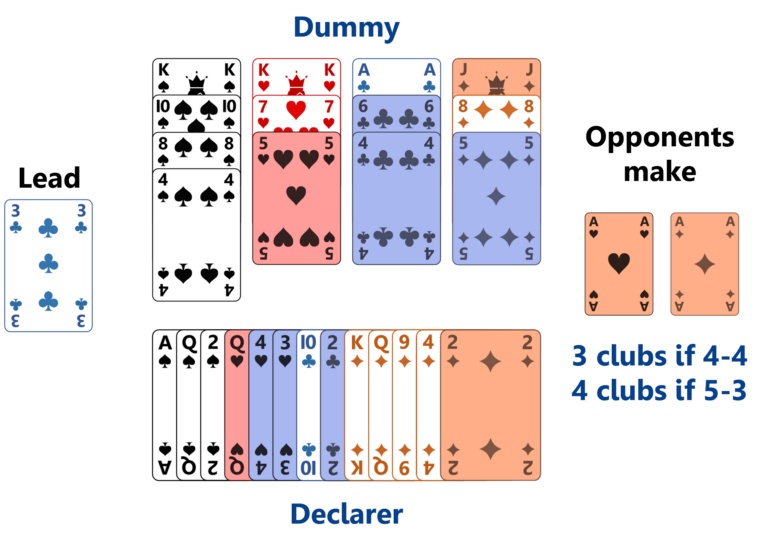
Repeat steps 1-5 at any point of the play.
Scenario 1: If there is some potential to win extra tricks, try to take them.
Scenario 2: If the number of tricks for both sides add to 13, cash your length tricks and watch the discards. The opponents can be in trouble and discard a winner → your trick potential can increase.
Scenario 3: If the opponents have more tricks than the potential, cash all your tricks as soon as possible.