Cashing winners
Watch the video lesson first
New vocabulary
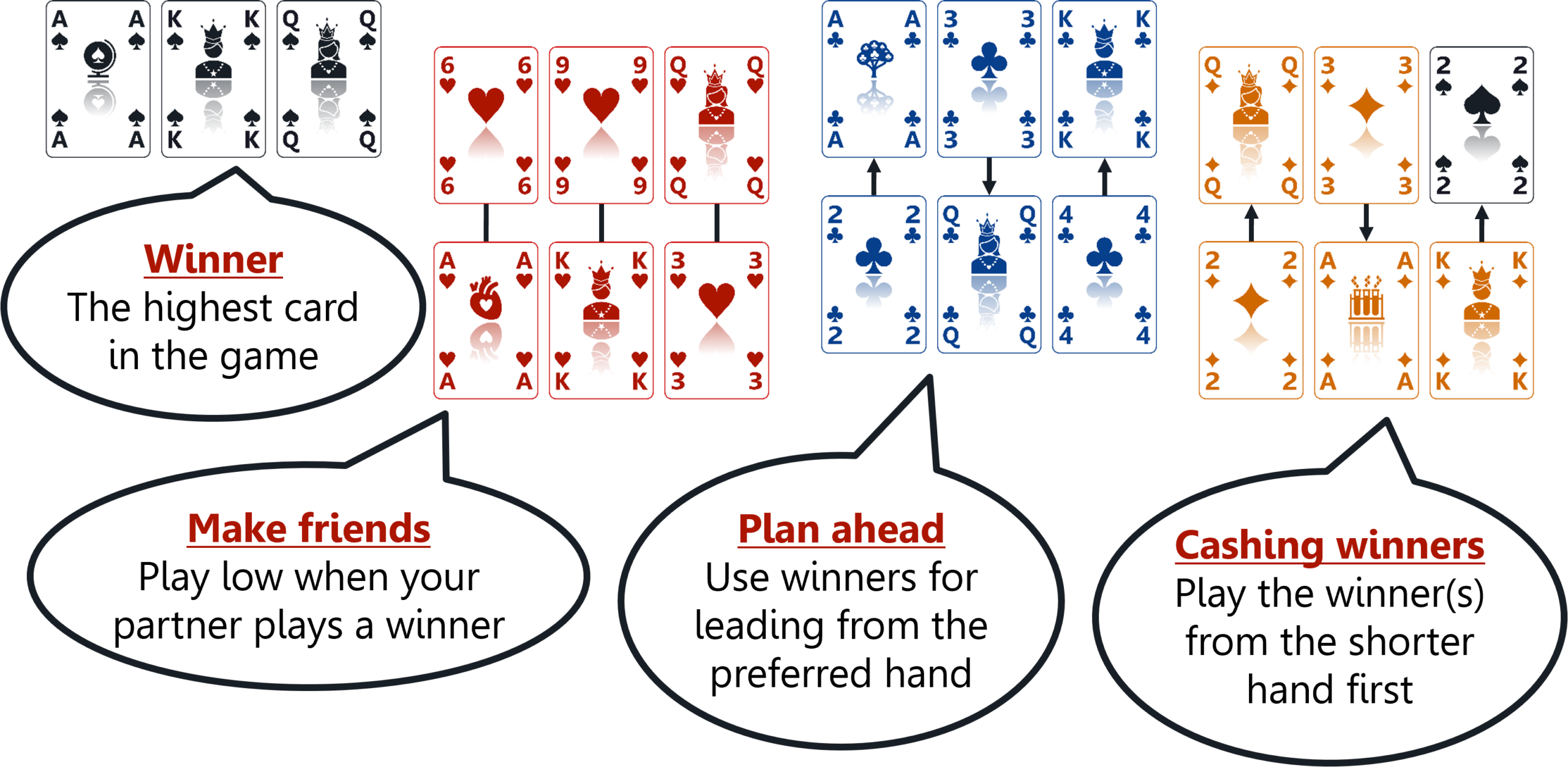
Winner = the highest card in the game.
Cashing winners = playing the cards in the correct order to win them all.
Short/long hand = player's cards will less/more cards in one suit.
Play your first hands
Task: Make all 13 tricks.
Key facts to remember
- A winner is the highest card in the game.
- Cooperate with your partner – if he plays a high card, you play a low card and vice versa.
- Plan ahead – use your winners to lead from the preferred side/hand.
- Play winners from the "short hand" first to avoid playing two winners in one trick or ending in the wrong hand.
- You can win as many tricks in one suit as we have cards in the "longer hand".
Lesson overview
Bridge is a game of tricks. The first card-play technique you must learn is cashing the high cards so you can make all the tricks that belong to you.
Bridge is a partnership game. You have to cooperate with your partner and play your high cards smartly. Players often forget that all players have to play a card in a trick, and they keep their high cards for later. Then they play their winners in the same trick with their partner and lose tricks.
Card combinations that should win 3 tricks
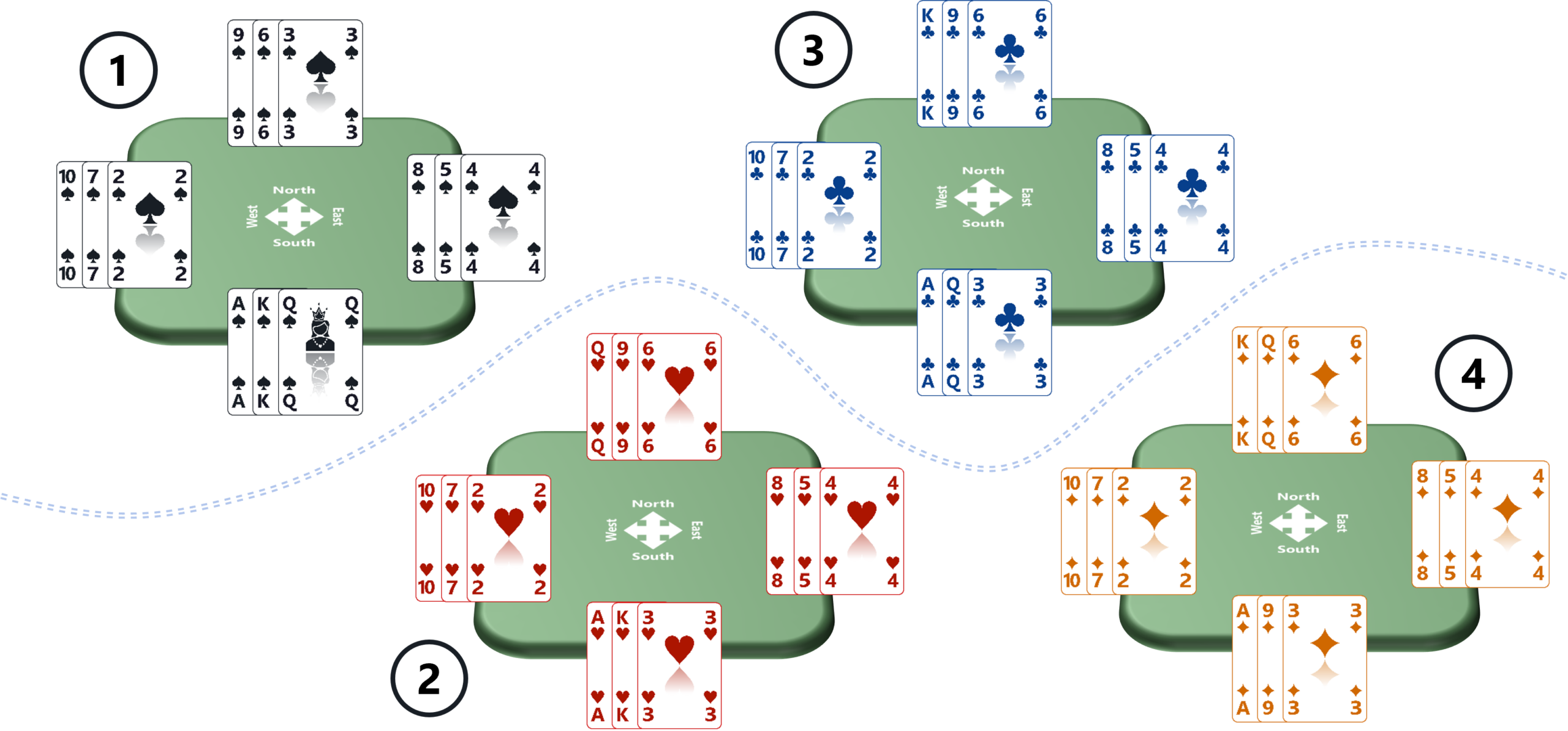
With all 4 combinations, you can win 3 tricks if one player plays a high card and the other one a small card. Both players must cooperate. It is much easier to cash your winners if you are a declarer because you can call the card from the dummy and plan ahead.
As a defender, you see only the dummy's cards. It is much harder to know that you have all the winners and cashing them.
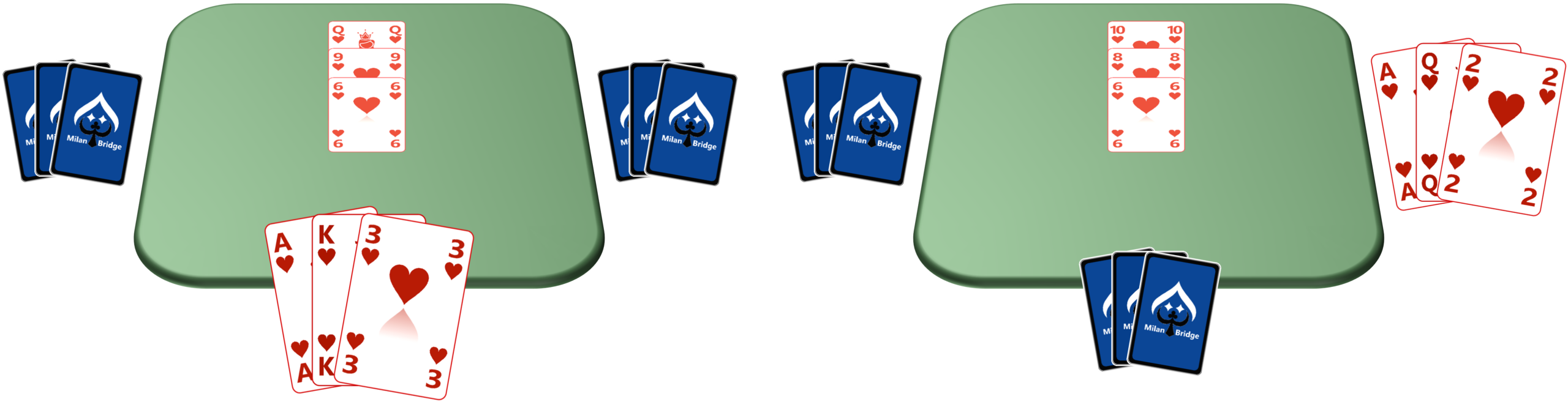
If we have the same number of cards in both hands, we can easily pair a high card with a low one. The situation changes when we have a different number of cards than our partner.
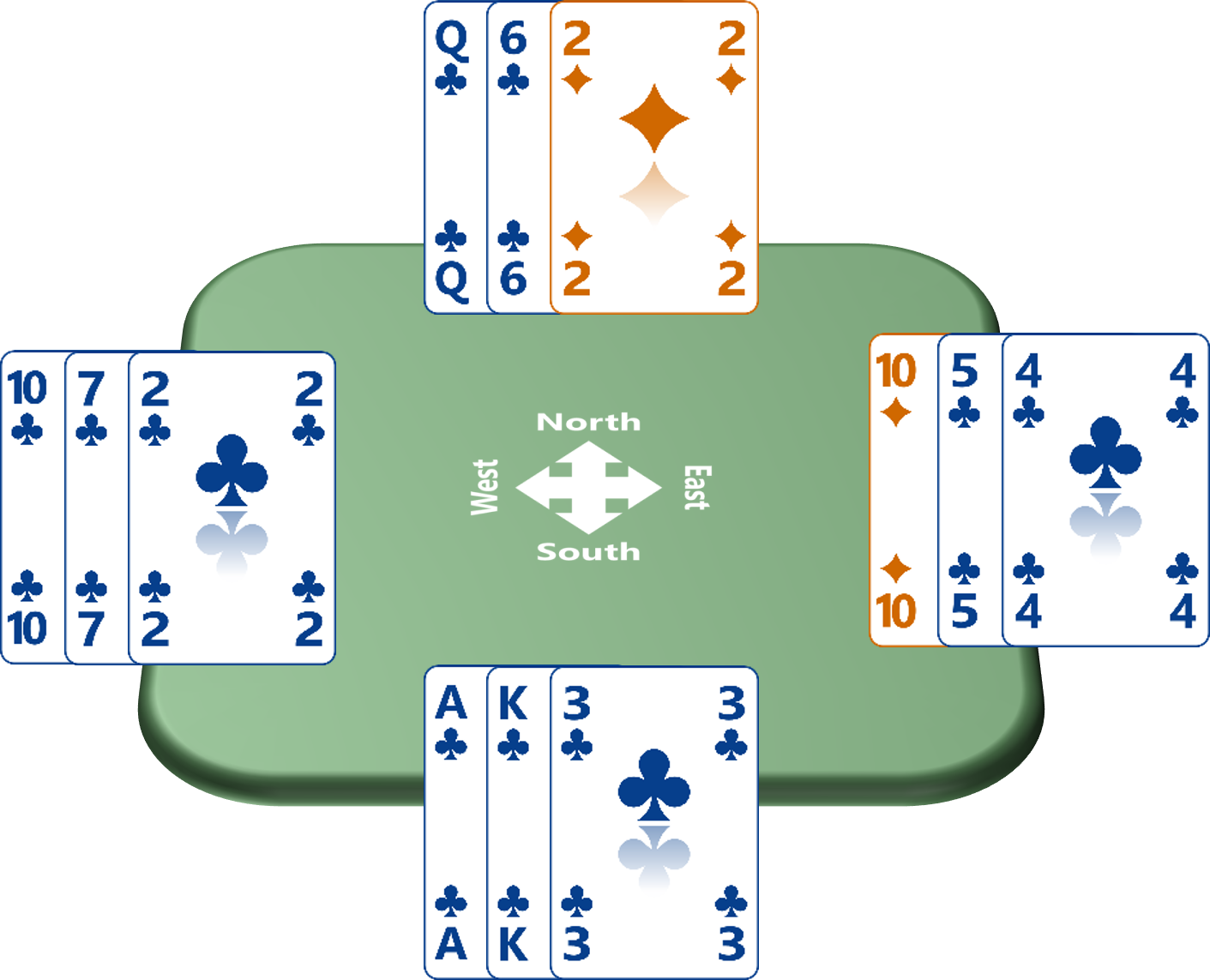
There is not one, but even two traps we may fall into:
Trap 1 – playing two winners in one trick
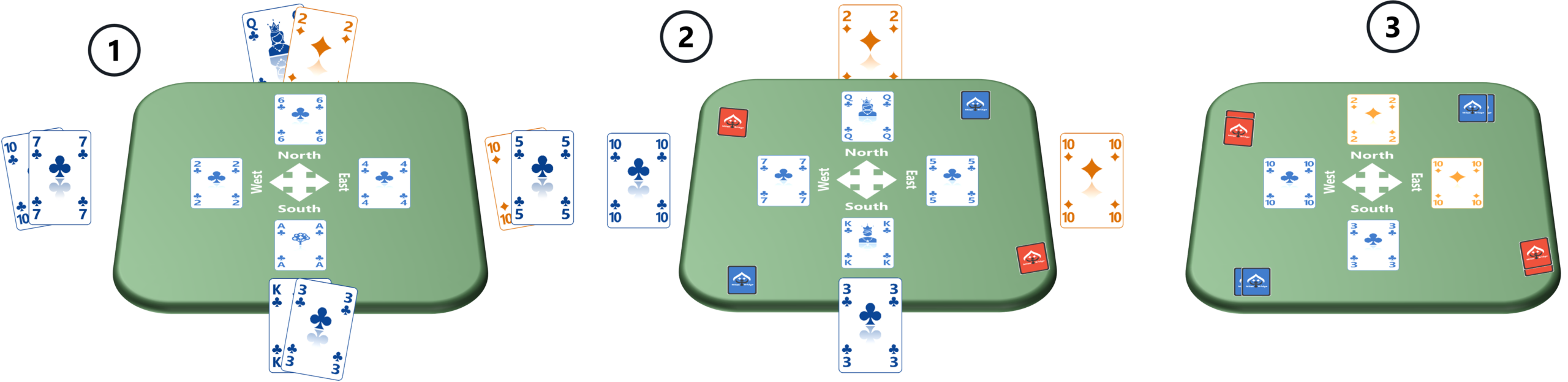
In trick 1, you can start by playing ♣A. Your partner plays a low card, so you don't lose a trick.
If you continue by playing ♣K in trick 2, you will play 2 winners in one trick because North has only one club card left – ♣Q.
That results in losing the last trick to West's ♣10, winning 2 tricks, and losing one.
Trap 2 – leading from the wrong hand
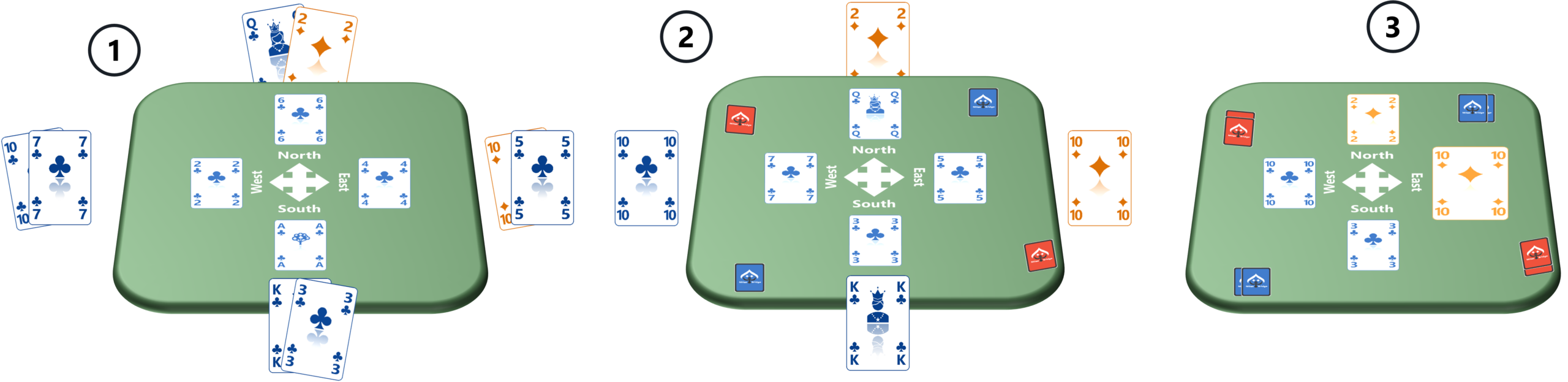
In trick 1, you can start by playing ♣A. Your partner plays a low card, so you don't lose a trick.
If you continue by playing ♣3 in trick 2, you will win the trick in the North's hand with the ♣Q.
That results in leading from the North and losing the ♦2 to East's ♦10. Winning 2 tricks and losing one.
To remember: Play winners in the "short hand" first
Correct orded of play
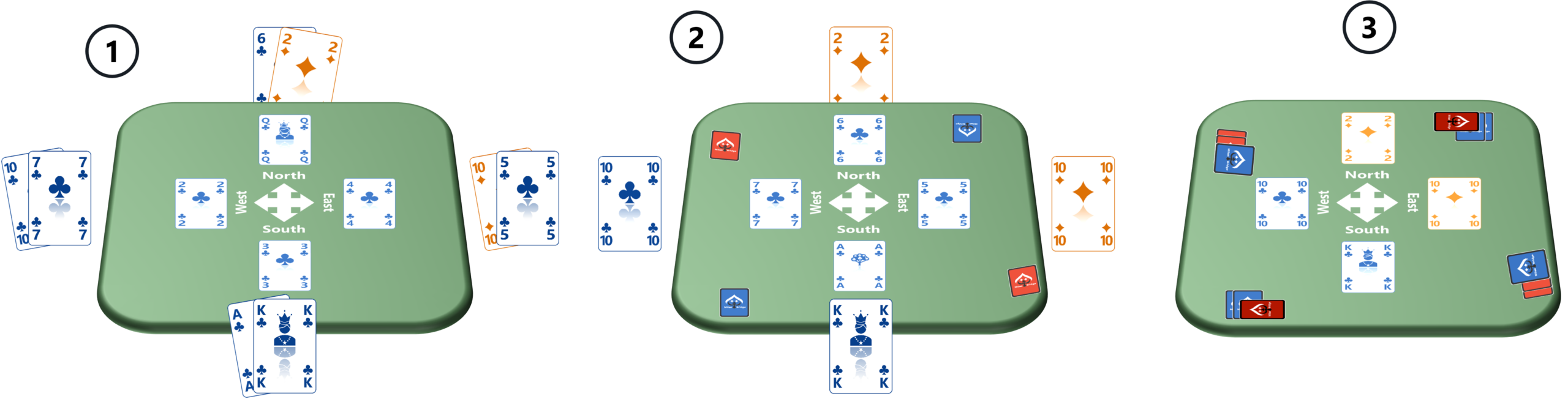
The correct line is to play a small club from the South – ♣3 already in trick 1. Your partner plays the ♣Q and wins the trick.
The North will play a club in trick 2 – ♣6. South wins with one of his honors and will play the next one in trick 3.
This way, the NS pair wins 3 tricks and loses none.
Our trick potential is limited to number of cards in the longer hand.
Each partnership may win only as many tricks in a suit as there are cards in the longer hand. Both players must follow a card in each trick, and some high cards might be played in one trick.
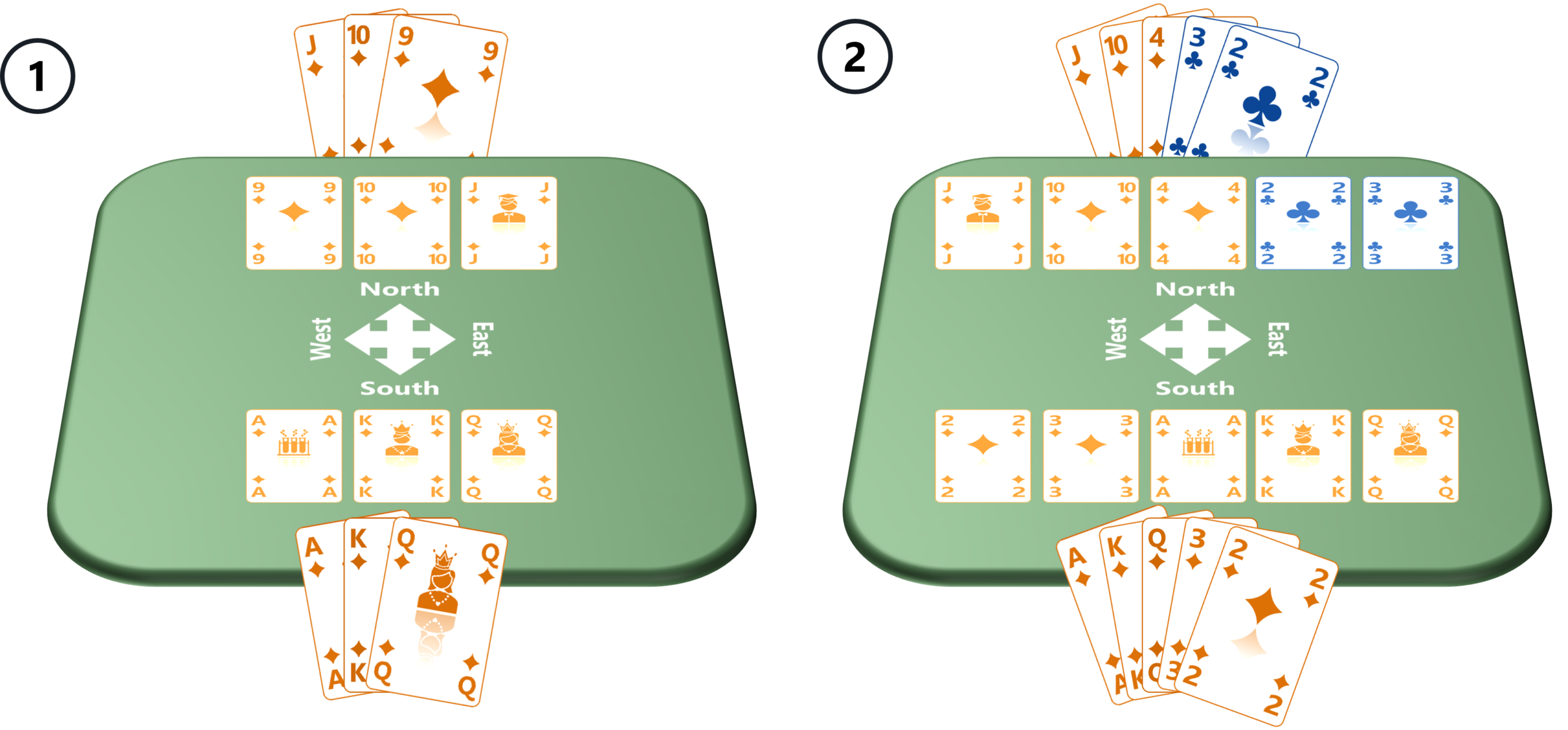
In the first example, NS has 6 highest cards. But both players hold only 3 cards, so we cannot win more than 3 tricks.
In the second example, we have the 5 highest cards. South has 5 cards in diamonds and North only 3. You can win 5 tricks if you play the winners from the short hand first.